

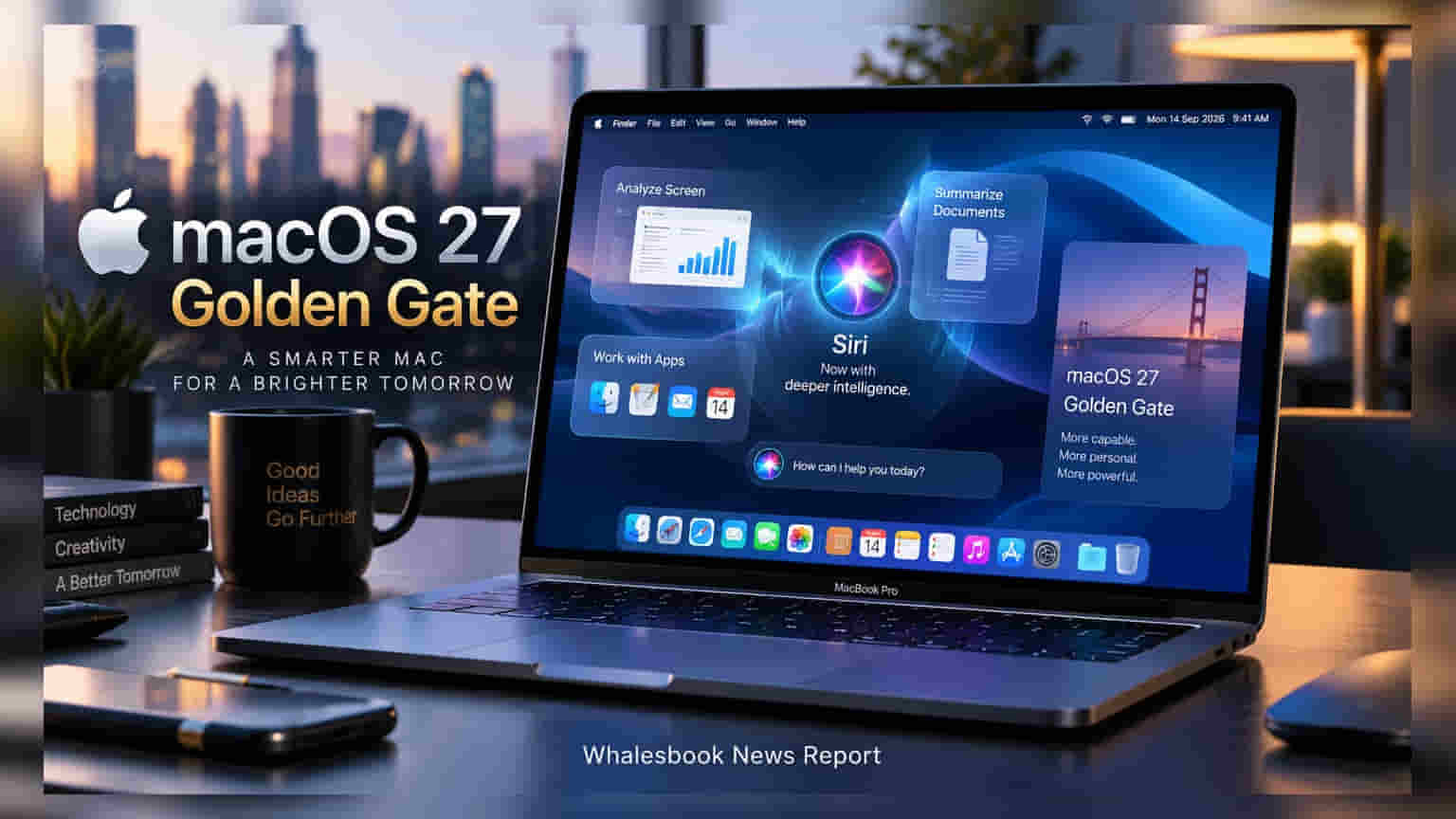
Apple has released macOS 27 'Golden Gate', introducing an AI-powered Siri and deep system intelligence exclusively for Apple Silicon Macs. The update aims to drive user engagement and hardware upgrades, though investors remain focused on the company’s cautious revenue guidance for the upcoming quarter.
Apple has released macOS 27, known as 'Golden Gate', on September 14, 2026. This major software update introduces a revamped Siri that utilizes deep intelligence to analyze screen content, summarize documents, and interact directly with apps. This is a significant step for the company as it integrates its AI technology directly into the core desktop experience.
The update is significant for the company’s hardware strategy. By making macOS 27 exclusive to Apple Silicon devices, the company is effectively creating an incentive for users with older, Intel-based Mac computers to upgrade their hardware. This move helps the company strengthen its ecosystem and sustain its recurring revenue streams from hardware sales, which remains a core pillar of its business model.
From a market perspective, Apple's stock has been trading near $334.53 as of September 14, 2026, maintaining a positive trend despite broader tech sector volatility. While the company reported a 16% increase in revenue during its third fiscal quarter of 2026, management has issued a cautious forecast for the fourth quarter. This conservative outlook suggests that the company is mindful of potential pressure on consumer spending and the rising costs of technology development.
Investors should note that this strategy comes with inherent risks. The company's recent focus on high-end hardware, such as the $2,000 'iPhone Duo', has sparked debates about whether consumers will continue to accept higher price points during a period of economic uncertainty. Furthermore, the company faces operational challenges, including the need to manage supply chain costs and memory price inflation, which can put pressure on profit margins.
Looking ahead, the success of 'Golden Gate' will depend on how quickly it drives adoption among existing users and whether the new AI features translate into stronger sales for its latest hardware lineup. Investors will likely monitor the company’s upcoming quarterly performance to see if these software innovations can offset the cautious demand outlook noted in previous management commentary.