

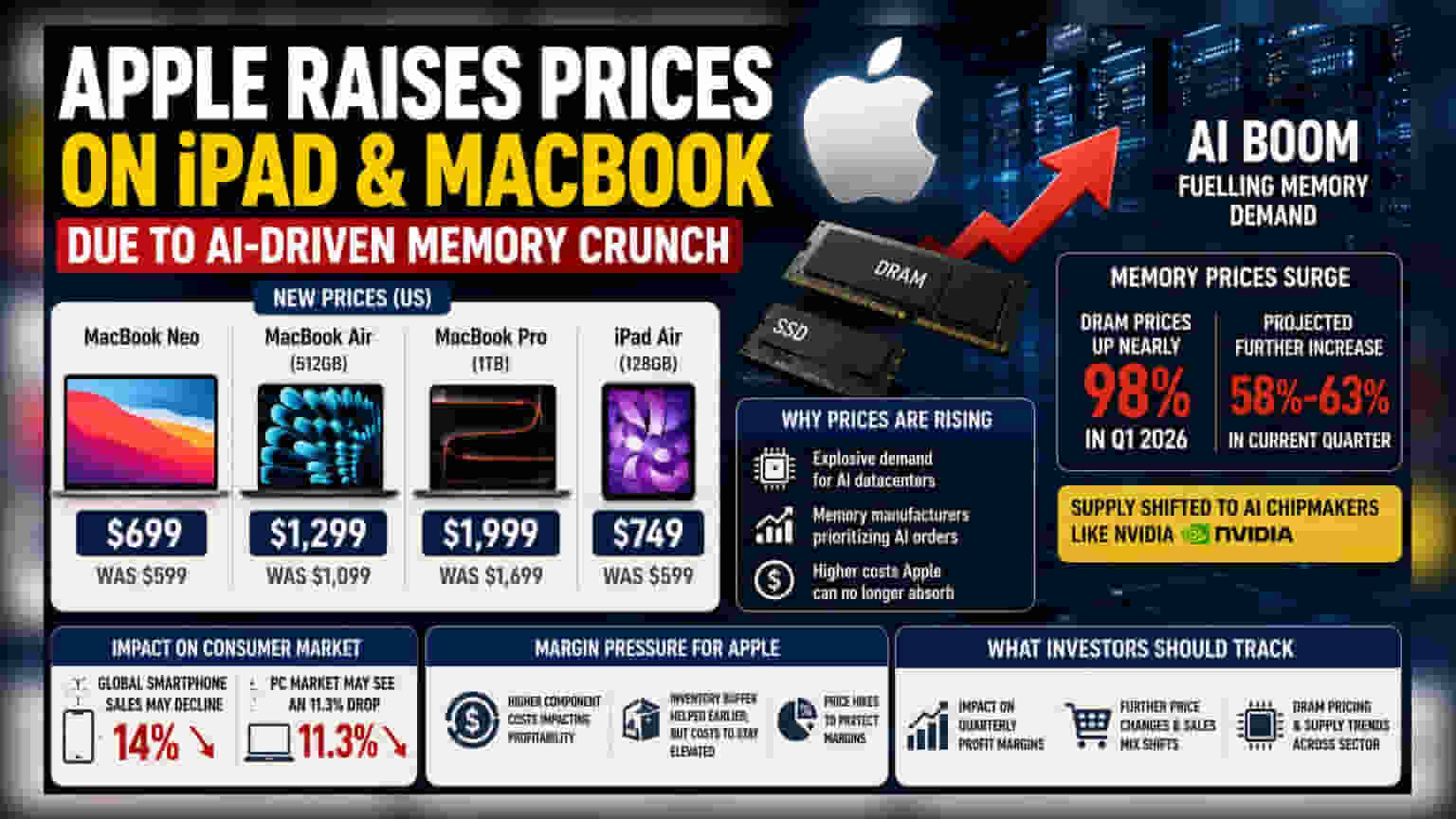
Apple has increased prices for its iPad and MacBook lineups by up to $300 as memory and storage chip costs rise. Driven by intense AI datacenter demand, this component shortage is squeezing hardware profit margins and may signal a cooling trend for consumer electronics sales. This shift marks a significant challenge for global tech manufacturers struggling with soaring material costs.
What Happened
Apple has implemented price increases across its iPad and MacBook product lines, citing rising costs for memory and storage components. The company stated that it can no longer absorb these escalating expenses, which are largely driven by the massive growth in artificial intelligence (AI) datacenter construction.
Specific models have seen notable price adjustments. The entry-level MacBook Neo has increased from $599 to $699. Other models also saw significant hikes: the MacBook Air with 512GB of storage now starts at $1,299, up from $1,099, while the MacBook Pro with 1TB of storage has risen to $1,999 from $1,699. Additionally, the iPad Air with 128GB of storage now costs $749, compared to its previous price of $599.
The AI-Driven Memory Crunch
The price hikes are a direct result of a supply-demand imbalance in the memory chip market. Manufacturers, including companies like Micron Technology, have prioritized orders from AI chipmakers such as Nvidia to meet the explosive demand for AI-focused infrastructure. This shift in production capacity has constrained the supply of DRAM (dynamic random access memory) and storage components for other electronics manufacturers.
Industry analysts have described the situation as severe, with DRAM prices surging by nearly 98% in the first quarter of 2026. Projections suggest further price increases of 58% to 63% in the current quarter. This environment, sometimes referred to in the industry as "RAMageddon," highlights how the AI boom is creating ripple effects across the entire technology hardware sector.
Why Hardware Margins Are Under Pressure
For companies like Apple, component costs are a critical factor in maintaining profit margins. While the company successfully shielded consumers from these increases earlier in the year, the sustained rise in costs has made it difficult to maintain previous price points.
Earlier in April, Apple noted that its existing inventory helped support profitability. However, management has since signaled that the company anticipates "significantly higher memory costs" impacting its business performance through the remainder of the year. This suggests that the current price adjustments are a reactive measure to protect profitability in an environment where suppliers are demanding more to guarantee supply.
Impact on Consumer Demand
The broader electronics market is bracing for a potential slowdown. IDC estimates suggest that global smartphone sales could decline by nearly 14%, while the PC market may see an 11.3% drop for the year. Higher prices for hardware often lead to reduced consumer demand, especially as budget-conscious buyers may delay upgrades or opt for cheaper, older models. As companies pass these increased costs to consumers, the challenge will be to see if demand remains steady or if the higher price tags lead to a noticeable drop in sales volume.
What Investors Should Track
Investors may monitor several key factors as this situation develops. First, the impact on quarterly profit margins will be essential to gauge how well the company can manage these rising input costs. Second, any further changes in product pricing or shifts in the sales mix will be important indicators of consumer demand resilience. Finally, broader sector trends—specifically DRAM pricing and supply availability for other hardware manufacturers—will continue to influence the overall health of the consumer electronics industry.