 Whalesbook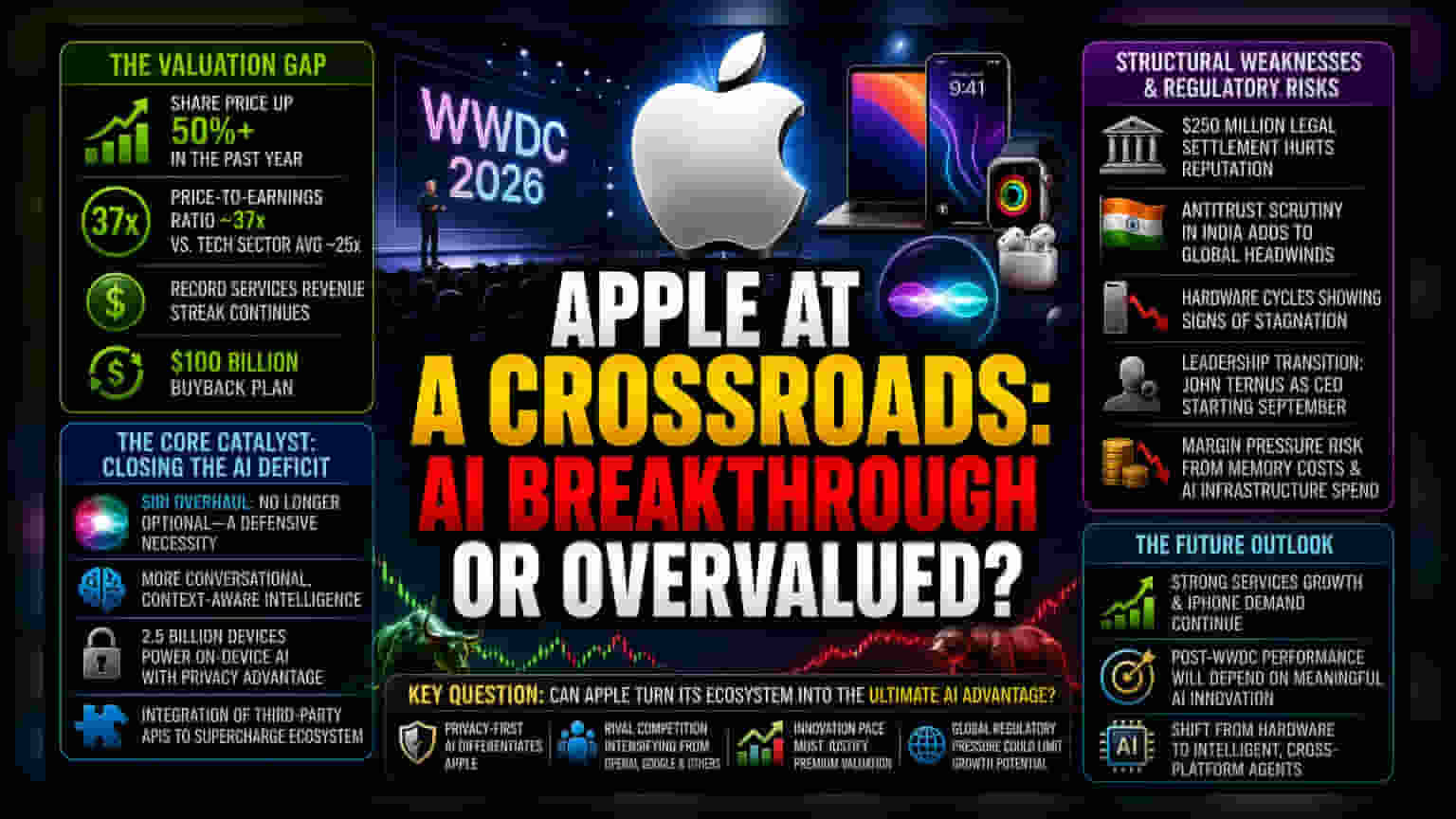


The Valuation Gap
Apple enters this year’s developers conference amid a sharp rally, with shares gaining over 50% in the past year and trading at a price-to-earnings ratio of approximately 37x. This valuation significantly outpaces the broader tech sector, forcing the company to justify its premium pricing through tangible technological leaps rather than incremental updates. While the market has responded favorably to a record services revenue streak and a massive $100 billion buyback plan, the "AI premium" remains a point of contention among analysts. Investors are now watching whether Apple can transition from its cautious, privacy-first AI stance to a competitive agent-based model that holds its own against rivals like OpenAI and Alphabet.
The Core Catalyst: Closing the AI Deficit
For two years, the narrative surrounding Apple’s artificial intelligence efforts has been defined by delays. The anticipated Siri overhaul is no longer merely a feature request; it is a defensive necessity to prevent user churn toward more capable, agent-based AI platforms. While previous attempts at on-device intelligence were criticized for being incomplete, expectations for this year center on a more conversational, context-aware assistant. Success here hinges on Apple’s unique ability to leverage its 2.5 billion active devices to process data locally, effectively bypassing the privacy concerns that plague cloud-dependent competitors. If the platform successfully integrates third-party APIs as expected, it may finally convert its massive hardware footprint into a dominant AI distribution network.
Structural Weaknesses and Regulatory Risks
Beneath the surface of the company’s strong fiscal performance lie persistent structural hurdles. A recent $250 million legal settlement regarding marketing claims has already bruised the company’s reputation for reliability, and further regulatory friction in India—where the firm faces potential antitrust scrutiny—adds to a growing list of global headwinds. Unlike its peers, Apple’s model is heavily tied to hardware cycles that have shown signs of stagnation. The transition to John Ternus as CEO in September introduces a layer of executive uncertainty; investors are closely monitoring whether this leadership shift will catalyze a faster pace of innovation or create further organizational friction. Furthermore, the firm remains vulnerable to margin compression if memory costs and AI infrastructure investment continue to climb, threatening to erode the high margins that investors currently rely on.
The Future Outlook
Analysts remain polarized on whether the current stock price captures the full potential of Apple’s AI ambitions or if the market has become overly optimistic. While brokerage consensus points toward continued growth in Services and strong iPhone demand, the post-WWDC performance will likely depend on whether the company can demonstrate a coherent, multi-model intelligence strategy that goes beyond mere notifications and text summarization. The next phase of Apple’s growth depends on shifting from a collector of hardware to an orchestrator of intelligent, cross-platform agents.