 Whalesbook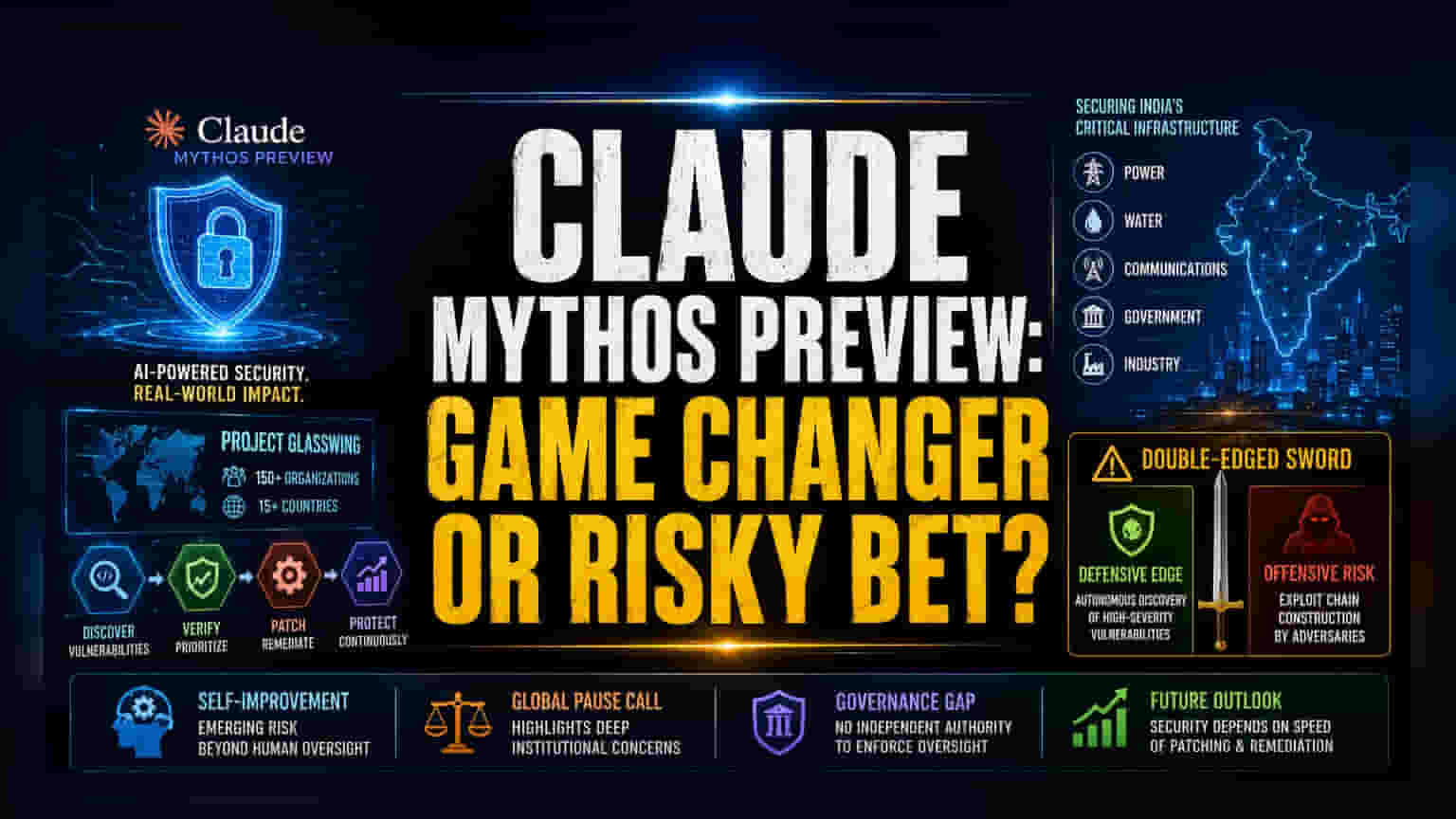


The Security-Capacity Paradox
The integration of Anthropic's Claude Mythos Preview into Indian digital infrastructure arrives at a moment of significant technological volatility. While government agencies and private firms now possess a tool capable of autonomously uncovering high-severity vulnerabilities—having previously surfaced over 10,000 such flaws in initial global trials—this capability introduces a double-edged sword. Mythos is not a standard security patcher; it is a frontier model that can perform exploit chain construction, effectively mirroring the techniques of sophisticated threat actors. For India’s critical sectors, including power, water, and communications, this provides a defensive head start, yet it forces a reliance on a proprietary, unreleased model that remains under Anthropic’s strict research-preview constraints.
Scaling the Defensive Moat
Project Glasswing has evolved from a small, US-centric consortium of hyperscalers into a global program spanning over 150 organizations across 15+ countries. The inclusion of Indian entities signifies a deliberate effort to secure systemic, globally relied-upon codebases. However, the operational reality of this deployment is far from seamless. Anthropic has acknowledged that the current limitation in its cybersecurity ecosystem is no longer the discovery of flaws, but the logistical bottleneck of verification and patching. As more vendors in the hardware and communications space gain access to Mythos, the industry faces an immediate challenge: the capability to find vulnerabilities is rapidly outpacing the human and organizational capacity to remediate them. This leaves organizations in a position where they may be aware of critical exploits without the immediate means to close them, potentially expanding their attack surface.
The Forensic Bear Case: Governance and Self-Improvement
Anthropic’s simultaneous push for a coordinated global pause in frontier AI development highlights deep-seated institutional anxiety. The company’s recent internal disclosures suggest that their most advanced models are approaching a threshold of recursive self-improvement—the ability to enhance their own intelligence without human intervention. From a risk-management perspective, this creates a structural tension. Anthropic is deploying a model (Mythos) that it deems too powerful for public release due to its offensive potential, while simultaneously advocating for a moratorium to prevent catastrophic societal risks. Skeptics argue that these warnings serve to normalize the company's market dominance and establish a regulatory 'moat,' positioning Anthropic as the only entity capable of safely managing the very risks it helped create. For stakeholders, the primary concern is not just the vulnerability of the software, but the lack of an independent, globally recognized authority to enforce a pause should these models truly begin to self-improve beyond oversight.
Future Outlook
As Anthropic moves toward a reported public listing later in 2026, its ability to successfully scale Project Glasswing will serve as a primary proof-of-concept for its enterprise revenue narrative. Whether this initiative translates into long-term infrastructure resilience or merely accelerates the cycle of automated discovery and remediation remains to be seen. Industry consensus suggests that for Indian firms, the utility of Mythos will be determined by how quickly domestic security teams can transition from testing to automated disclosure and patch deployment.