

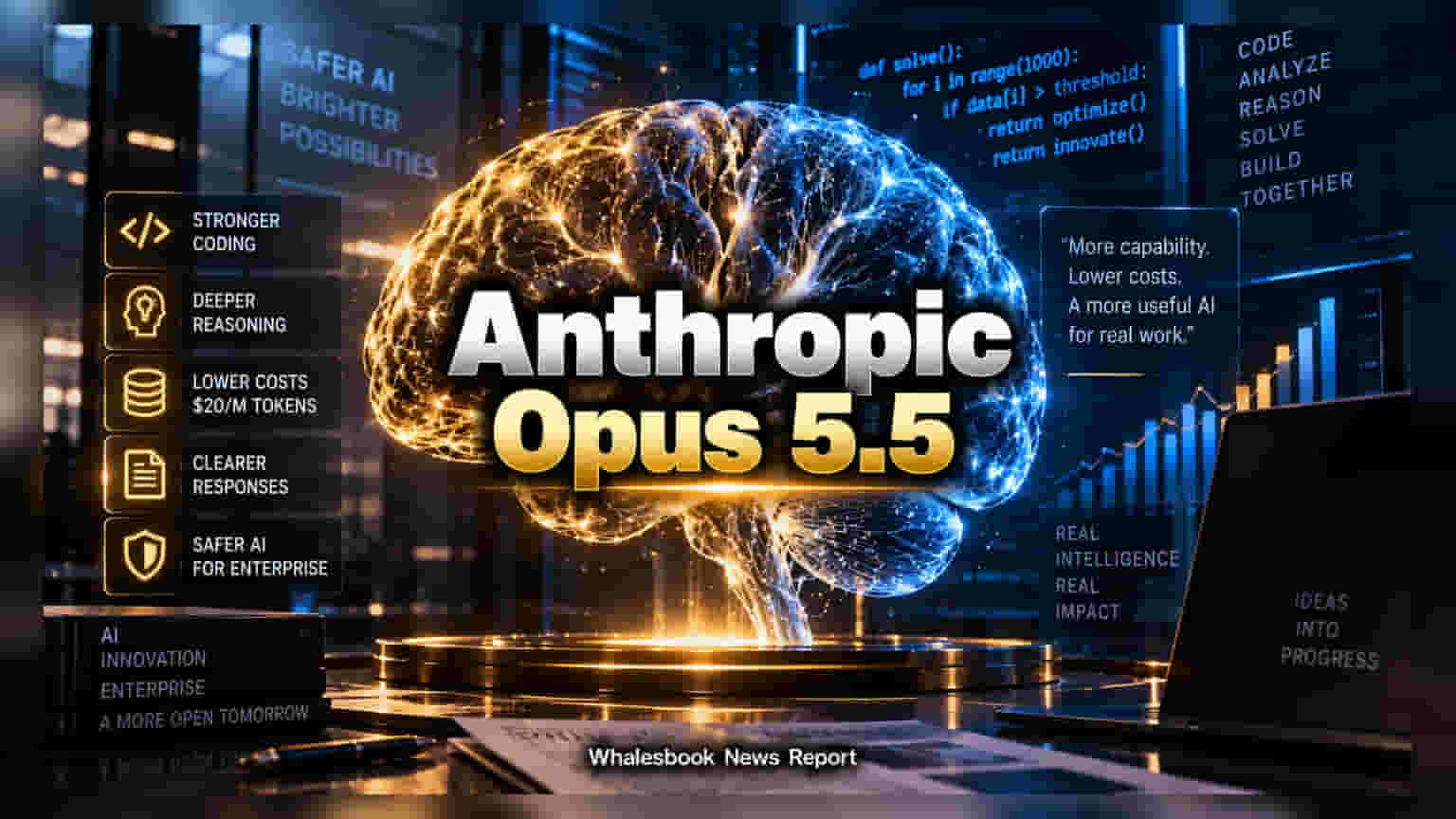
Anthropic has launched Opus 5.5, an AI model that offers better coding and reasoning performance at a 20% lower cost. This update targets business efficiency with clearer output structures, signaling a push for wider enterprise adoption. The company also confirmed that updates for its Sonnet and Haiku models are expected in the coming weeks.
Anthropic has launched its latest AI model, Opus 5.5, marking a significant update to its core technology stack. The new model is designed to deliver higher performance in complex coding and reasoning tasks while reducing costs for enterprise users. Specifically, the price for output tokens has been lowered to $20 per million, down from the previous rate of $25. This cost reduction is driven by improvements in operational efficiency and lower compute requirements, making the technology more accessible for companies scaling AI applications.
The update also addresses feedback regarding usability in business environments. Opus 5.5 is designed to communicate with less technical jargon and prioritizes essential information at the beginning of its responses. For corporate users, this adjustment is intended to provide concise and actionable output, reducing the time needed to parse through long, verbose explanations. By focusing on these structural improvements, Anthropic aims to make its models more effective for daily business operations, such as report writing, software development, and analytical workflows.
From a safety and regulatory perspective, the company continues to focus on balancing rapid development with rigorous oversight. Opus 5.5 retains advanced capabilities for handling sensitive tasks like biological research and cybersecurity. To manage associated risks, the firm uses external organizations such as METR and Frontier Design to conduct testing. This process is part of a broader shift by Anthropic to move safety protocols from internal technical checks to policy-backed standards. CEO Dario Amodei has consistently highlighted this commitment, emphasizing that the pace of innovation should align with advancements in safety research.
For the broader technology sector, the move to lower costs while increasing performance is a critical indicator of market trends. As AI models become cheaper to run, the viability of deploying AI solutions for large-scale enterprise projects increases. This shift often impacts the IT services sector, as businesses become more willing to integrate advanced AI tools into their existing software infrastructure. Anthropic has confirmed that further updates for its Sonnet and Haiku models will be released in the coming weeks, which will likely provide more options for enterprises looking to scale their AI usage at different price and performance tiers.