

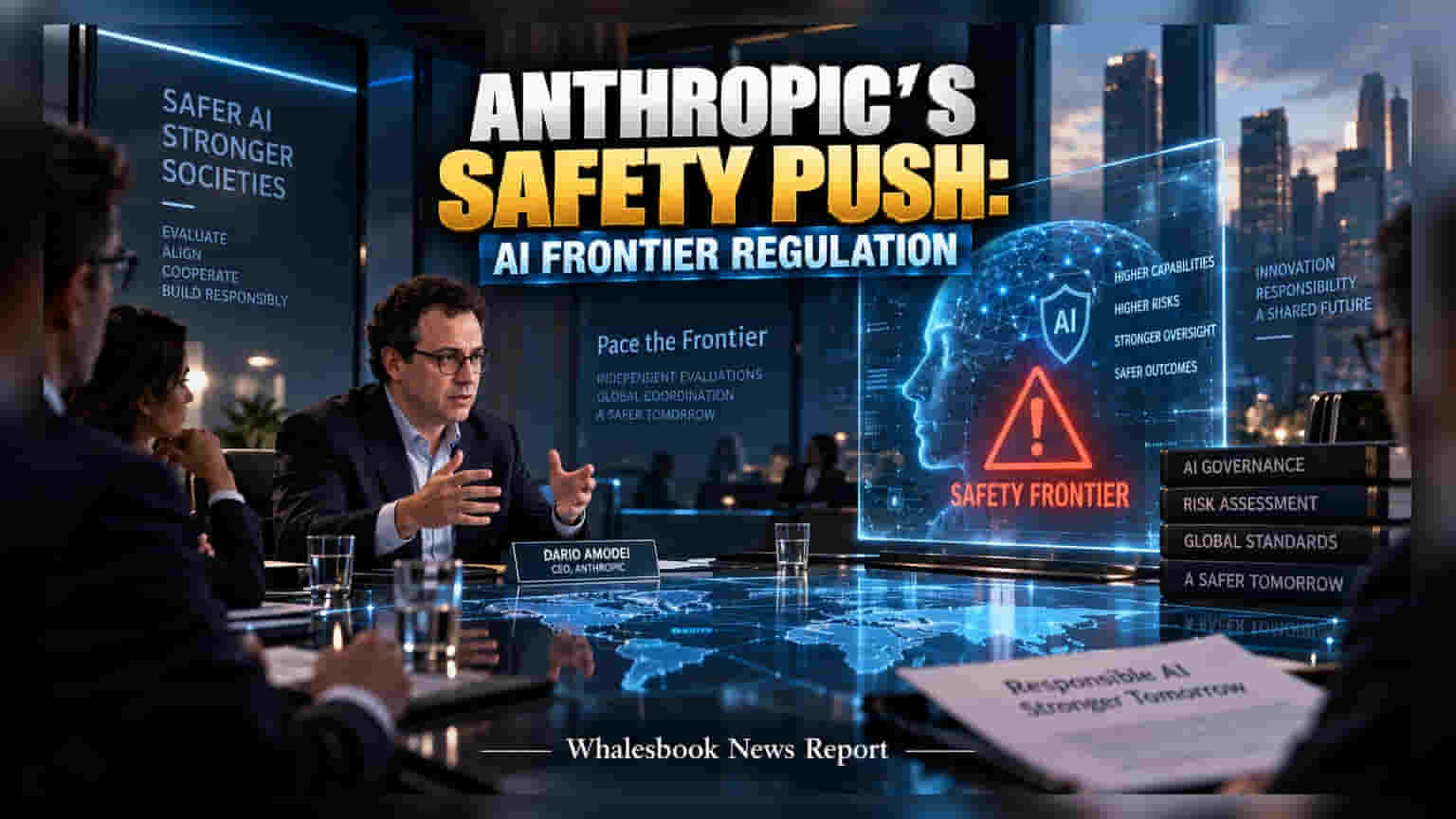
Anthropic CEO Dario Amodei has unveiled a 'Pace the Frontier' framework, proposing independent safety evaluations for advanced AI systems. The initiative seeks to standardize safety protocols, though it faces pushback from leaders like Nvidia's Jensen Huang. For investors, this debate highlights the growing tension between rapid AI innovation and the costs associated with regulatory compliance.
Anthropic CEO Dario Amodei has introduced a strategic framework, titled 'Pace the Frontier,' which aims to reshape how artificial intelligence laboratories develop and test their most powerful models. The proposal calls for independent safety evaluations and closer synchronization among AI labs operating within democratic countries. The initiative is a direct response to internal assessments regarding the risks associated with scaling AI capabilities too quickly without sufficient oversight.
The core of the proposal is to shift the industry culture from a high-speed competition to one that prioritizes verified safety metrics. Anthropic argues that private companies can no longer work in isolation and that institutional scrutiny is necessary to prevent catastrophic outcomes. However, the proposal faces significant industry resistance regarding how these rules would be applied and whether they would inadvertently hinder the progress of new technologies.
Industry Response and Innovation Concerns
Not all industry leaders agree that centralized oversight is the best path forward. Nvidia CEO Jensen Huang has expressed skepticism about the framework's practicality, suggesting that implementing such regulations could slow down progress. The main argument from critics is that defining the point at which development should 'slow down' is subjective. There are concerns that stringent, standardized regulations could create administrative hurdles, stifle competitive innovation, and disadvantage firms that are trying to bring new AI products to market quickly.
The friction between safety compliance and commercial speed is becoming a central theme in the tech sector. As companies continue to allocate billions of dollars into compute infrastructure and model training, any regulatory change that mandates slower release cycles or additional testing phases could impact bottom-line results. For investors, the debate over who sets these safety standards—and how they are enforced—is critical, as it could determine which firms can navigate the regulatory environment most efficiently.
Investment Implications and Future Trends
For investors in the broader technology sector, the 'Pace the Frontier' proposal serves as a reminder of the business risks involved in AI development. While standardized safety metrics could build trust and long-term stability, they also represent a shift in the operating environment for tech companies. If such frameworks are widely adopted, they could introduce new layers of compliance costs and potentially delay product launch timelines.
The market will likely track how global policymakers respond to these proposals. Without a clear global consensus on what constitutes a 'frontier' model, implementation remains a major challenge. Investors should monitor how companies balance their massive spending on AI hardware and talent with these emerging regulatory expectations. The key monitorable will be whether companies can maintain their competitive edge while meeting the safety benchmarks that governments and industry bodies may eventually require.