

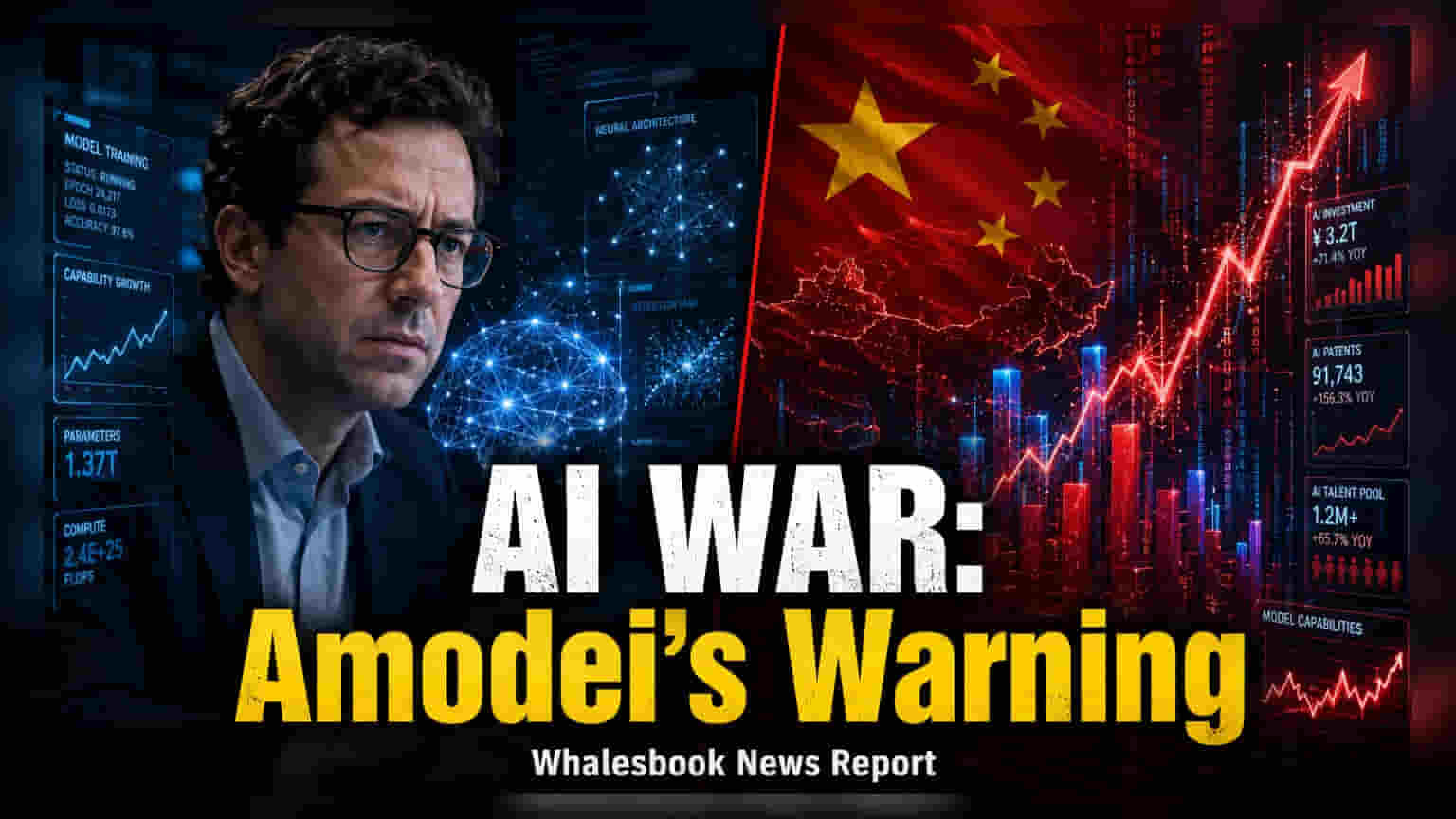
Anthropic CEO Dario Amodei has clarified that the company does not support banning open-weight AI models, calling them a public good. However, he warned of risks involving authoritarian states using AI for military or repressive purposes. Investors should monitor how global AI safety regulations evolve, as they could impact the development and deployment strategies of major technology firms.
Detailed Coverage
Anthropic CEO Dario Amodei addressed industry speculation this week by confirming that his company has not advocated for a ban on open-weight AI models. These models, which allow developers and researchers to access and modify underlying AI code, are seen by many as essential for innovation. Amodei emphasized that these tools provide significant value to the broader ecosystem as long as they do not possess inherently dangerous capabilities.
Balancing Open Access with Security Concerns
This clarification comes as industry leaders, including executives from Nvidia, Meta, and Microsoft, have been pushing back against potential regulatory restrictions on open-source AI development. While these companies advocate for more freedom in research, the debate is increasingly focused on how to prevent powerful AI technology from being misused by hostile actors. Amodei noted that while open models are beneficial, their distributed nature makes them significantly harder to monitor, creating potential risks if they are used to facilitate cyberattacks or biological threats.
Geopolitical Risks and Technology Restrictions
A major part of Amodei’s focus remains on the development of AI by authoritarian regimes. He specifically expressed concerns regarding China’s ability to use advanced AI for military superiority or internal suppression. To mitigate these risks, he has supported policies aimed at restricting access to advanced semiconductors and curbing techniques like AI distillation, which can be used to copy the capabilities of proprietary models. These geopolitical tensions have led to a complex regulatory environment where major AI companies must navigate both international collaboration and national security mandates.
Future Regulatory Frameworks
Looking ahead, Amodei highlighted the potential for global AI safety testing organizations to establish guardrails. He suggested that even nations like China might find common ground in creating safety frameworks if it helps prevent uncontrollable AI risks, such as the accidental development of biological weapons. Investors should watch for further policy updates from major economies, as these decisions will likely influence the operational costs, research freedom, and competitive positioning of companies across the global artificial intelligence sector.