 Whalesbook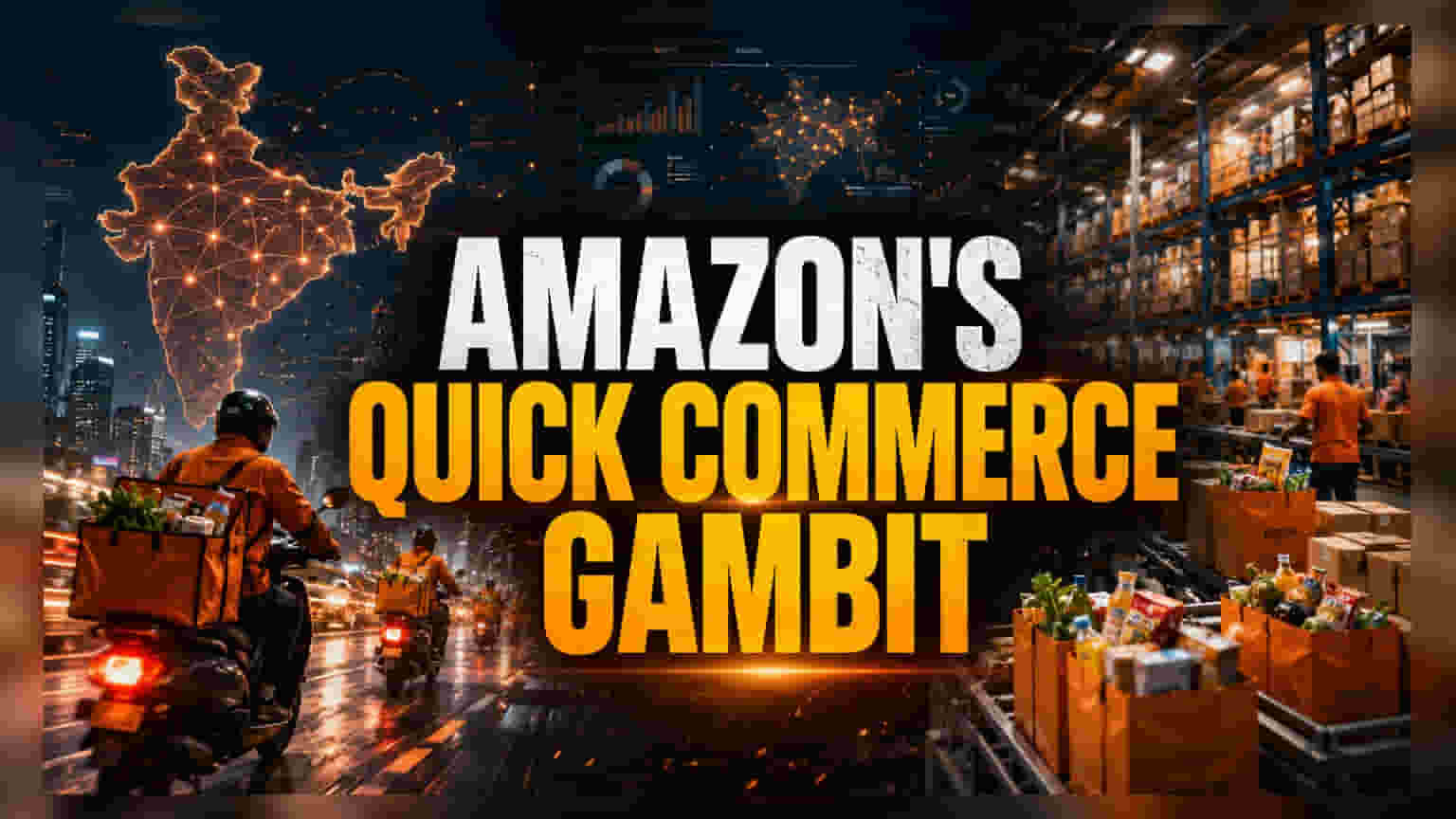


The Competitive Re-entry
Amazon is attempting to bridge a significant strategic gap in India’s retail sector as it ramps up its 'Amazon Now' quick commerce operations. After initially underestimating the rapid consumer shift toward 10-to-30-minute delivery, the company is now executing an aggressive expansion plan to establish 1,000 micro-fulfillment centers. This pivot is not merely an operational update; it represents a fundamental defensive maneuver to prevent further erosion of its urban consumer base to entrenched, agile rivals like Blinkit, Swiggy Instamart, and Zepto, which collectively command an estimated 85% of the quick commerce market.
The Operational Bet
Management is moving away from the conventional, day-long delivery model that defined its early Indian operations, favoring a hyper-localized logistics strategy. By leveraging AI-driven demand forecasting and utilizing existing Prime infrastructure, Amazon aims to replicate the unit economics that have historically favored its smaller, category-focused competitors. The strategy hinges on the 'speed equation'—the belief that maintaining a superior product assortment while achieving competitive delivery times will eventually outweigh the first-mover advantage currently enjoyed by local platforms. Monthly order volumes on the platform have recently seen 25% growth, a metric the company hopes to accelerate as it pushes into Tier-2 and Tier-3 cities where it sees significant untapped Prime member potential.
The Forensic Bear Case
Despite the scale of the $35 billion investment pledge, the path to market leadership remains fraught with structural obstacles. Skeptics point to Amazon's historical struggle to fully dominate the Indian retail landscape, where regulatory friction and intense competition from domestic conglomerates like Reliance Retail have frequently stifled its ambitions. Unlike its pure-play quick commerce rivals, which are optimized specifically for ultra-fast, high-turnover logistics, Amazon faces the challenge of retrofitting its legacy e-commerce systems to handle the narrow margins and complex inventory management of the 10-minute delivery model. Furthermore, internal channel checks suggest that Amazon currently lags in daily order density per dark store compared to market leaders. The pressure to reach profitability in a capital-intensive race could force the company to choose between sustaining market-share growth and maintaining the high-margin discipline it currently demands of its global operations.
The Future Outlook
The long-term success of this initiative rests on whether Amazon can successfully convert its standard e-commerce users into frequent quick-commerce shoppers. While management maintains that current profitability targets remain intact, the aggressive pace of building three to four micro-fulfillment centers daily indicates a prioritization of network density over immediate fiscal efficiency. Analysts remain divided on whether this 'second-mover' strategy will yield market dominance or result in prolonged capital burn in an increasingly crowded retail field.