

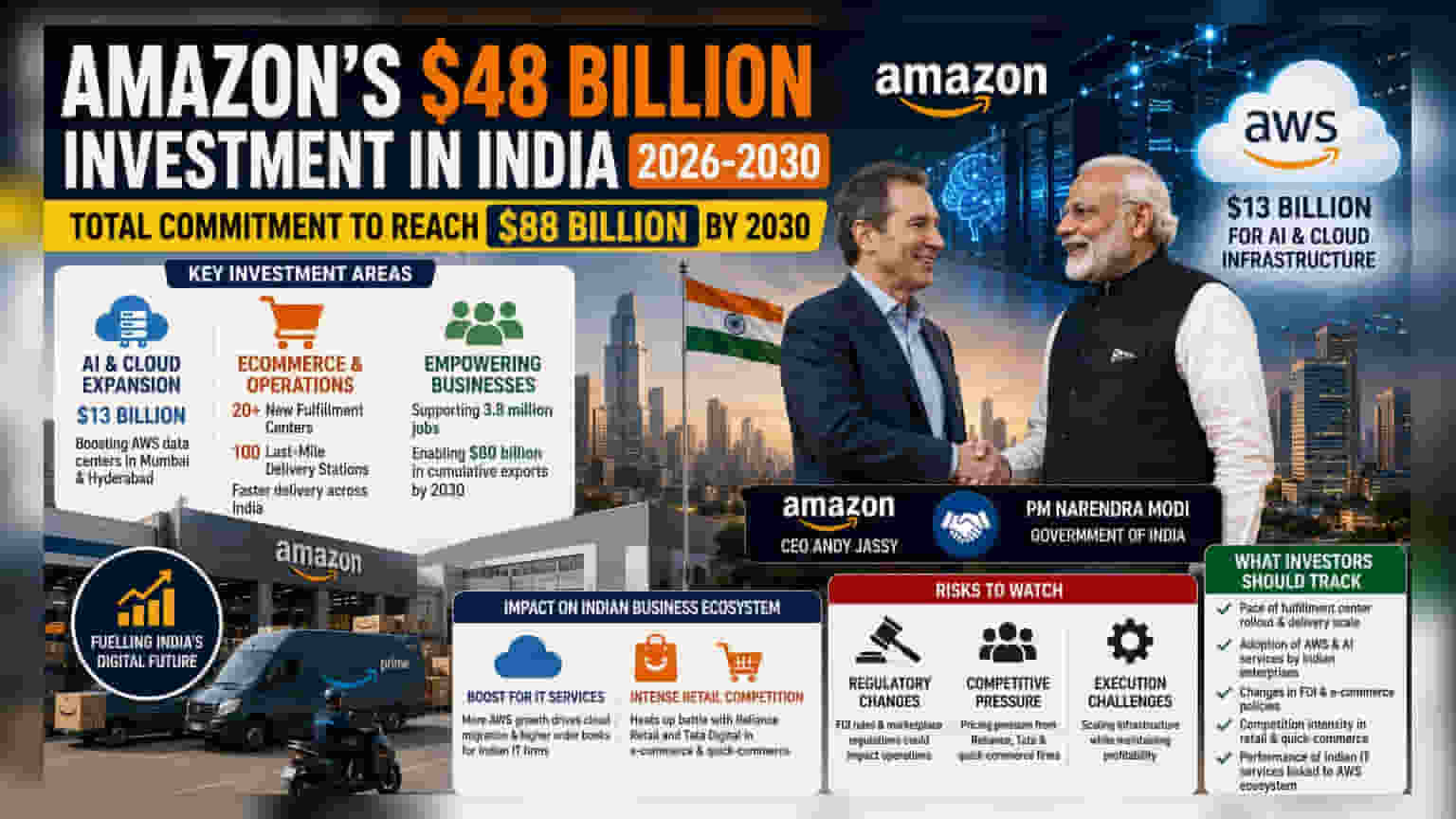
Amazon has committed $48 billion to expand its Indian footprint through 2030, targeting growth in AI, cloud computing, and e-commerce. This plan includes $13 billion specifically for AWS infrastructure. For the Indian market, this strategy intensifies competition in digital services and retail, while creating new demand for local IT infrastructure and managed services.
What Happened
Amazon has announced a massive investment plan for India, pledging $48 billion between 2026 and 2030. This commitment, confirmed following discussions between CEO Andy Jassy and Prime Minister Narendra Modi, focuses on expanding the company’s digital infrastructure, including artificial intelligence, cloud services, and e-commerce operations. This new capital infusion is expected to bring the company's total planned investment in the country to $88 billion over a twenty-year period ending in 2030.
The AI and Cloud Expansion
A central part of this strategy is the $13 billion allocation specifically for artificial intelligence and cloud computing infrastructure under Amazon Web Services (AWS). This investment aims to boost data center capacity in key hubs like Mumbai and Hyderabad. By building out this infrastructure, Amazon intends to provide Indian businesses, startups, and government entities with better access to advanced cloud tools and AI capabilities. This is a critical move to capture a larger share of India’s growing demand for digital storage and computing power.
E-commerce and Operational Growth
Beyond cloud services, Amazon is scaling its physical presence in India. The company plans to open more than 20 new fulfillment centers and 100 last-mile delivery stations this year. These additions are designed to improve delivery times, particularly in smaller cities and towns. The company is also continuing its focus on digitizing small and medium businesses, aiming to support 3.8 million jobs and enable $80 billion in cumulative exports by 2030.
Impact on the Indian Business Ecosystem
For investors in the Indian stock market, Amazon's aggressive expansion has a ripple effect across several sectors. The growth of AWS is closely tied to the broader IT services sector; many Indian IT firms partner with Amazon to manage cloud migrations and maintain digital infrastructure for their clients. Consequently, continued AWS expansion often supports the service order books of major Indian software companies.
On the retail side, the continued focus on e-commerce intensifies competition for large domestic conglomerates like Reliance Industries (Reliance Retail) and the Tata Group (Tata Digital). As Amazon builds more fulfillment capacity, the race to capture the quick-commerce and e-commerce market share will likely continue to drive pricing pressure and service-level competition in the retail sector.
Regulatory and Competition Risks
While the capital injection signals strong intent, the company faces inherent risks related to the Indian regulatory environment. Foreign-owned e-commerce platforms are subject to strict Foreign Direct Investment (FDI) guidelines in India. Changes in these regulations or stricter enforcement regarding marketplace models can directly impact operational strategies. Additionally, the rapid expansion of fulfillment centers brings operational challenges, including the need to maintain profitability amidst intense competition from both established players and emerging quick-commerce firms.
What Investors Should Track
Investors should look for updates on the pace of fulfillment center commissioning and the actual adoption rate of Amazon's AI services by local Indian enterprises. Changes in FDI policy for e-commerce, competitive intensity in the retail sector, and the performance of Indian IT services companies that manage AWS cloud ecosystems will be the key monitorables following this announcement.