

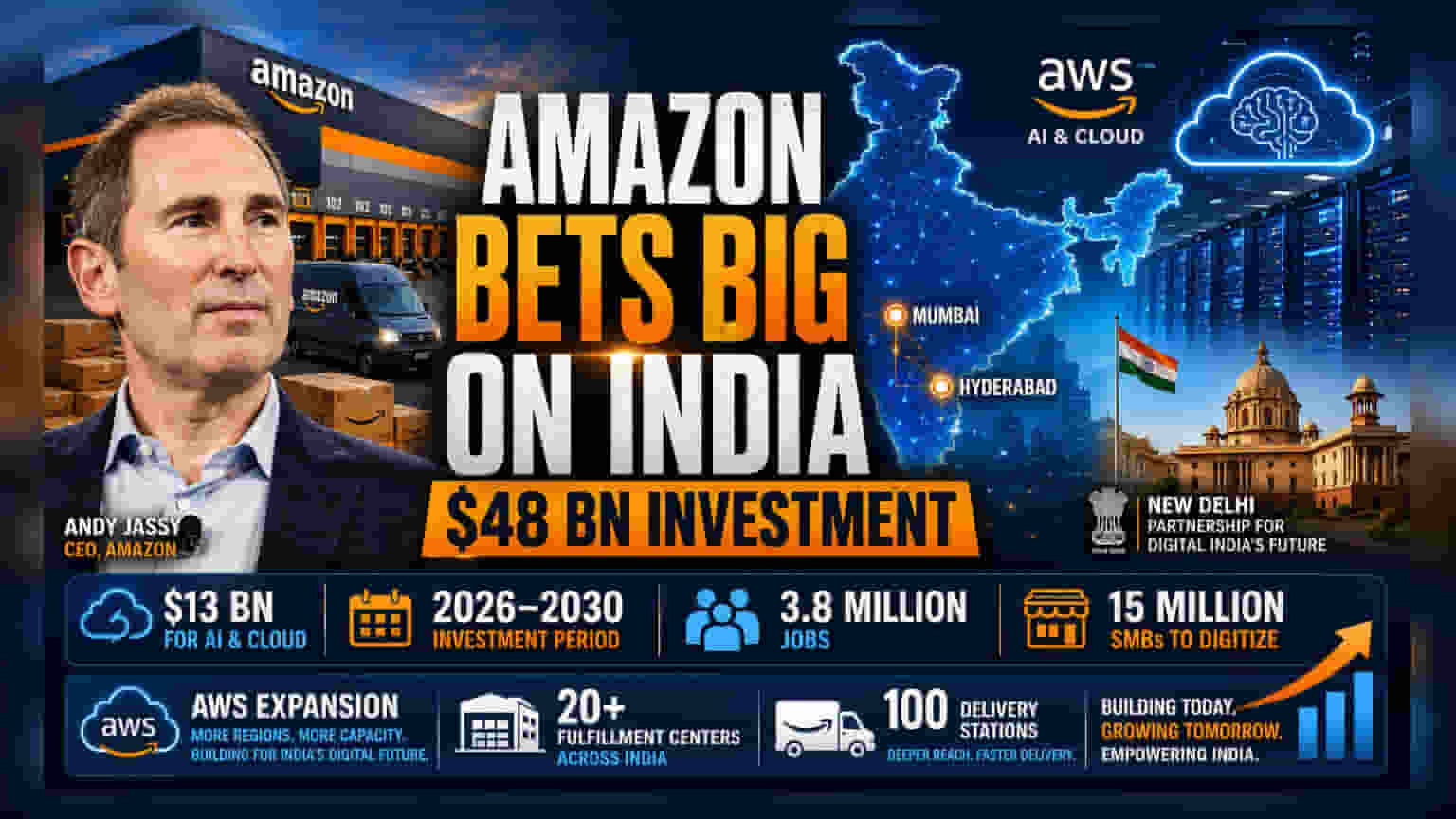
Amazon CEO Andy Jassy has announced a $48 billion investment plan for India through 2030 to bolster AI, cloud infrastructure, and e-commerce. While Amazon is not a listed company in India, this massive capital infusion signals a major push into the domestic digital market, which may influence local IT, logistics, and retail ecosystems.
What Happened
Amazon has announced a significant expansion of its financial commitment to India, pledging to invest $48 billion between 2026 and 2030. This new capital allocation, confirmed following a meeting between Amazon CEO Andy Jassy and Prime Minister Narendra Modi in New Delhi, builds upon the company’s existing operations in the country. The fresh commitment includes a specific $13 billion earmarked for enhancing artificial intelligence and cloud infrastructure. By 2030, Amazon expects its cumulative investment in India to exceed $88 billion. The company also outlined broad socioeconomic targets, including supporting 3.8 million jobs and digitizing 15 million small businesses through AI-powered tools.
Why This Matters for the Indian Ecosystem
Although Amazon is not listed on Indian stock exchanges, its massive capital expenditure creates ripples across several sectors. The company’s focus on building AI and cloud infrastructure in regions like Mumbai and Hyderabad may influence the demand for local data center services and digital transformation projects. Furthermore, Amazon’s push for e-commerce and logistics expansion—including plans for over 20 new fulfillment centers and 100 delivery stations this year—is set to intensify competition in the Indian quick-commerce and retail landscape. This environment often forces local players in logistics, retail, and tech services to accelerate their own capital spending to maintain market share and service quality.
Scaling AI and Cloud Capacity
The $13 billion earmarked specifically for AI and cloud technologies underscores Amazon's strategy to capture the growing demand for digital tools among Indian enterprises and startups. As businesses across India increasingly adopt cloud-based solutions, this investment aims to expand Amazon Web Services (AWS) data center capacities. For Indian investors, this development highlights the sustained global focus on India’s digital economy. It also suggests that the competitive intensity for cloud service providers and digital infrastructure firms will likely remain high in the coming years.
Indirect Impact on Competitors and Partners
The scale of Amazon's expansion may indirectly impact other major players in the Indian market. Competitors in the e-commerce space, such as Walmart-backed Flipkart and various quick-commerce platforms, may face renewed pressure to innovate and scale their own infrastructure. On the other hand, Indian IT services companies that act as partners for AWS or help businesses transition to cloud environments could potentially see increased demand for their consulting and implementation services. However, the exact benefit to individual companies depends on their specific integration with Amazon’s platforms and their ability to compete effectively in a crowded market.
What Investors Should Track
While Amazon’s expansion is a private corporate strategy, investors in related Indian sectors should monitor a few key areas. First, look for shifts in capital spending by domestic logistics and retail companies in response to Amazon's infrastructure rollout. Second, observe how Indian IT service providers adapt their cloud-related revenue strategies in light of the expanded AWS capacity in India. Third, monitor the overall competitive dynamics in the quick-commerce and e-commerce sectors, as intensified infrastructure investment often leads to faster service expectations and potential pressure on operating margins for all players involved.