 Whalesbook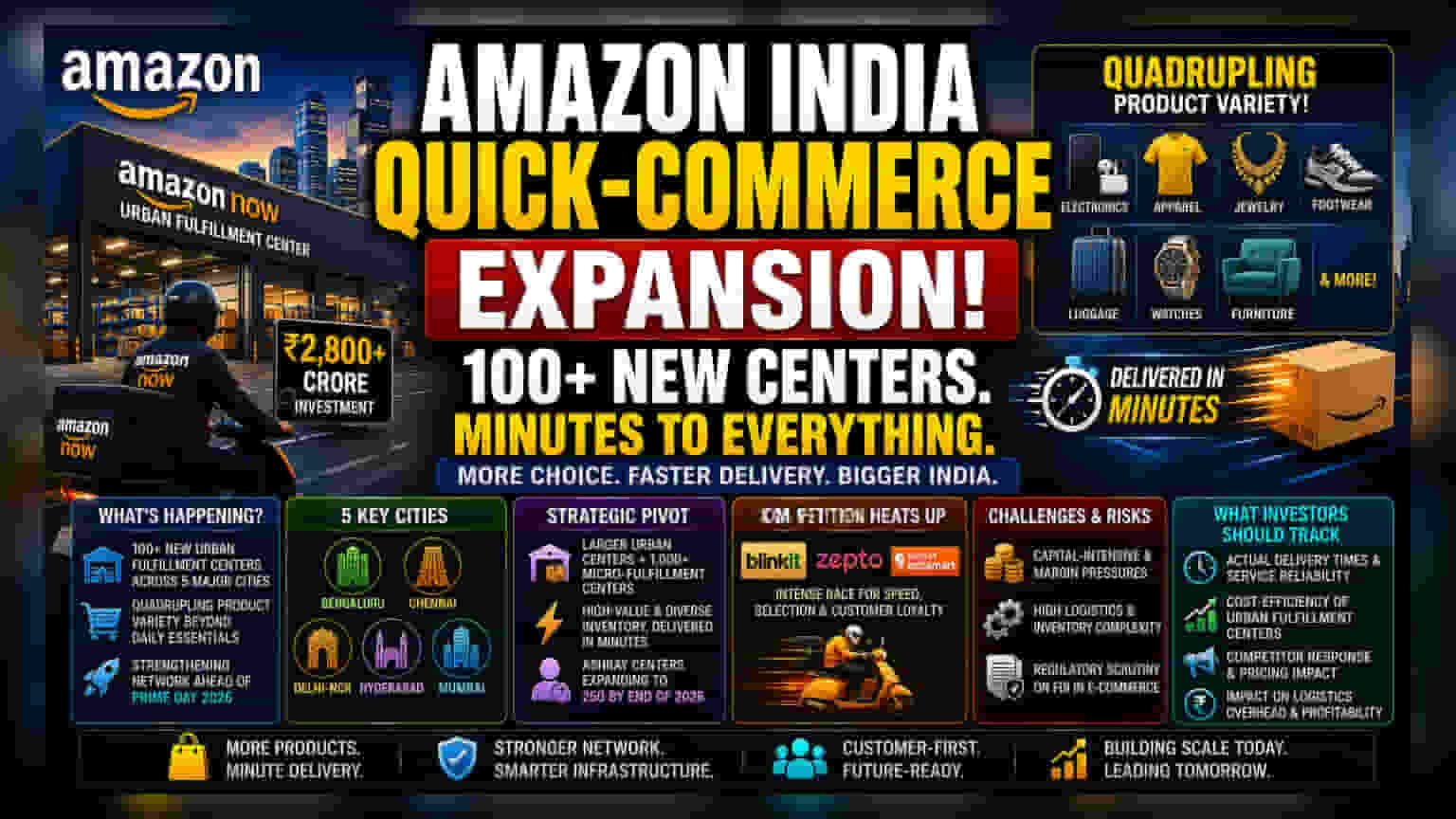


Amazon India is significantly expanding its "Amazon Now" quick-commerce service by adding 100+ Urban Fulfillment Centers. Backed by a ₹2,800 crore investment, the company plans to quadruple its product range to include electronics, apparel, and furniture for rapid delivery. This expansion, launching in five major cities ahead of Prime Day 2026, marks a major push into the competitive rapid-delivery sector currently dominated by players like Blinkit and Zepto.
What Happened
Amazon India has announced a major expansion of its quick-commerce operations, deploying over 100 new Urban Fulfillment Centers across five key cities: Bengaluru, Chennai, Delhi-NCR, Hyderabad, and Mumbai. This strategic rollout is designed to quadruple the variety of products available on the Amazon Now platform. While the service previously focused primarily on daily essentials like groceries and personal care, the expansion introduces non-grocery categories, including electronics, apparel, jewelry, footwear, luggage, watches, and furniture. The move is timed to bolster the company’s logistics network ahead of its upcoming Prime Day 2026 event.
The Strategic Pivot
This development signals Amazon’s intention to defend and expand its position in India’s rapidly evolving quick-commerce market. By utilizing larger Urban Fulfillment Centers—which complement the company’s existing network of over 1,000 Micro-Fulfillment Centers—Amazon aims to store a wider inventory closer to customers. This allows the platform to offer rapid, minute-based delivery times for high-value items that were traditionally reserved for standard, multi-day e-commerce shipping. The company has allocated over ₹2,800 crore to this investment, which also includes expanding its 'Ashray' centers to 250 locations by the end of 2026 to support delivery personnel with rest stops and facilities.
Competitive Landscape
Amazon’s expansion comes at a time when the Indian quick-commerce sector is experiencing intense competition. Specialized players like Blinkit (owned by Zomato), Zepto, and Swiggy Instamart have set a high bar for delivery speeds, often forcing established e-commerce giants to adapt their logistics models. By bridging the gap between standard e-commerce and rapid-delivery services, Amazon is looking to leverage its existing infrastructure and vast product catalog to compete directly with these quick-commerce specialists.
Sector Challenges and Risks
The quick-commerce business model is capital-intensive and faces significant challenges. Delivering high-value, diverse inventory in minutes requires high operational efficiency and sophisticated inventory management. A key risk for any company entering this space is the pressure on profit margins. Maintaining rapid delivery times while managing the costs of warehousing and last-mile logistics in congested urban areas can lead to higher operational expenses. Additionally, the company faces regulatory scrutiny regarding foreign direct investment (FDI) in multi-brand retail, which governs how foreign-funded entities operate in the Indian e-commerce and inventory space.
What Investors Should Track
For market observers and investors looking at the broader e-commerce and quick-commerce space, the focus will be on the execution of this expansion. Key monitorables include the actual delivery times achieved for the new product categories, the cost-efficiency of these Urban Fulfillment Centers, and how this expansion impacts Amazon’s overall logistics overhead. Market participants will also watch for reactions from competing platforms, as the increased supply and faster delivery options from a major player could influence pricing and promotional strategies across the entire sector.