

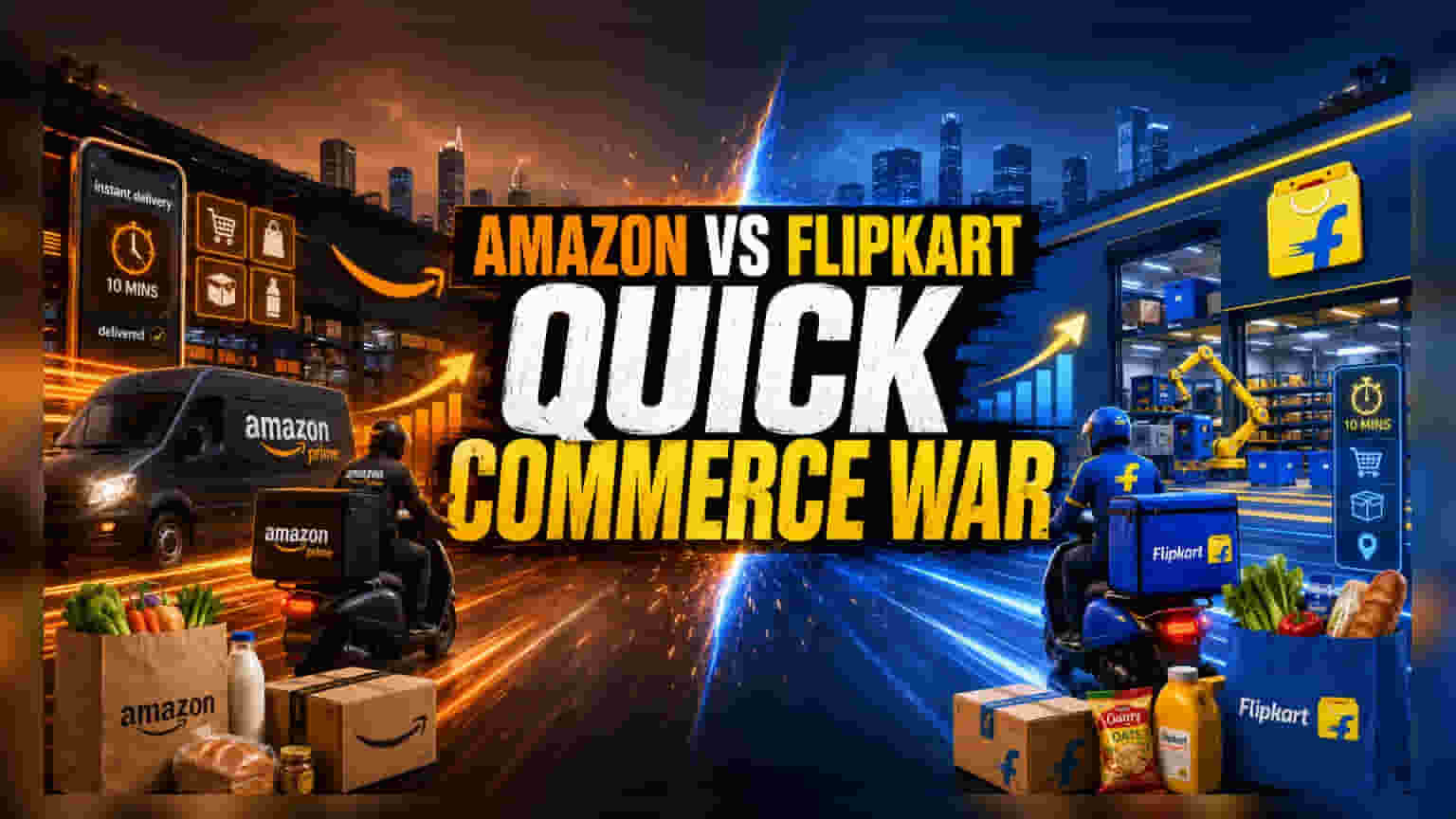
Amazon and Flipkart are aggressively scaling their micro-fulfillment networks to challenge quick commerce leaders like Blinkit and Zepto. This move marks a major shift in the Indian retail landscape, raising questions about sustainability, margin pressure, and long-term profitability in a highly competitive, capital-intensive segment.
What Happened
Amazon and Flipkart are ramping up their presence in the quick commerce market, moving beyond traditional e-commerce to offer instant delivery services. Flipkart has scaled its micro-fulfillment center network to 1,000 locations, aiming to compete directly with specialized quick commerce players like Blinkit and Zepto. Amazon is simultaneously enhancing its urban delivery capabilities through its Prime services. Both companies are shifting their focus to leveraging their massive existing user bases to drive adoption of instant delivery for daily essentials, fresh produce, and bakery items.
Why This Matters For Investors
The entry of these retail giants significantly changes the competitive dynamics of the quick commerce industry. Historically, this space has been dominated by specialized startups. The arrival of Amazon and Flipkart turns the sector into a battle of scale, capital, and logistics efficiency. For investors, the primary concern is the potential impact on profit margins. Quick commerce is notoriously capital-intensive, requiring expensive urban real estate for fulfillment centers and complex delivery logistics. Increased competition often leads to higher marketing spend and aggressive discounting to win customers, which can hurt profitability for all players involved.
The Profitability Challenge
Operating a successful quick commerce model requires a delicate balance between rapid delivery and operational costs. Unlike traditional e-commerce, which can rely on slower, cheaper logistics, quick commerce requires high-frequency restocking and localized inventory. As these giants expand, the sector may face pressure on operating margins. Companies will likely need to spend heavily on setting up more micro-fulfillment centers and maintaining high inventory turnover. Investors should consider whether these businesses can achieve sustainable profitability or if the intense competition will force a prolonged period of high cash burn to protect market share.
Peer And Sector Context
This expansion poses a direct competitive challenge to listed players like Zomato, which operates Blinkit. Zomato has seen rapid growth in its quick commerce segment, which has become a significant part of its business valuation. With Amazon and Flipkart using their massive, established customer bases to enter this space, the pressure on specialized quick commerce firms to maintain their lead will likely increase. This development could lead to a consolidation of market share, where only those with deep pockets or superior logistical efficiency can maintain long-term viability.
What Investors Should Track
Moving forward, the key monitorable for the sector is the sustainability of margins. Investors may watch for management commentary regarding the cost of acquisition for new customers versus their lifetime value in the quick commerce segment. Other critical indicators include the pace of fulfillment center expansion, inventory management efficiency, and whether the entry of Amazon and Flipkart leads to a sector-wide price war that squeezes profitability for everyone in the market.