

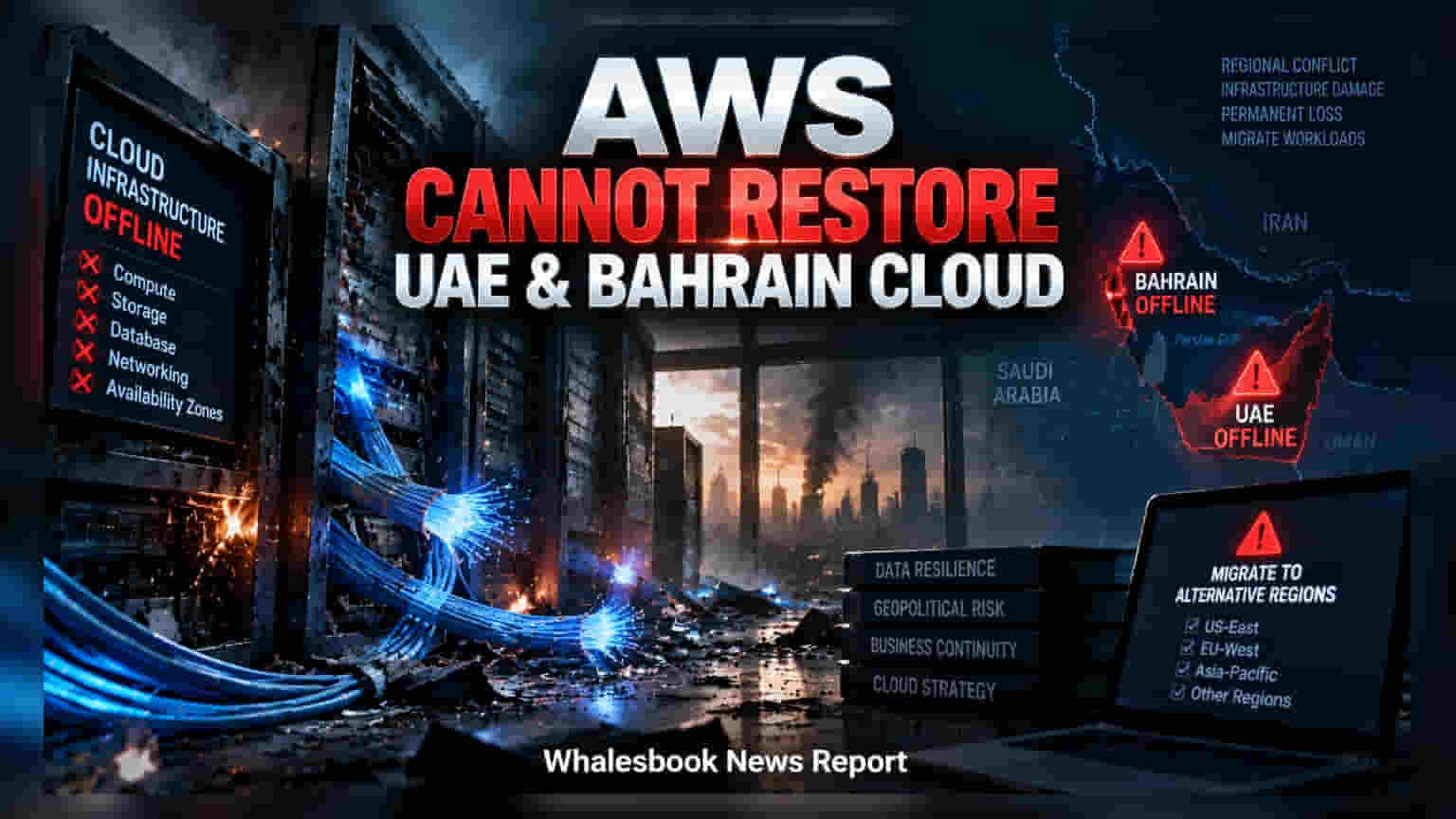
Amazon Web Services (AWS) has announced that critical infrastructure in its Bahrain and UAE regions is irrecoverable following physical damage caused by regional conflict in March 2026. The company is now advising enterprise clients to migrate workloads, highlighting significant operational risks for cloud providers operating in geopolitically volatile regions.
Amazon Web Services (AWS) has confirmed that it cannot restore its cloud computing infrastructure in the Bahrain and United Arab Emirates regions. This update marks a significant shift from a service disruption to a permanent loss of physical assets, resulting from regional conflict damage sustained back in March 2026. The company has officially advised its enterprise clients to migrate their digital workloads to alternative hosting regions to ensure continuity.
For investors and enterprise users, this event challenges the long-standing assumption that cloud architecture provides near-absolute protection against physical disasters. AWS maintains a business model based on redundancy, where data and applications are distributed across multiple independent availability zones to prevent downtime. However, the physical destruction in this instance was extensive enough to bypass these multi-zone safety designs. This indicates that even the most robust cloud safety models can face limitations when physical infrastructure is subjected to direct, large-scale regional instability.
The business and financial implications of this loss are multifaceted. Beyond the immediate operational challenge, Amazon faces the prospect of financial liabilities related to Service Level Agreements (SLAs). Enterprise clients who experience prolonged downtime often have contracts that require the service provider to issue service credits or financial compensation. While Amazon as a parent company has a massive balance sheet, these costs—combined with the capital spending required to rebuild or harden infrastructure in high-risk zones—could influence near-term profitability metrics for the specific cloud business unit.
From a market perspective, this situation highlights a specific operational risk that is often overlooked in cloud infrastructure analysis: geopolitical location risk. While Amazon’s stock (AMZN) has not seen a sharp, singular reaction solely to this infrastructure loss—given the diversified nature of the company’s global operations—the incident forces a re-evaluation of how cloud companies manage capacity in sensitive parts of the world. Investors may track whether AWS modifies its regional investment strategy or increases insurance and security provisions for data centers located in potential conflict zones.
The most critical monitorable for investors now is how Amazon manages client retention. If a large number of enterprise customers in the Middle East decide to shift their cloud provider or move to on-premise solutions due to concerns over infrastructure reliability in the region, it could affect regional revenue growth. The company’s next steps regarding regional infrastructure investment will be a key indicator of its long-term strategy for the Middle East market.