

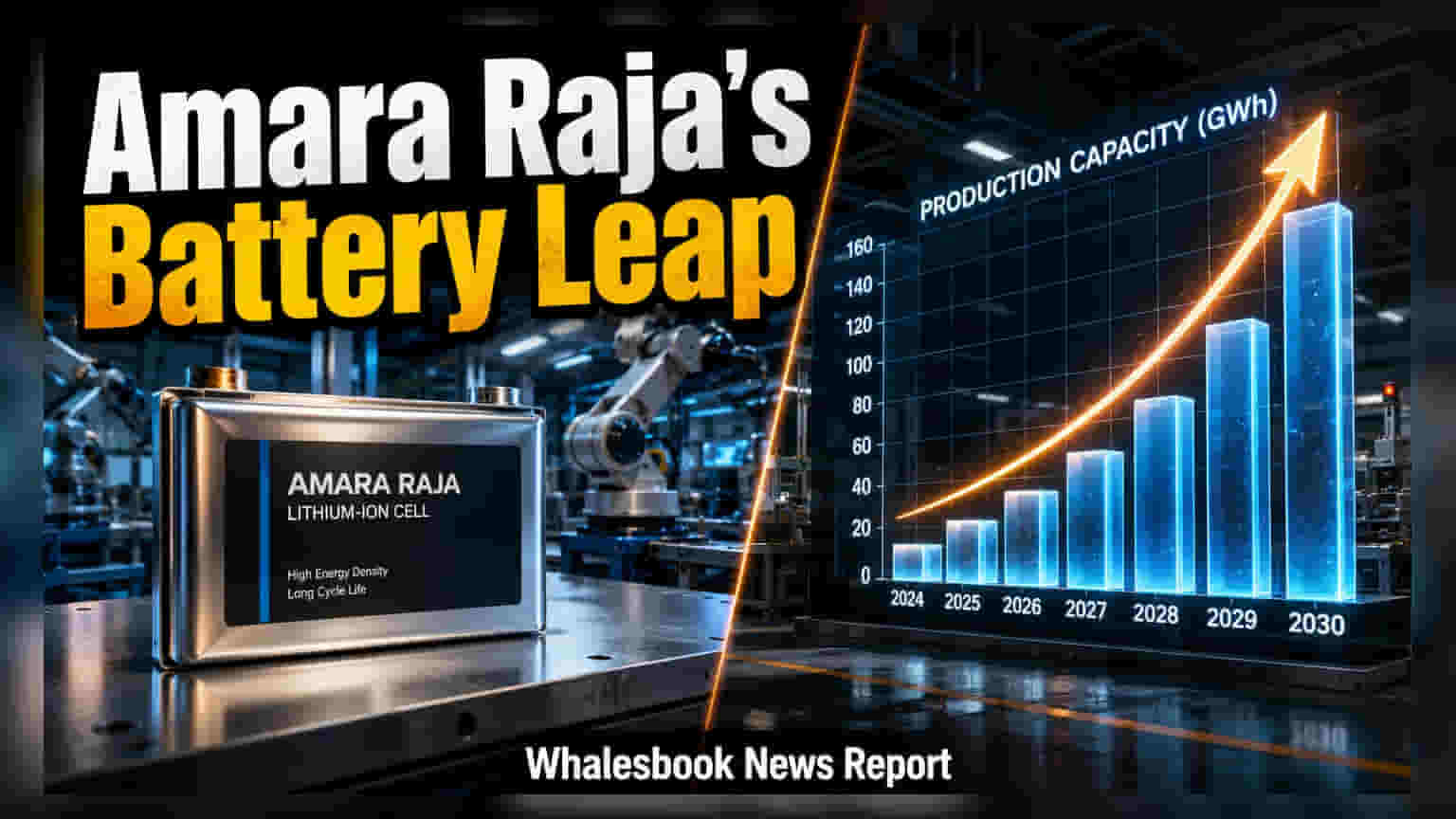
Amara Raja Advanced Cell Technologies has launched a 60 MWh Customer Qualification Plant in Telangana to test lithium-ion cells before mass production. This ₹500 crore facility aims to help clients validate battery technology while reducing risks associated with scaling to full commercial manufacturing.
Amara Raja Advanced Cell Technologies, a subsidiary of Amara Raja Energy & Mobility, has officially commissioned its Customer Qualification Plant (CQP) at its Giga Corridor in Mahbubnagar, Telangana. This facility serves as a critical bridge between laboratory research and commercial-scale production for lithium-ion battery cells. By operating this 60 megawatt-hour plant, the company enables its customers to conduct testing and validation using cells produced on lines that mirror future full-scale manufacturing environments.
Strategic Role of the New Facility
The primary purpose of this plant is to de-risk the manufacturing process. As the company prepares for mass production, the ability to provide clients with validated, test-ready cells is expected to accelerate the adoption of their new battery technologies. The facility is scheduled to begin supplying cells for customer validation starting in August 2026. This intermediate manufacturing step helps the company refine its processes, potentially reducing the risk of technical delays or cost increases when it eventually transitions to high-volume commercial production.
Investment and Expansion Context
Amara Raja has invested ₹500 crore into this specific plant. This expenditure is part of a larger, multi-phase commitment toward its ₹9,500 crore Giga Corridor program in Telangana. The company has already committed over ₹1,500 crore toward the first phase of this program, which includes the ePositive Energy Labs research center and the upcoming Giga 1 manufacturing unit. For investors, the key focus remains on the company’s ability to manage this heavy capital spending while maintaining balance sheet health. High spending on expansion can pressure cash flows, so the successful and timely commissioning of these facilities is essential to generate future returns.
Sector and Competition Landscape
Amara Raja is currently competing with both established battery manufacturers and new entrants in India’s rapidly growing electric vehicle and energy storage ecosystem. While the move into lithium-ion cell manufacturing aligns with India’s push for clean energy independence, the company faces risks common to the sector, such as raw material cost volatility—particularly for lithium and cobalt—and the challenge of achieving profitable margins against aggressive competition. Furthermore, the final commercial success of these investments will depend on the actual market demand for their specific battery chemistries and the speed of EV adoption in India. Investors may continue to monitor progress on the Giga 1 plant, as its successful completion will be the next major milestone in the company's shift from lead-acid batteries toward new-age energy storage solutions.