

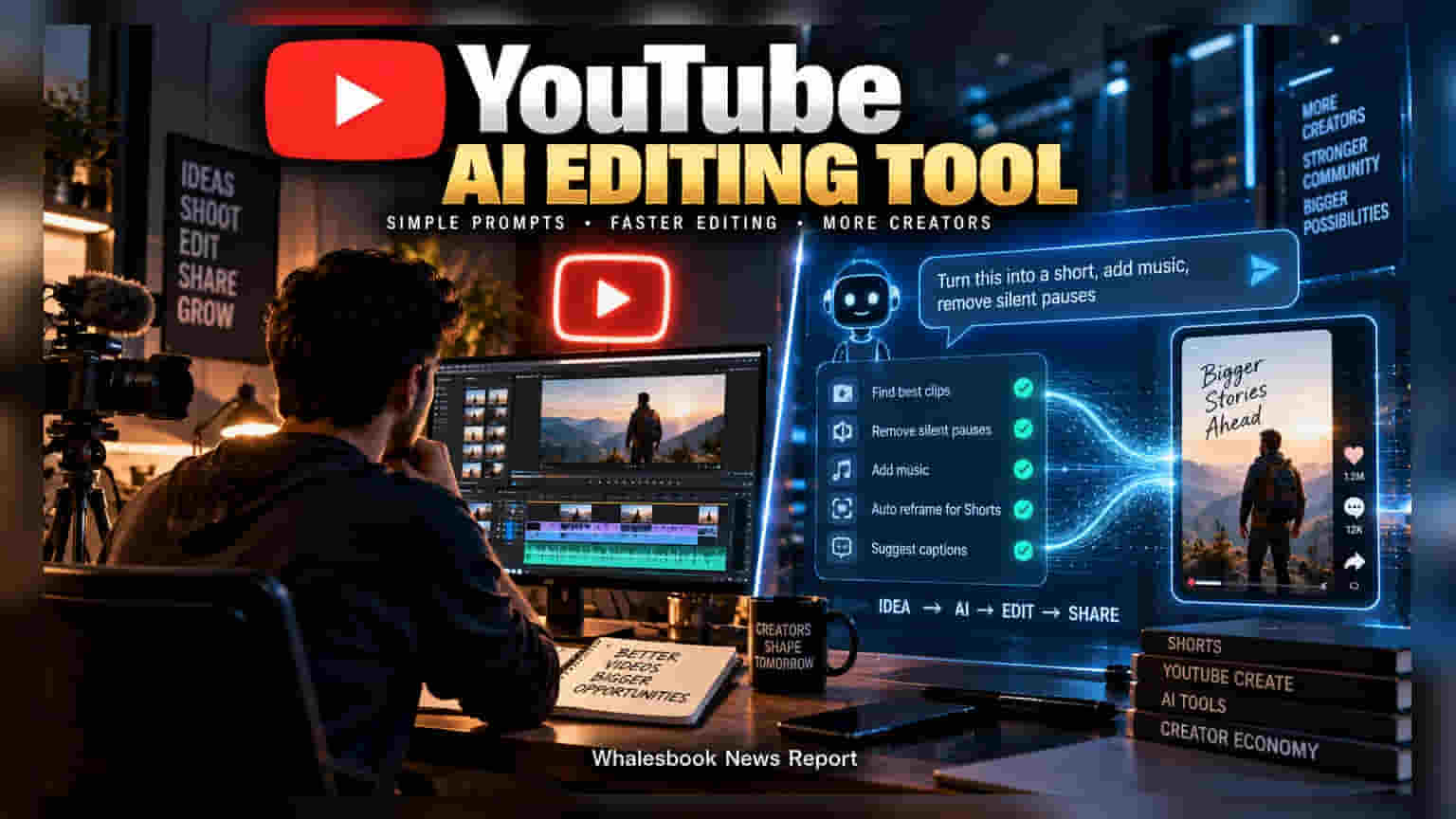
Alphabet-owned YouTube will release a conversational AI video editing tool in early 2027 for Shorts and the YouTube Create app. The feature aims to automate repetitive tasks like clip selection and music synchronization to boost content creation speed. For investors, this move reflects YouTube's push to increase content velocity and ad inventory, keeping it competitive against platforms like TikTok.
Alphabet-owned YouTube has announced plans to roll out a conversational AI-driven editing tool in early 2027. This feature is set to integrate into both YouTube Shorts and the standalone YouTube Create application, allowing creators to refine their videos using simple, natural language prompts. The system will handle time-consuming tasks such as selecting clips, synchronizing music, and removing silent pauses, all while providing manual control for the final output.
For YouTube, this development is a strategic move to address the production barriers that prevent many users from uploading content frequently. By lowering the technical skill required to produce high-quality videos, the company aims to increase the overall volume of content on its platform. In the digital advertising business, higher content velocity directly translates to more ad inventory, which is a key driver for Alphabet’s revenue. If the tool successfully encourages more creators to post daily or weekly, it could help YouTube maintain its dominance in the video-sharing market.
The competitive landscape remains intense, with platforms like TikTok and Meta's Instagram Reels heavily focused on making creation as easy as possible. TikTok’s popularity is partly driven by its intuitive editing capabilities and external tools like CapCut, which have set a high bar for user-friendly production. YouTube’s investment in this AI interface is essentially a defensive and offensive measure to ensure it remains the preferred platform for the creator economy, where engagement time is the primary metric for success.
From a financial perspective, investors may track the cost and efficiency of deploying these AI features. Running advanced AI models at this scale requires significant computing power, which impacts operational expenses. While the company is positioning this as a way to enhance creativity, there is also the risk that automated tools could lead to a wave of generic content. Maintaining the unique, human-led style that has traditionally defined YouTube’s success will be critical to keeping audiences engaged. If the content feels too automated or repetitive, it could impact viewer retention over the long term.
Moving forward, the primary monitorable for investors will be the adoption rate of these tools once they launch in 2027. The company's ability to balance automation with the creative control that long-form creators demand will likely determine the success of this rollout. As YouTube continues to experiment with generative AI, the focus will remain on whether these technical upgrades result in tangible growth in user engagement and advertising revenue for the parent company, Alphabet.