

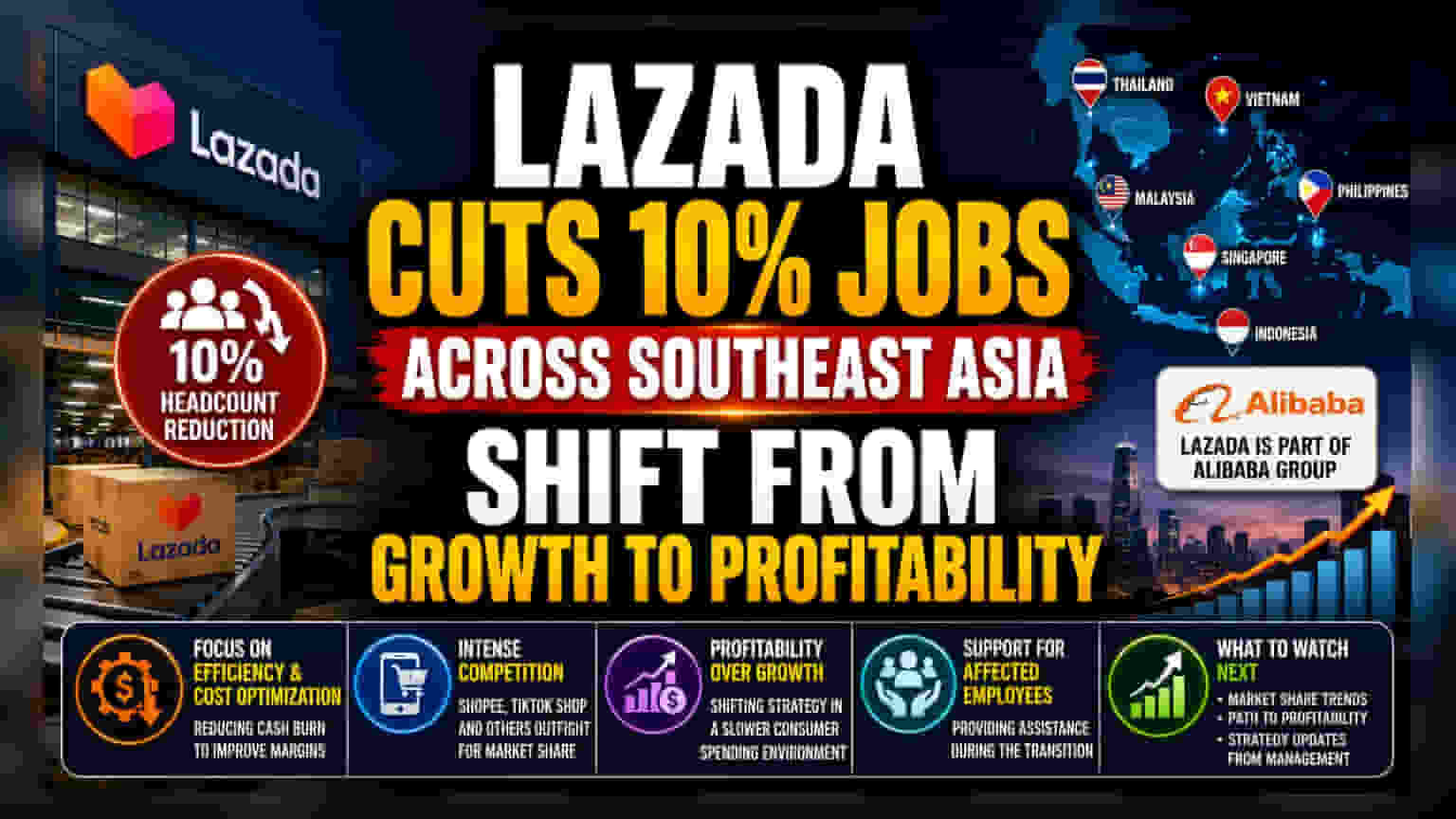
Alibaba's e-commerce arm, Lazada, is laying off 10% of its workforce across Southeast Asia to streamline operations and improve efficiency. This move reflects a broader industry trend where tech companies are prioritizing profitability over aggressive growth to better compete with rivals like Shopee and TikTok Shop.
What Happened
Lazada, the Southeast Asian e-commerce division owned by Chinese technology giant Alibaba Group, is reducing its headcount by 10% across the region. The workforce reduction affects the company’s operations in key markets, including Indonesia, Malaysia, the Philippines, Singapore, Thailand, and Vietnam. The company stated that the adjustment is intended to make the firm more efficient and better aligned with its current business objectives. Lazada has also confirmed that it will provide support to the affected employees during this transition.
The Move Toward Profitability
For investors, this reduction is a clear sign that Lazada is shifting its focus from aggressive expansion to sustainable profitability. In the highly competitive Southeast Asian digital commerce sector, companies have traditionally spent heavily on subsidies and marketing to acquire customers. However, the current environment has forced many technology firms to reduce their "cash burn" and focus on margins. By streamlining its structure, Lazada aims to optimize its operational costs, which is a common strategy among global tech companies currently dealing with slower consumer spending and high competitive pressure.
Competitive Landscape
The Southeast Asian e-commerce market remains intense, with Lazada facing significant competition from players like Shopee (owned by Sea Ltd) and the rapid growth of TikTok Shop (owned by ByteDance). TikTok Shop, in particular, has changed the market dynamics by integrating social media and live streaming into shopping. For Alibaba, Lazada serves as a critical gateway to international markets, and its ability to defend market share while maintaining financial discipline is a key monitorable for the parent group's overseas e-commerce segment.
Investor Context
Alibaba Group itself has undergone significant restructuring in recent years, splitting into several independent business units to unlock value. Investors often view such workforce adjustments as a necessary, albeit difficult, step in ensuring that a business unit remains viable and efficient in a challenging macroeconomic climate. The market generally monitors these changes to see if they result in improved operating margins or if they signal that the company is struggling to maintain its position against newer, more agile competitors.
What To Watch Next
Moving forward, investors and industry analysts will likely look for updates on Lazada’s market share in the region and its path toward consistent profitability. The key indicator will be whether these cost-cutting measures allow the company to operate more effectively without sacrificing its competitive advantage in pricing and logistics. Additionally, any further management commentary regarding the group's strategy for international e-commerce will be important for understanding how Alibaba plans to balance growth and efficiency in Southeast Asia.