

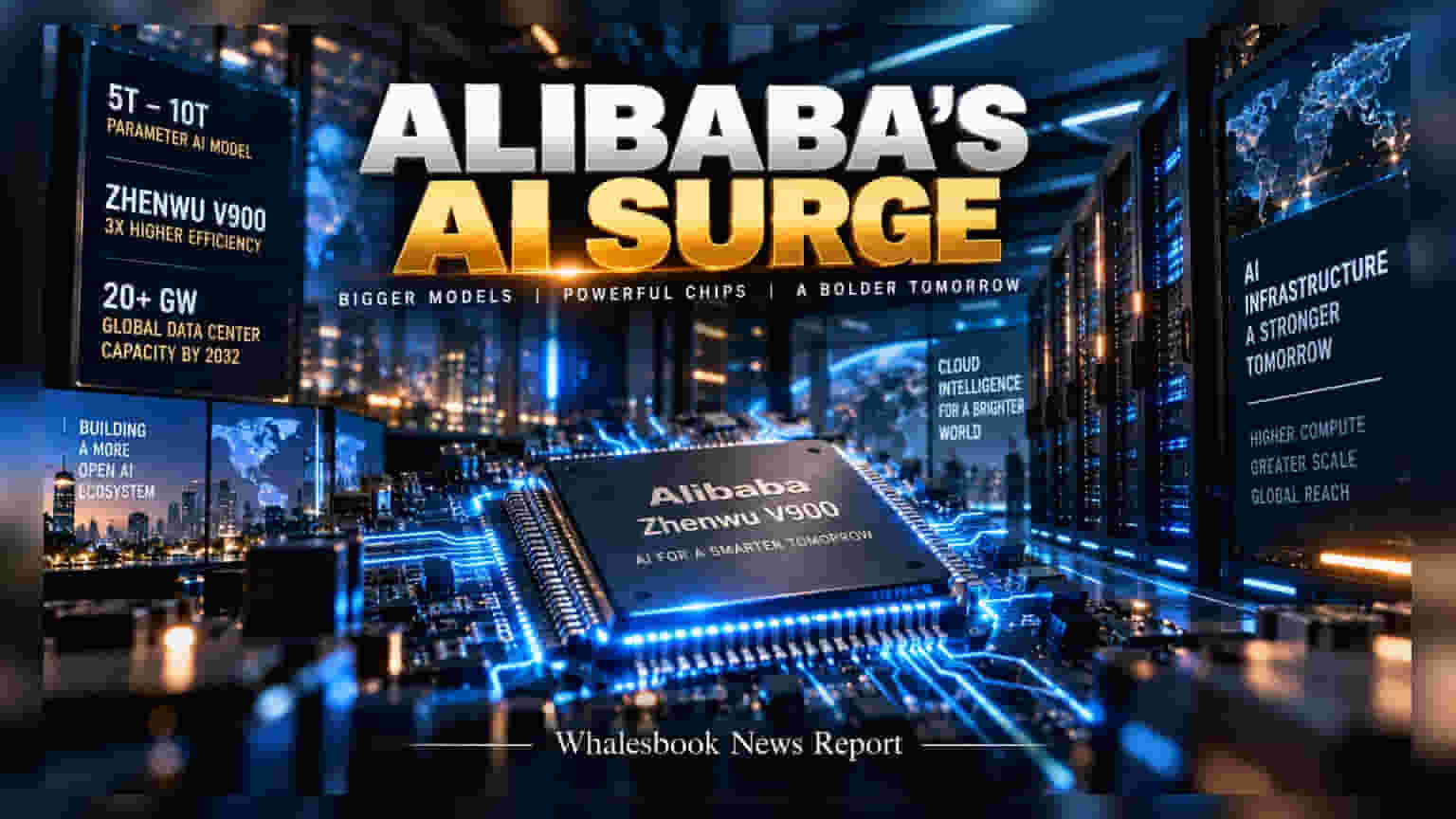
Alibaba Group is developing an AI model with up to 10 trillion parameters and launching the Zhenwu V900 chip to reduce dependency on foreign hardware. The company also announced plans to reach 20 gigawatts of data center capacity by 2032. This massive infrastructure plan highlights Alibaba's strategy to secure its AI future amid tightening international trade restrictions.
Alibaba Group has announced a significant expansion in its artificial intelligence infrastructure, including plans to build an AI model containing between 5 trillion and 10 trillion parameters. During the company update, CEO Eddie Wu also introduced the Zhenwu V900, a new AI chip designed to handle the heavy computational tasks required for such large models. The company claims the V900 provides three times the efficiency of its previous hardware.
Developing internal chip technology is a strategic move for Alibaba to navigate trade restrictions that limit access to advanced foreign semiconductors. By creating high-performance hardware within its own ecosystem, the company intends to maintain operational continuity and avoid supply chain disruptions caused by changing international trade regulations. This focus on domestic hardware is a necessary step for companies in the sector to continue training advanced models without relying on restricted high-end global chips.
Alongside hardware and software development, Alibaba Cloud has set an ambitious target to scale its global data center capacity to over 20 gigawatts by 2032. This project involves substantial capital expenditure, as data centers require massive energy and hardware investment. This move aligns the company with global cloud infrastructure trends, where providers are scaling up capacity to meet the rising demand for generative AI services.
The scale of this infrastructure rollout carries significant financial implications. Sustained heavy spending on data centers and chip development will likely put pressure on the company’s profit margins and cash flow over the coming years. Investors will need to track how the company balances this aggressive expansion with its financial stability. Additionally, the execution of such a long-term roadmap remains subject to operational risks and evolving geopolitical factors that could affect access to necessary global technologies and equipment.
The competitive landscape in AI is intense, with global tech giants investing heavily in infrastructure. Alibaba's success will depend on its ability to manufacture its new chips at scale and efficiently manage its growing data center fleet. Key factors to monitor in future updates include the actual commissioning timeline of the new data center capacity, the performance of the Zhenwu V900 in real-world workloads, and the impact of these capital investments on the company’s quarterly earnings and free cash flow.