

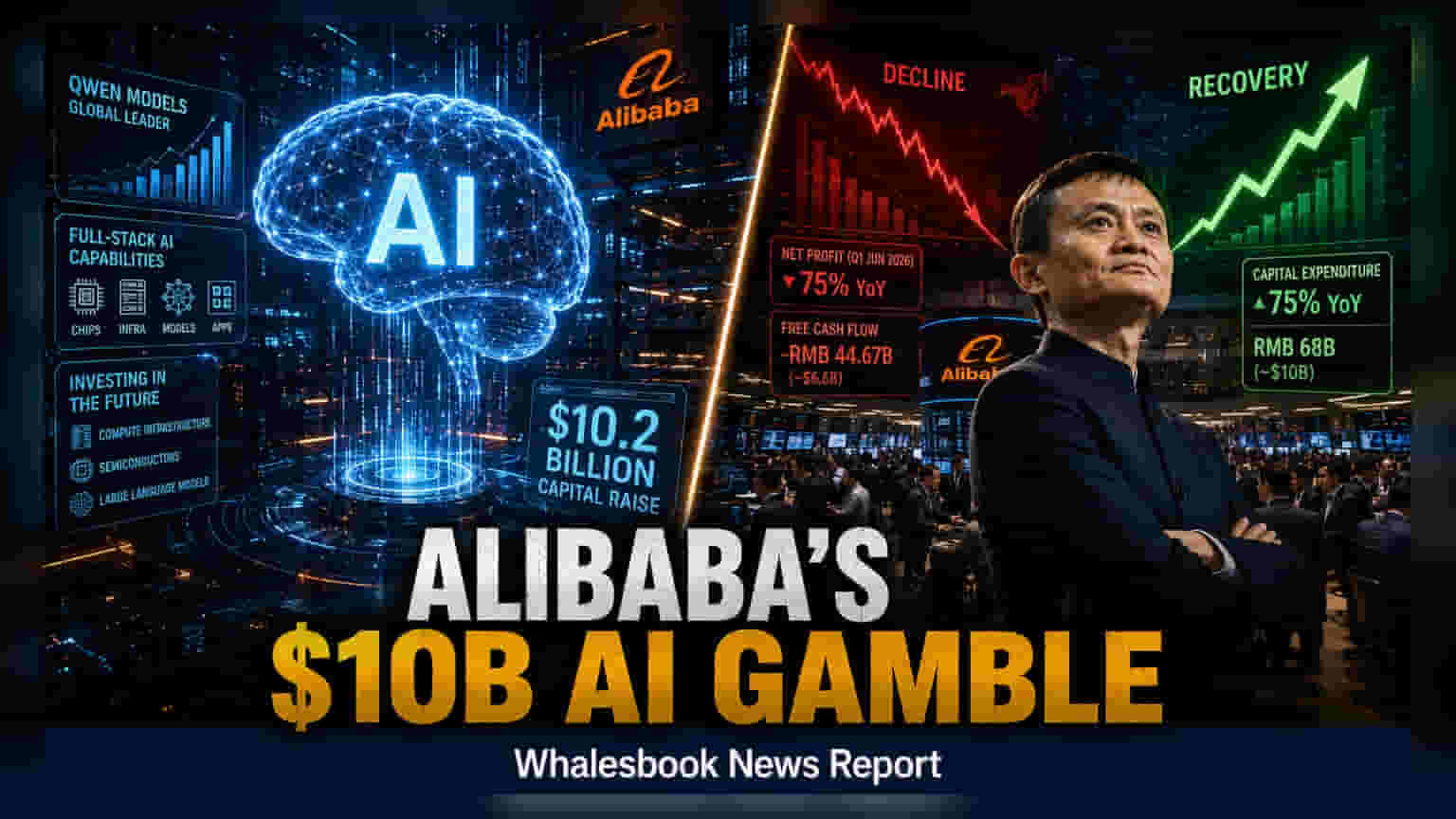
Alibaba Group is initiating a HK$80 billion (approx. $10.2 billion) share offering in Hong Kong to fund its aggressive artificial intelligence infrastructure plans. This move follows a 75% drop in quarterly profit as the company ramps up capital spending to compete in the global AI race.
Alibaba Group has announced a plan to raise approximately HK$80 billion, or about $10.2 billion, through a follow-on share offering in Hong Kong. This capital raise represents the largest primary follow-on offering ever by a Hong Kong-listed company, signaling the tech giant’s intent to secure a dominant position in the artificial intelligence sector. The company is offering 710 million shares priced at HK$112.70 each, which is a 3.6% discount to the previous closing price.
The capital raised is earmarked for strengthening Alibaba’s full-stack AI capabilities. This includes heavy investment in computing infrastructure, semiconductor development, and the training of large-language models like its Qwen series, which has gained significant traction globally this year. The offering is managed by a consortium of major financial institutions, including China International Capital Corp, HSBC, Morgan Stanley, and UBS.
Financial Context and Cash Burn
This fundraising comes at a time when Alibaba is navigating a period of intense financial pressure. In its most recent quarterly results for June 2026, the company reported a 75% year-over-year decline in net profit, which fell to RMB 10.54 billion. This sharp drop is largely attributed to the company's aggressive spending strategy. During the same period, Alibaba’s capital expenditure surged by 75% to nearly RMB 68 billion, or approximately $10 billion, as it prioritizes building the hardware and data centers necessary for its AI ambitions.
The high level of spending has also impacted the company's cash position, with Alibaba reporting a negative free cash flow of RMB 44.67 billion, or roughly $6.6 billion, for the quarter. By seeking external capital through this share sale, Alibaba aims to maintain its financial flexibility while continuing its investment cycle.
Risks and Investor Monitorables
The company’s heavy focus on AI involves significant risks that investors may want to monitor. The primary challenge is the execution risk; the company must successfully monetize its AI infrastructure and model deployments before competitors gain significant market share. Additionally, the current fundraising will lead to some dilution for existing shareholders. Investors will also be tracking the 90-day lockup period that follows this sale, which is a standard restriction to ensure market stability during such a large transaction.
The ultimate success of this initiative depends on Alibaba's ability to balance its high capital spending with future revenue growth from its AI services. As the sector faces rapid technological changes and fierce competition, the return on these massive investments will be a key metric for shareholders to observe in the coming quarters.