

Indian drone startup Airbound has secured $37 million in Series A funding to expand its autonomous cargo network. The company is currently a privately held entity and is not listed on the NSE or BSE. Investors tracking the logistics sector note that while the startup aims to achieve trucking cost parity, it remains in the pre-revenue phase and faces significant regulatory hurdles regarding autonomous flight certifications.
Airbound, an Indian deep-tech startup, has successfully raised $37 million in a Series A funding round. The investment was led by Greenoaks, with participation from DoorDash, Lachy Groom, Lightspeed, and Humba Ventures. This latest capital injection is intended to support the company’s efforts to scale its autonomous drone delivery infrastructure, which currently aims to make aerial logistics competitive with traditional road-based trucking.
It is important for market participants to understand that Airbound is a privately held company. It is not listed on the National Stock Exchange (NSE) or the Bombay Stock Exchange (BSE), and its shares are not available for trading by the general public. Investors looking at the logistics space should monitor this as a private equity and venture capital development, rather than a public market event.
Technology and Operational Context
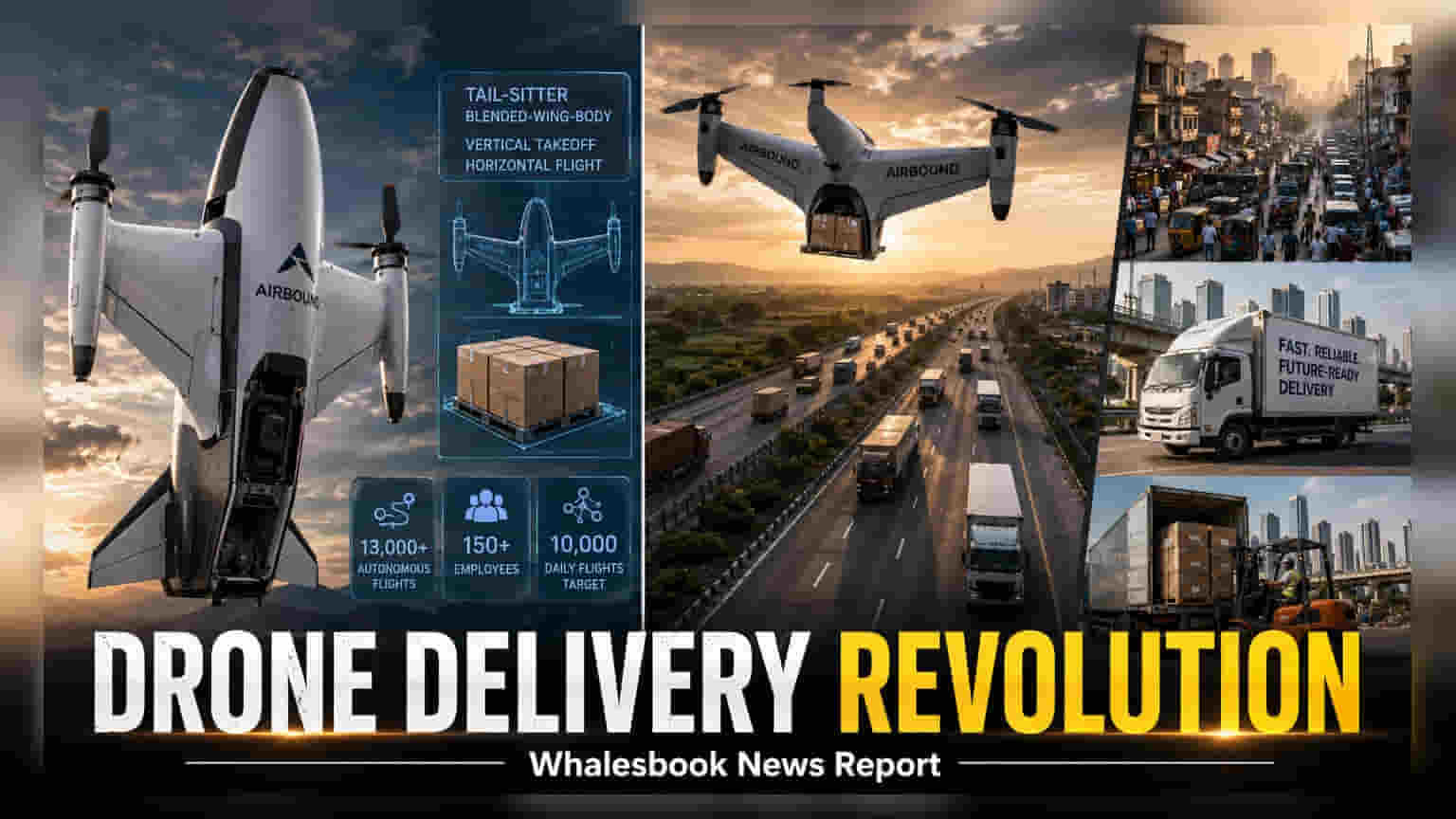
Airbound designs proprietary autonomous drones using a unique tail-sitter, blended-wing-body architecture. This design allows the aircraft to take off vertically and transition into efficient horizontal flight, eliminating the need for traditional runways. According to company statements, the objective is to build aircraft that are lighter than the cargo they carry, a strategy designed to reduce energy costs and bridge the efficiency gap between small-scale drone deliveries and large-scale road freight.
Since its inception, the startup has built a workforce of over 150 employees and has conducted more than 13,000 autonomous flights. A key operational milestone includes its ongoing partnership with the Narayana Health hospital network, where the drones are utilized for the time-sensitive transport of diagnostic samples. The company has also outlined ambitions to establish a large-scale network in Andhra Pradesh, with a stated target of 10,000 daily flights for the retail and healthcare sectors.
Execution and Regulatory Risks
Despite the significant capital raised, the company faces substantial business challenges common in the nascent drone logistics sector. Airbound remains largely pre-revenue, meaning its path to profitability is tied directly to its ability to scale operations significantly. The primary barrier to this scale is regulatory, specifically the requirement for Beyond Visual Line of Sight (BVLOS) certifications. In India, obtaining these permits is a complex process required to operate drone networks over long distances and across urban areas.
The company faces competition from other emerging drone logistics players like Skye Air Mobility and TSAW Drones, which are also developing networks within the country. For investors monitoring the sector, the key developments to track next will include the status of these crucial regulatory clearances, the successful transition from pilot projects to commercial-scale networks, and the company’s ability to manage its high capital-expenditure requirements without immediate revenue streams.