

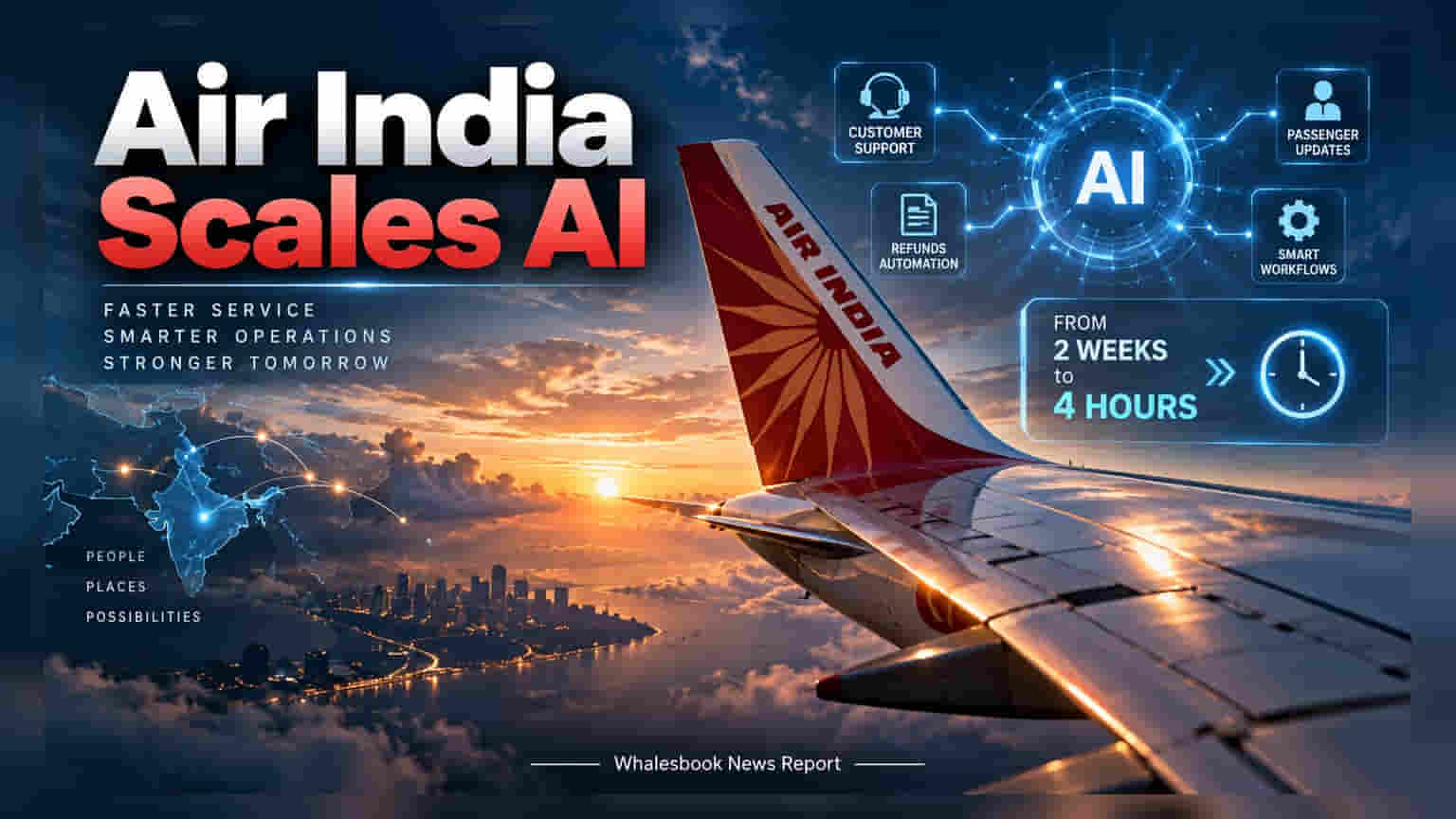
Air India is scaling its use of Salesforce’s Agentforce AI to automate customer service tasks like refunds and name changes. While the airline focuses on improving operational speed, the company remains in a long-term turnaround phase following significant financial losses in the last fiscal year.
Air India is expanding its use of the Salesforce Agentforce artificial intelligence platform to automate complex customer service workflows. The airline has launched over 30 AI-driven initiatives designed to handle routine tasks, such as processing refunds and updating passenger names, without the need for constant human intervention. By deploying these tools, the airline aims to significantly reduce the time required to resolve customer requests, with early implementations reportedly cutting refund turnaround times from two weeks to four hours.
Operational Context and Financial Reality
It is important for business observers to note that Air India is not a publicly traded company. It is currently owned by the Tata Group (74.9%) and Singapore Airlines (25.1%). Because it does not trade on the National Stock Exchange (NSE) or the Bombay Stock Exchange (BSE), there is no stock price movement or public shareholder data for the airline. However, the company’s business performance is a central monitorable for the Indian aviation sector.
The airline is in the midst of a difficult financial restructuring. In the fiscal year ending March 2026, Air India reported a net loss of approximately ₹22,238 crore. This financial strain highlights the challenges the company faces as it attempts to modernize its legacy systems and fleet. Management has previously indicated that the turnaround of the airline is a long-term process, potentially spanning five to 10 years, as it seeks to stabilize operations and return to profitability.
Challenges Facing the Airline
The digital transformation efforts, such as the adoption of AI, are part of a broader attempt to improve efficiency and reduce operational costs. However, the airline continues to face significant hurdles. Geopolitical tensions, particularly in West Asia, have led to airspace restrictions that disrupt flight paths and increase fuel consumption, adding to the cost of operations.
Furthermore, the airline has been working to navigate the operational and reputational consequences following the fatal accident involving flight AI171 in June 2025. These events have created a demanding environment for leadership as they attempt to balance rapid technological upgrades with the need for safety and financial stability. The success of these digital initiatives will likely depend on the company's ability to maintain high service standards while simultaneously controlling debt and managing the external risks inherent in global aviation. The key monitorable for the business remains its quarterly performance trends and progress toward narrowing these significant financial losses.