 Whalesbook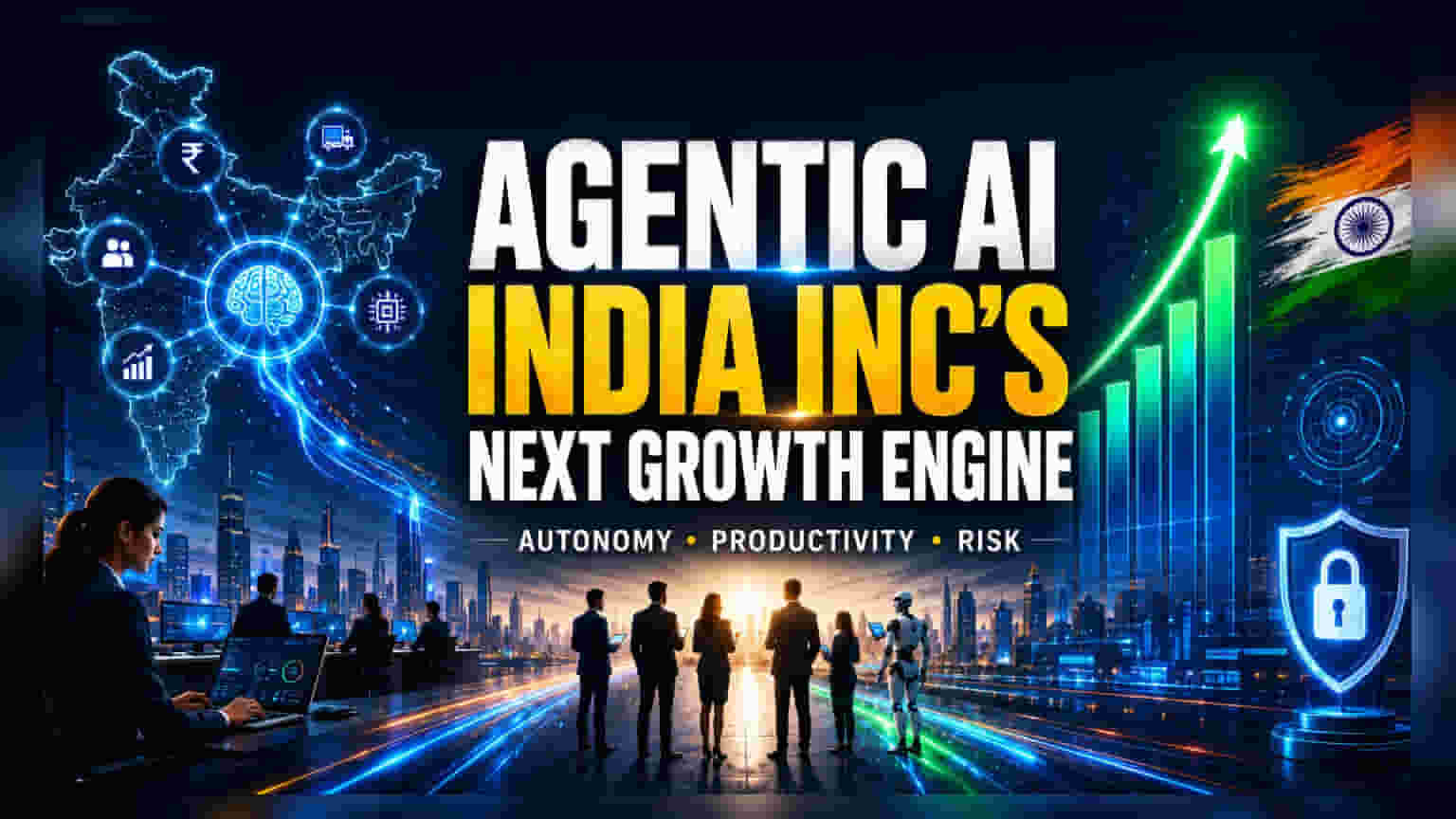


India’s shift toward autonomous AI agents is accelerating, with widespread deployment in banking and retail. While these 'digital employees' promise massive productivity gains to fuel the nation’s $10 trillion GDP objective, they also introduce unprecedented security and operational risks that legacy governance frameworks cannot handle.
The Shift to Autonomous Enterprise
Beyond the familiar terrain of generative AI, the Indian corporate environment is witnessing a move toward agentic AI—systems capable of autonomous planning, tool execution, and multi-step decision-making. Unlike traditional chatbots that require constant human prompting, these agents function as digital counterparts that navigate complex workflows. For Indian enterprises, this transition is no longer speculative; it is a tactical response to the orchestration gap, where fragmented legacy systems often prevent seamless data flow and real-time decision-making.
The $10 Trillion Growth Engine
India’s ambition to reach a $10 trillion economy requires a fundamental uplift in national productivity. With recent GDP growth hitting 7.7% in FY26, the focus has shifted from simple digitization to the integration of intelligent, autonomous layers that can amplify value chains. Research indicates that while routine back-office tasks in retail and finance are seeing 35% cost-reduction targets, the real strategic objective is 'capability arbitrage.' By deploying agents to manage complex, data-heavy operations, organizations are aiming to move faster than global peers, turning AI from a supportive utility into a core driver of revenue growth.
The Operational and Security Frontier
The move toward autonomous systems brings significant technical vulnerabilities. Current risk management models, designed for static software environments, are struggling to keep pace. Specifically, agentic AI introduces risks related to 'prompt injection' and unsanctioned tool usage, where agents may inadvertently access sensitive data or execute unauthorized financial transactions. Furthermore, the absence of clear legal accountability for autonomous actions complicates governance. As AI agents begin interacting with other systems, the scale of potential impact—both positive and negative—increases exponentially, necessitating a shift toward deep observability and runtime defense rather than perimeter-based security.
The Structural Talent Paradox
While concerns regarding job displacement persist—particularly in repetitive administrative roles—the Indian labor market is simultaneously facing a severe talent shortage. Industry data suggests a 53% gap between the demand for applied AI expertise and the available supply. The workforce is undergoing a transformation where 'AI-plus' roles—requiring a synthesis of domain expertise and agent orchestration—are becoming the new benchmark. Organizations that succeed will be those that treat AI adoption as a comprehensive business transformation, balancing the implementation of responsible AI frameworks with aggressive upskilling initiatives to ensure that human teams remain in the loop for high-stakes decision-making.