

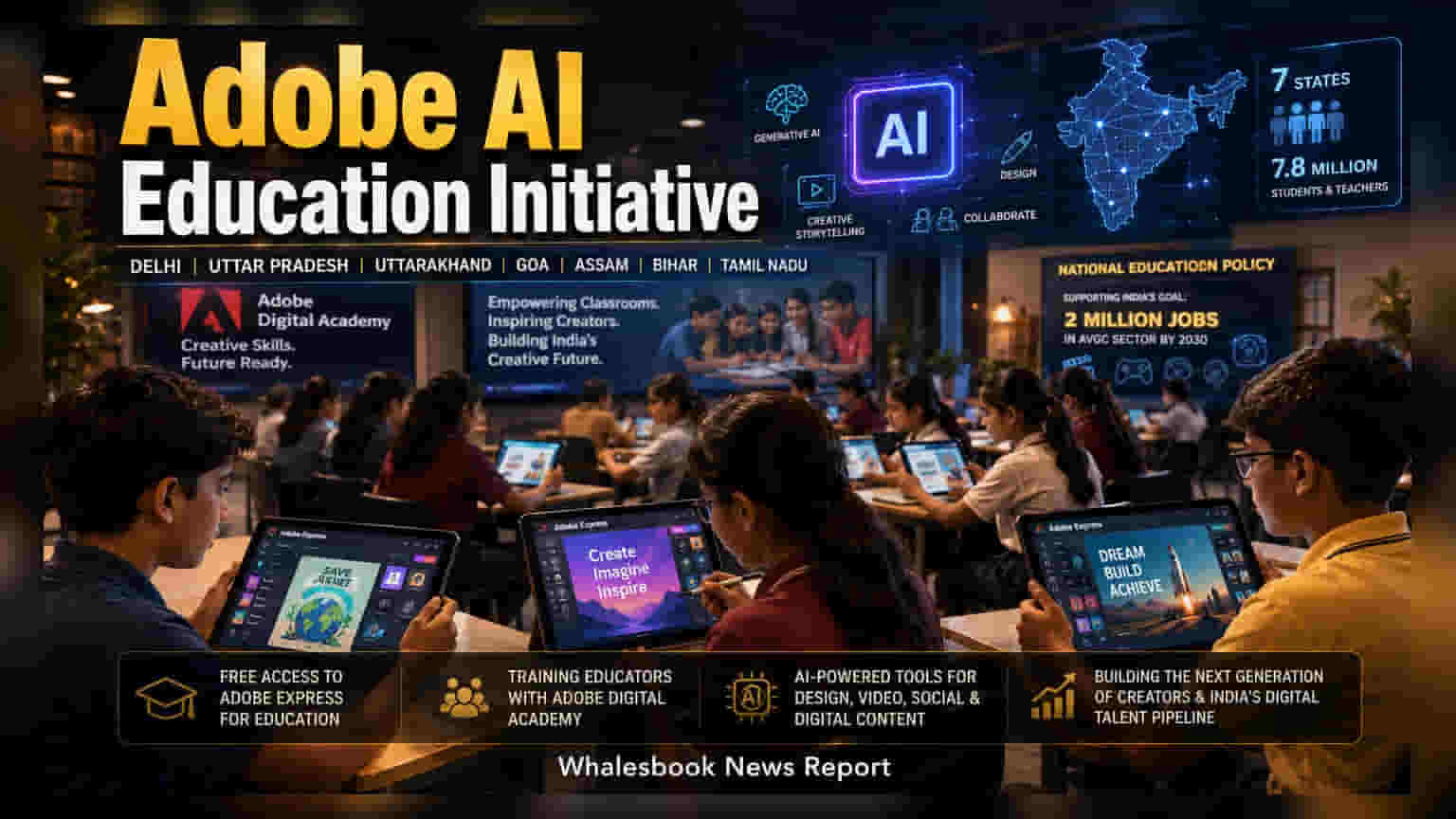
Adobe has partnered with seven Indian states to provide AI-powered creative tools to 7.8 million students and teachers. This initiative aims to align with national job creation goals in the creative sector. For investors, the move is a strategic long-term effort to build market share in India, though the company faces challenges regarding competition and converting free users into long-term subscribers.
Adobe has formed a strategic partnership with seven Indian states—Delhi, Uttar Pradesh, Uttarakhand, Goa, Assam, Bihar, and Tamil Nadu—to introduce its AI-powered creative tools into government schools. The initiative, announced today, provides free access to Adobe Express for Education for approximately 7.8 million students and teachers. By deploying the Adobe Digital Academy, the company plans to train educators to incorporate digital storytelling and AI-assisted content creation into their daily classroom routines.
Strategic Alignment with AVGC Growth
This move is directly aligned with India’s National Education Policy and the government's target to generate two million jobs in the Animation, Visual Effects, Gaming, and Comics (AVGC) sector by 2030. For Adobe, this is a calculated effort to establish an early talent pipeline. By making its ecosystem the standard in government institutions, the company aims to ensure that the next generation of creative professionals enters the workforce already familiar with Adobe’s software, potentially creating a long-term competitive advantage.
Financial Context and Market Risks
The announcement comes at a time when Adobe is focusing heavily on AI-driven product adoption. Following the strong performance of its generative AI tool, Firefly, the company recently raised its fiscal 2026 revenue and earnings guidance. However, while the initiative helps build brand presence, it also highlights the company's reliance on a 'freemium' strategy. Providing tools for free to capture market share is common, but it does not guarantee that these users will convert into long-term paying subscribers.
Investors should also consider the broader competitive landscape. The creative software sector is crowded, and Adobe faces pressure from various cloud-based competitors. Furthermore, there are significant execution risks involved in deploying high-end digital tools across diverse government institutions, which may vary in terms of internet infrastructure and teacher readiness. The ultimate success of this initiative will depend on Adobe’s ability to transition these students into its professional ecosystem. Moving forward, shareholders may watch for updates on user adoption rates and management commentary on how these partnerships translate into tangible market penetration in the region.