 Whalesbook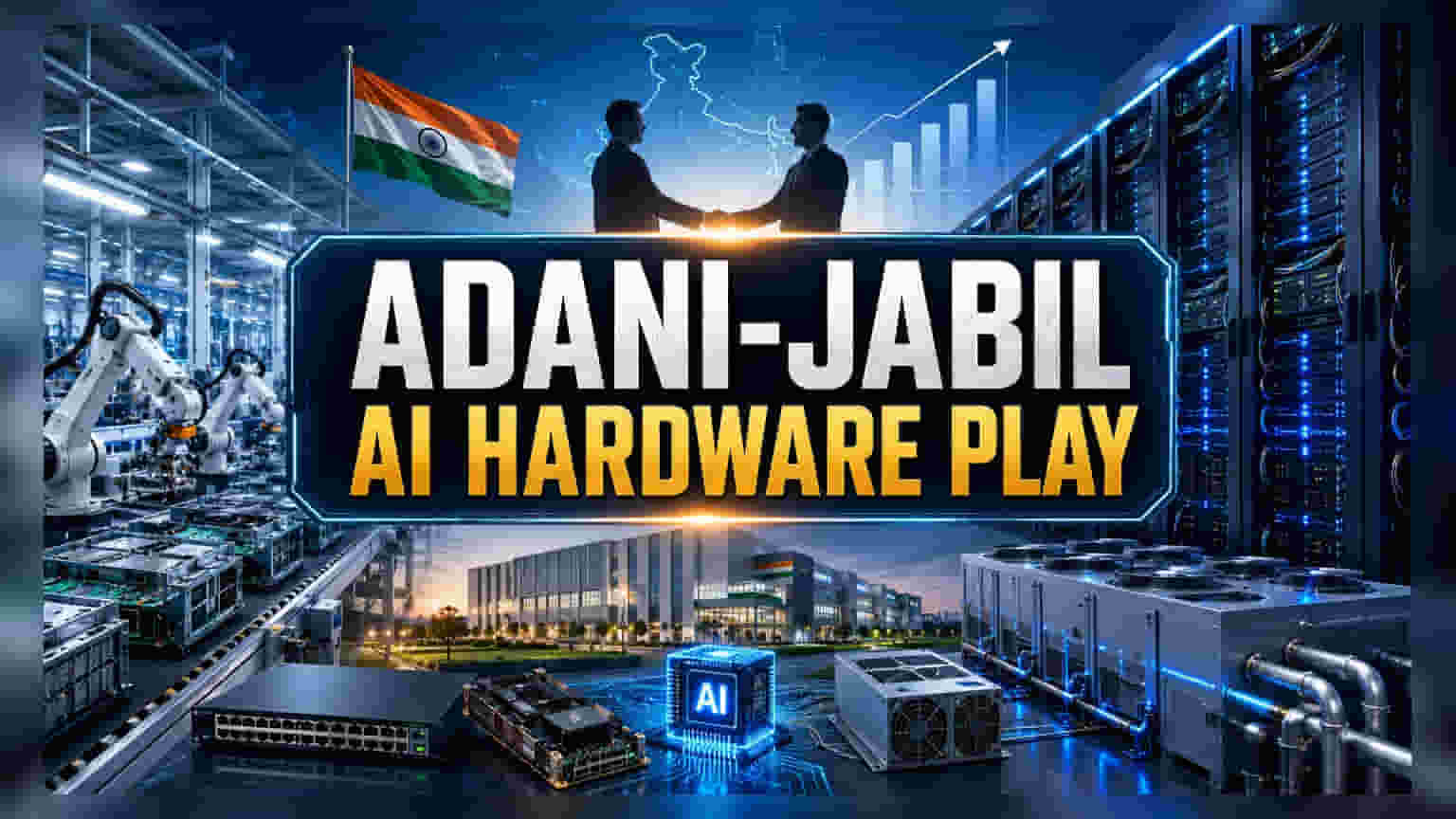


Adani Enterprises has partnered with US-based manufacturing giant Jabil to build AI and data centre hardware in India. The alliance aims to produce high-density servers, cooling systems, and networking gear to meet rising global AI infrastructure demand. For investors, this move highlights Adani’s focus on vertical integration within the data centre space. The critical monitorables will be the scale of capital expenditure, the timeline for operational readiness, and the company’s ability to compete in the high-tech manufacturing export market.
What Happened
Adani Enterprises has formed a strategic alliance with Jabil Inc., a US-based global manufacturing solutions provider. The partnership aims to establish a manufacturing platform in India to produce critical hardware for artificial intelligence (AI) and data centres. The venture plans to manufacture high-density AI server racks, networking equipment, power distribution systems, and thermal management infrastructure. By combining Jabil’s technical manufacturing expertise with Adani’s infrastructure and renewable energy resources, the companies aim to serve both the growing Indian digital market and global customers.
Why This Matters For Investors
For shareholders, this partnership marks a shift in Adani Enterprises' data centre strategy. Previously, the company focused on building and operating data centres through its partnership with EdgeConneX (AdaniConneX). This new venture suggests a move into manufacturing the physical hardware that goes inside those facilities.
Vertical integration—controlling more parts of the supply chain—can potentially improve cost structures and reliability for the group's own data centre projects. However, manufacturing high-end AI hardware is capital-intensive and requires significant investment in machinery, talent, and technology. Investors should evaluate how this new project fits into the company’s broader capital spending plans and whether it will strain cash flow in the near term.
The Bigger Business Context
India has been actively promoting the 'Make in India' initiative, and electronics manufacturing has been a key area of focus. With global companies looking to diversify their manufacturing hubs away from a single country, India is positioning itself as a potential alternative. Adani Enterprises has historically used an incubation model, where it builds new businesses and scales them rapidly. This manufacturing platform appears to follow that same philosophy, aiming to capture a share of the rapidly growing AI infrastructure market, which is projected to see significant global investment over the next few years.
Understanding The Execution Risk
While the market opportunity is large, entering the advanced electronics manufacturing space involves risks. Unlike basic manufacturing, producing AI-ready hardware requires specialized engineering capabilities, strict quality controls, and a steady supply of global tech components. There is an execution risk regarding the time it takes to build a facility, reach full capacity, and achieve the expected profit margins. Additionally, the company will face competition from global contract manufacturers and other large Indian conglomerates that are also scaling up their electronics and hardware manufacturing capabilities.
How Investors May Read This
The stock market often reacts to such news based on the expected impact on the balance sheet. Investors will likely look for clarity on three key factors. First, the size of the initial investment and how it will be funded. Second, the timeline for the plant to become fully operational and start generating revenue. Third, whether this venture will lead to export-led growth or primarily support the group’s internal data centre expansion. As with any large-scale infrastructure project, the success will depend on demand stability for AI hardware and the company's ability to maintain competitive pricing against global peers.
What Investors Should Track
Moving forward, shareholders may want to monitor company filings for details on the joint venture structure, including ownership stakes and funding commitments. Updates on project milestones, such as land acquisition, construction progress, and the timeline for commissioning the manufacturing facility, will be important. Furthermore, management commentary on the expected order book and potential customers for this hardware will help in gauging the future revenue impact.