

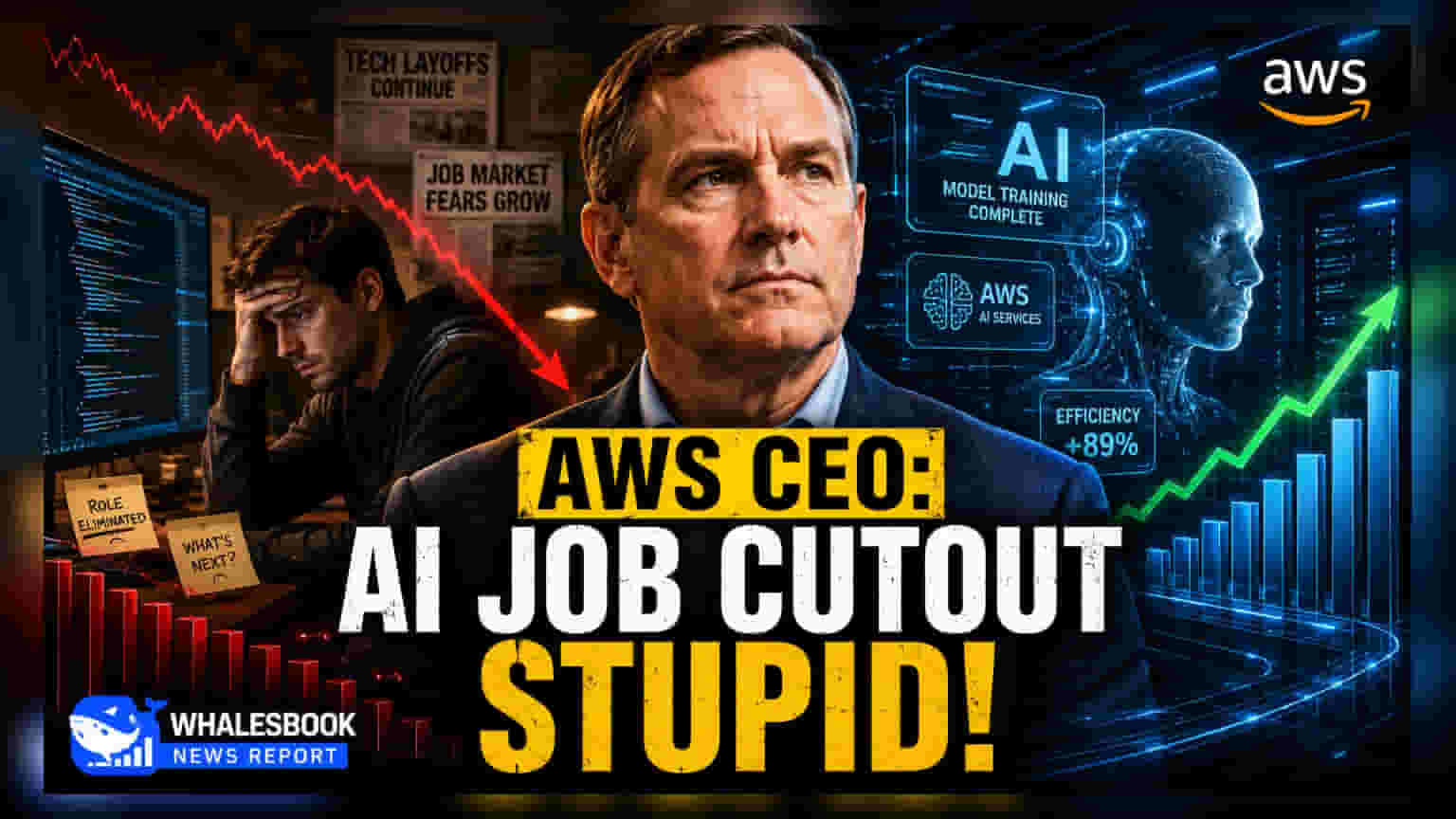
AWS CEO Matt Garman has rejected the idea of replacing junior staff with AI, calling it a long-term strategic risk. For Indian investors, this highlights a growing divide between traditional hiring methods and the industry's shift toward AI-led efficiency, which has already led to a notable slowdown in campus recruitment across major tech firms.
What Happened
Amazon Web Services (AWS) CEO Matt Garman has publicly dismissed the notion of using artificial intelligence to replace entry-level technology employees. Speaking in a recent interview, Garman labeled the strategy as "one of the dumbest things" he has heard, warning that companies focusing solely on short-term AI-driven efficiency gains risk damaging their future leadership pipelines. He argued that entry-level staff are not just cheaper resources but are vital for bringing new energy, learning new tools, and eventually becoming the senior leaders of tomorrow. Amazon is backing this stance by hiring over 11,000 interns and new graduates in 2026, positioning junior talent as essential for long-term innovation.
The Indian IT Pyramid Dilemma
Garman’s comments put a spotlight on a major structural shift occurring in the Indian IT services sector. For decades, Indian tech giants like TCS, Infosys, and Wipro relied on the "pyramid model," where a large base of fresh engineering graduates was hired to handle routine, volume-based work, supporting a smaller number of experienced seniors. This model drove revenue growth and provided a steady supply of trained talent.
However, the rise of generative AI is disrupting this foundation. Many Indian IT companies are now moving away from this junior-heavy structure, favoring leaner, "diamond-shaped" teams that consist of experienced professionals capable of using AI tools to handle tasks that previously required a large team of freshers. This has led to a noticeable decline in mass campus hiring across the industry as firms prioritize profitability and operational efficiency over headcount expansion.
Why Investors Are Watching the Shift
For investors, the debate between "hiring for long-term health" and "cutting for short-term efficiency" is critical. While AI can undoubtedly boost productivity and margins, the AWS CEO’s warning suggests that companies which completely dismantle their junior hiring pipeline may face a talent shortage in the future. Senior leaders are often harder and more expensive to train internally if there is no foundational layer of junior staff to promote from within.
Investors are currently monitoring how Indian IT firms balance these two pressures. If a company stops hiring freshers entirely to protect margins, it might signal an inability to adapt its training programs to the AI era. Conversely, if firms continue to hire freshers but focus heavily on reskilling them for AI-linked roles, it could signal a more sustainable long-term strategy.
The Reality of Today's Market
Data from recent quarters shows a trend toward caution. Hiring demand in India’s tech sector has faced pressure as companies grapple with weak discretionary spending by global clients and the need to integrate AI. With many firms now emphasizing outcome-based or fixed-price contracts, the traditional reliance on the number of bodies billed is diminishing. The sector is moving toward hiring talent that is "AI-ready" on day one, meaning the entry barrier for freshers has risen significantly.
What Investors Should Track Next
Moving forward, investors may want to monitor a few specific triggers in quarterly updates and management commentary:
- Campus Hiring Numbers: Look for whether companies are maintaining any level of fresh graduate intake or if they have completely pivoted to hiring only experienced professionals.
- Training and Upskilling Costs: Track how much companies are investing in AI training for existing staff versus the cost of hiring new talent.
- Margin Guidance vs. Growth: Observe if companies are managing to improve profit margins while still investing in talent development, or if margin expansion is coming primarily from cutting headcount.
- Management Commentary on Talent Pipelines: Listen for leadership views on their ability to build future managers and architects, especially if mass hiring remains frozen.