

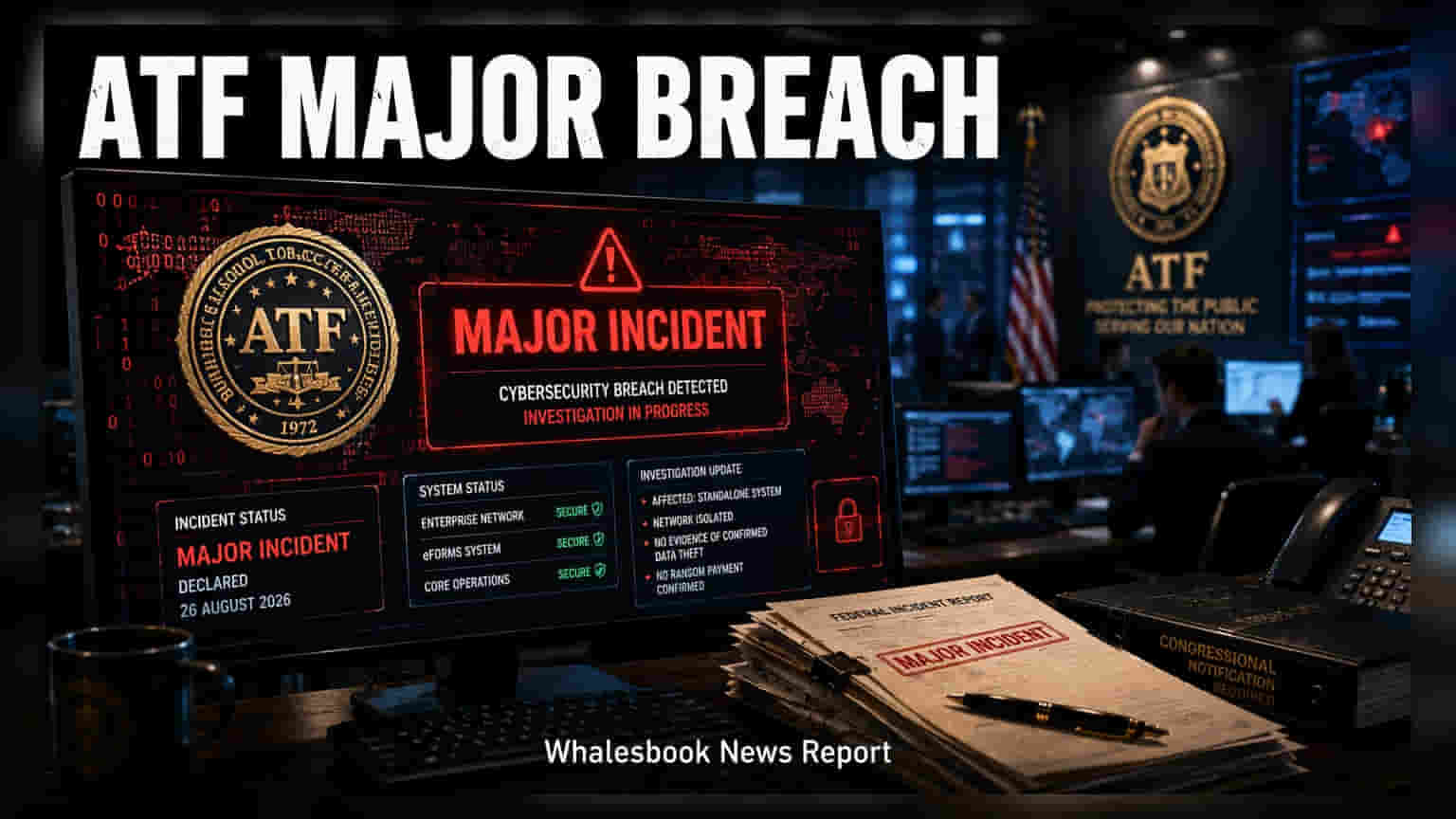
The U.S. Bureau of Alcohol, Tobacco, Firearms and Explosives (ATF) has declared a major cybersecurity incident following a breach of a standalone system by the Qilin ransomware group. While the agency confirmed its primary network remains secure, the event highlights ongoing security vulnerabilities in federal digital infrastructure. This development brings renewed attention to the demand for advanced cybersecurity solutions across government and defense sectors.
The U.S. Bureau of Alcohol, Tobacco, Firearms and Explosives (ATF) confirmed on August 26, 2026, that it is managing a major cybersecurity incident involving a standalone computer system. The breach, which has been claimed by the Qilin ransomware group, prompted the agency to officially classify the event as a major incident under federal regulatory guidelines. This classification mandates strict reporting protocols, including a required notification to Congress.
Crucially, the agency has stated that its primary enterprise network, including critical platforms like eForms and its core operational missions, remains unaffected by the intrusion. Because the compromised system operated outside the bureau’s main network, the agency was able to isolate the damage. As of August 27, 2026, investigations are ongoing in collaboration with the Department of Justice to determine the extent of the data exposure, though no evidence of confirmed data theft or ransom payment has been independently verified.
The involvement of the Qilin ransomware gang, a group known for utilizing the 'ransomware-as-a-service' model to facilitate attacks, has drawn significant attention to the security posture of federal law enforcement agencies. By listing the ATF on its dark web leak site, the group has underscored the persistent risks that even government-managed systems face from sophisticated criminal entities.
For market observers and investors, these recurring incidents involving high-profile government agencies often act as a barometer for cybersecurity sector trends. Federal spending on digital infrastructure and security compliance is frequently re-evaluated following such breaches. As government bodies face increasing pressure to modernize their security frameworks against ransomware attacks, the demand for robust threat detection, data protection, and forensic services typically increases. Companies specializing in government-grade cybersecurity and defense IT infrastructure are likely to face increased scrutiny and potentially shift their focus toward helping federal agencies close these specific security gaps.
The regulatory oversight process will now shift to a formal review, as the ATF must explain the breach's impact on national security and operational interests to Congress. Investors and sector analysts will likely track the outcomes of these briefings, as they often influence future government IT security budgets and the procurement of advanced defense technologies.