

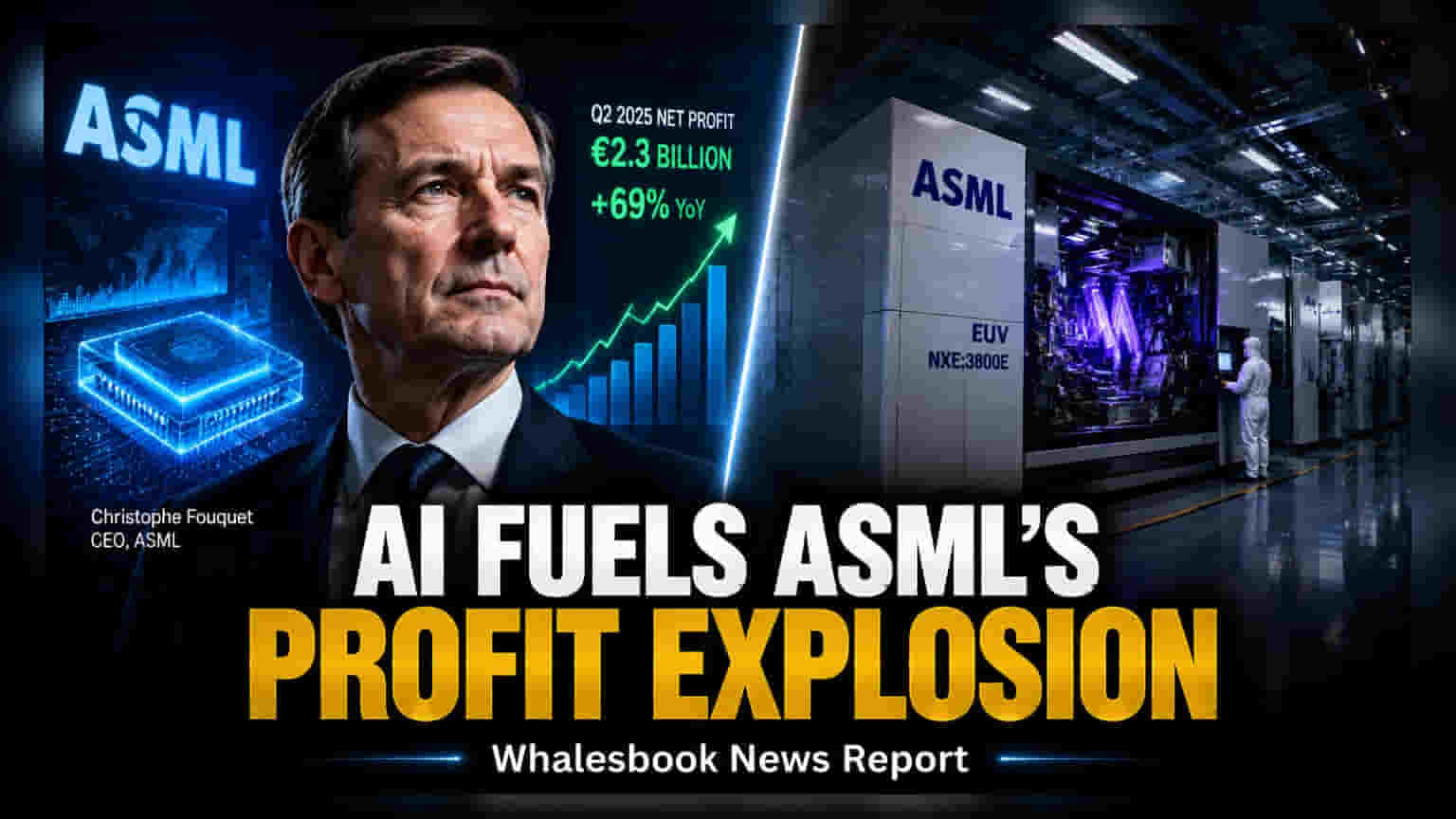
ASML reported a second-quarter net profit of €2.9 billion, up from €2.3 billion last year, as AI-driven investments fueled sales. The company raised its 2026 full-year revenue outlook to between €43 billion and €45 billion. Investors are monitoring how the firm balances strong global demand with ongoing trade restrictions affecting exports to China.
ASML Holding N.V., the Dutch semiconductor equipment manufacturer, has reported strong financial results for the second quarter of 2026. The company’s net profit rose to 2.9 billion euros, a clear increase from the 2.3 billion euros it earned during the same period last year. This performance exceeded market expectations, driven largely by the global push for artificial intelligence and high-performance computing hardware.
Revenue Outlook and AI Demand
The company’s net sales reached 9.3 billion euros for the second quarter, topping its own earlier guidance of 8.4 to 9.0 billion euros. Management has expressed confidence in the short term, projecting net sales between 11 and 12 billion euros for the third quarter. Reflecting this momentum, ASML increased its full-year 2026 sales forecast to a range of 43 to 45 billion euros, significantly higher than its previous estimate of 36 to 40 billion euros.
Chief Executive Officer Christophe Fouquet stated that ongoing investments in AI technologies are fueling persistent demand for advanced logic and memory chips. Because ASML is the primary global manufacturer of extreme ultraviolet lithography machines—the essential equipment needed to print the most advanced microchips—it remains a core beneficiary of the current AI infrastructure spending cycle.
Navigating Geopolitical Trade Restrictions
While the financial results appear strong, the company continues to manage complex trade friction between the United States and China. The US-led export restrictions have impacted the high-tech semiconductor supply chain, limiting the types of machinery ASML can sell to Chinese customers. Despite these hurdles, the company currently expects the Chinese market to contribute roughly 20 percent of its total sales throughout 2026.
ASML has had to navigate strict compliance requirements regarding these exports. The company has publicly denied reports alleging that its advanced equipment entered the Chinese market in violation of international trade rules. These ongoing regulatory pressures remain a significant factor for shareholders, as the company must constantly adapt its operations to changing export laws in multiple jurisdictions.
Organizational Adjustments
To manage costs and align its resources with its long-term strategy, ASML initiated a restructuring program earlier this year. This plan involves reducing its global workforce by approximately 1,700 positions, with a focus on streamlining leadership roles in the Netherlands and the United States. With a total global headcount of about 44,000 employees, the company is attempting to maintain operational efficiency while navigating a shifting global landscape.
For investors, the primary monitorables moving forward will be the actual execution of these quarterly sales targets and the company’s ability to sustain profit margins in an environment of high research spending. Additionally, any updates regarding trade policies from Washington or Beijing could directly impact the company's ability to maintain its projected revenue contribution from China.