

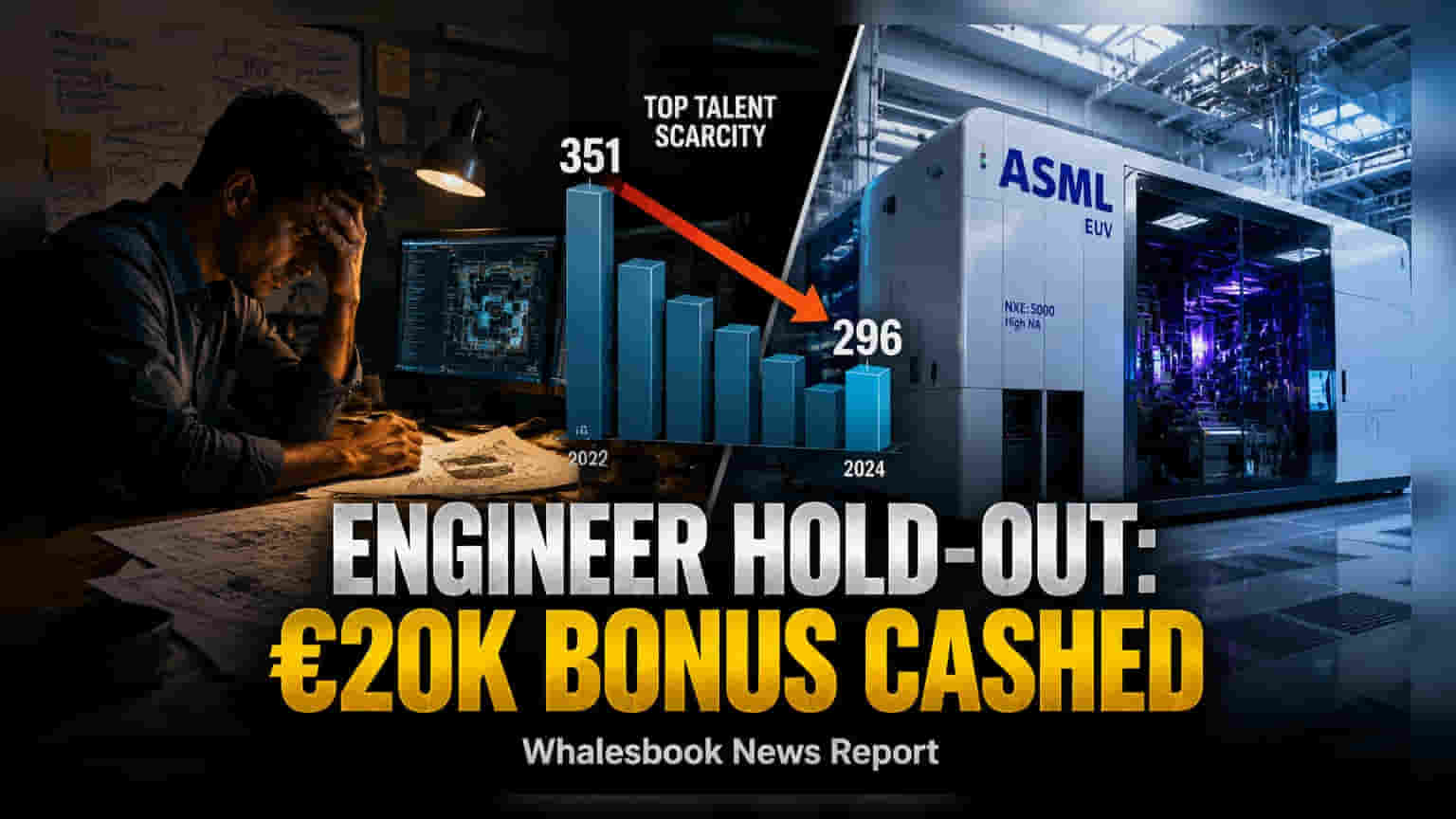
ASML is granting €20,000 in stock to key employees who stay with the company through 2030. This move addresses the intense global competition for specialized semiconductor engineers, which is now a critical bottleneck for chip equipment production. Investors should note that maintaining this expert workforce is vital for the company to meet its delivery targets for complex lithography machines.
Detailed Coverage
ASML, the Netherlands-based manufacturer of advanced lithography systems, is implementing a new retention strategy to protect its workforce from industry-wide poaching. The company confirmed it will offer eligible employees a conditional stock grant worth approximately €20,000, provided they remain with the firm until 2030. This decision underscores the increasing difficulty semiconductor companies face in keeping staff with specialized knowledge in a market where skilled talent has become as precious as raw materials.
The Strategic Importance of ASML's Workforce
ASML occupies a unique position in the global supply chain as the sole provider of extreme ultraviolet (EUV) lithography machines. These machines are essential for producing the world’s most advanced chips used in smartphones and AI hardware. Because the assembly and maintenance of these systems require highly specific technical expertise, the loss of experienced engineers could lead to significant operational disruptions. For shareholders, this retention program is a defensive measure aimed at ensuring the company meets its delivery commitments, which are reportedly backed by a strong order book extending through 2027.
Competition for Technical Talent
ASML is not alone in using financial incentives to secure its human capital. Major chip manufacturers including TSMC, Samsung Electronics, and SK Hynix have also turned to stock-based compensation and performance bonuses to prevent talent attrition. This competitive environment for engineers is driven by the massive expansion of semiconductor fabrication capacity globally. As countries provide subsidies to build new plants, the physical infrastructure is being created faster than the workforce can be trained, leading to wage inflation and increased turnover across the sector.
Investor Monitorables
The long-term success of this initiative will be reflected in ASML’s future operating costs and its ability to maintain profit margins. While stock grants effectively align employee interests with shareholder value, they also represent a cost that can affect earnings per share over time. Investors should track how these retention costs impact the company’s operating margins in upcoming quarterly reports. Additionally, the broader supply chain dynamics—such as whether the industry can successfully scale its workforce to meet the surging demand from AI and data center growth—remains a critical factor for the semiconductor sector. Any failure to retain technical experts could lead to project delays, which would directly challenge the company’s ability to fulfill its current order backlog.