

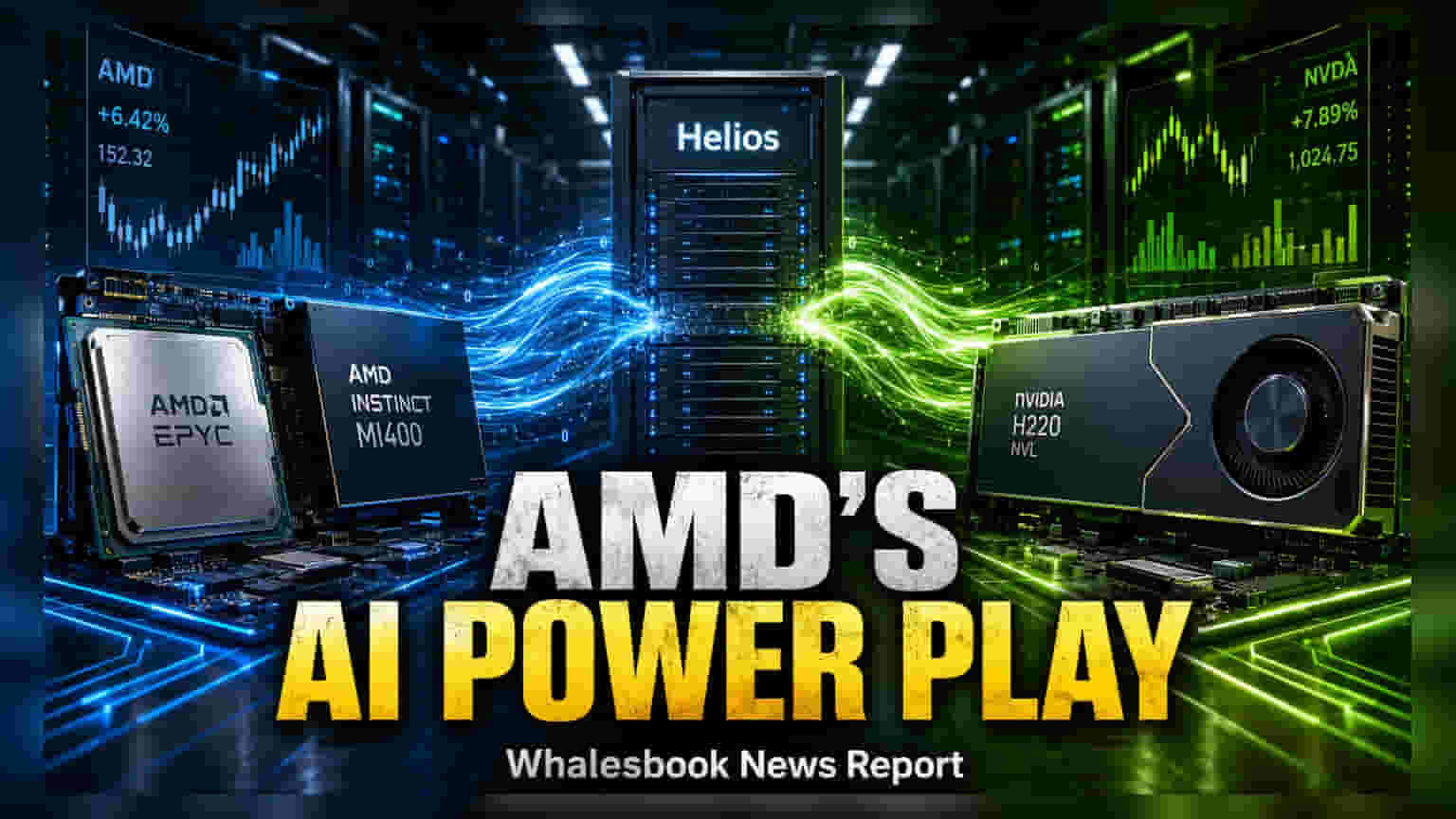
Advanced Micro Devices has introduced Helios, an integrated AI infrastructure system combining CPUs, GPUs, and networking, to compete directly with Nvidia. This strategy includes major partnerships with OpenAI, Anthropic, and Meta to gain market share in the rapidly growing AI server segment. Investors are watching whether this shift toward full-stack solutions can successfully challenge Nvidia’s long-standing leadership.
Detailed Coverage
Advanced Micro Devices (AMD) has entered a new phase of its competition with Nvidia by launching Helios, an integrated rack-scale AI infrastructure platform. During its Advancing AI 2026 event, the company debuted its sixth-generation EPYC server processors, the Instinct MI400 series GPUs, and an updated ROCm.ai software suite. By bundling these components into a single system, AMD is shifting its business model from selling individual chips to providing complete, data-center-ready AI solutions.
Scaling Through Strategic Partnerships
AMD has secured significant commitments from major technology firms to validate this new platform. OpenAI is scheduled to begin deploying Helios systems later this year, with plans extending through 2027. Anthropic has entered a partnership to deploy up to 2 gigawatts of AMD’s Instinct MI450 GPUs, alongside a $5 billion investment agreement linked to specific deployment targets. Additionally, Meta has committed to utilizing up to 6 gigawatts of AMD Instinct GPUs across various system generations. These deals are designed to provide AMD with the scale needed to refine its software ecosystem and prove its hardware reliability in high-intensity AI environments.
Closing the Software and Networking Gap
Historically, Nvidia has held a strong business advantage due to its integrated software ecosystem, such as CUDA, and specialized networking capabilities that optimize performance across thousands of connected chips. AMD has faced pressure to improve its software compatibility to ensure developers can easily transition from competitor platforms. The expansion of the ROCm.ai software suite and the inclusion of networking hardware in the Helios platform are direct efforts to lower these adoption barriers. By offering a unified stack, AMD aims to reduce the integration work for cloud providers, potentially increasing its appeal to data centers looking for alternatives to Nvidia's hardware.
Market Context and Future Monitorables
As global spending on AI infrastructure continues to rise, AMD is targeting a larger slice of the multi-trillion-dollar market. While the hardware performance of the Instinct MI400 series remains a focus for analysts, the company's ability to execute on these large-scale deployments will be the key test. Investors may monitor the progress of these specific partnerships, as successful integration at Meta and OpenAI could be a strong signal of broader market acceptance. Additionally, the impact of these capital-intensive deals on AMD’s profit margins and cash flow will be important to track in upcoming quarterly results, as the cost of software development and large-scale hardware rollout can influence profitability.