

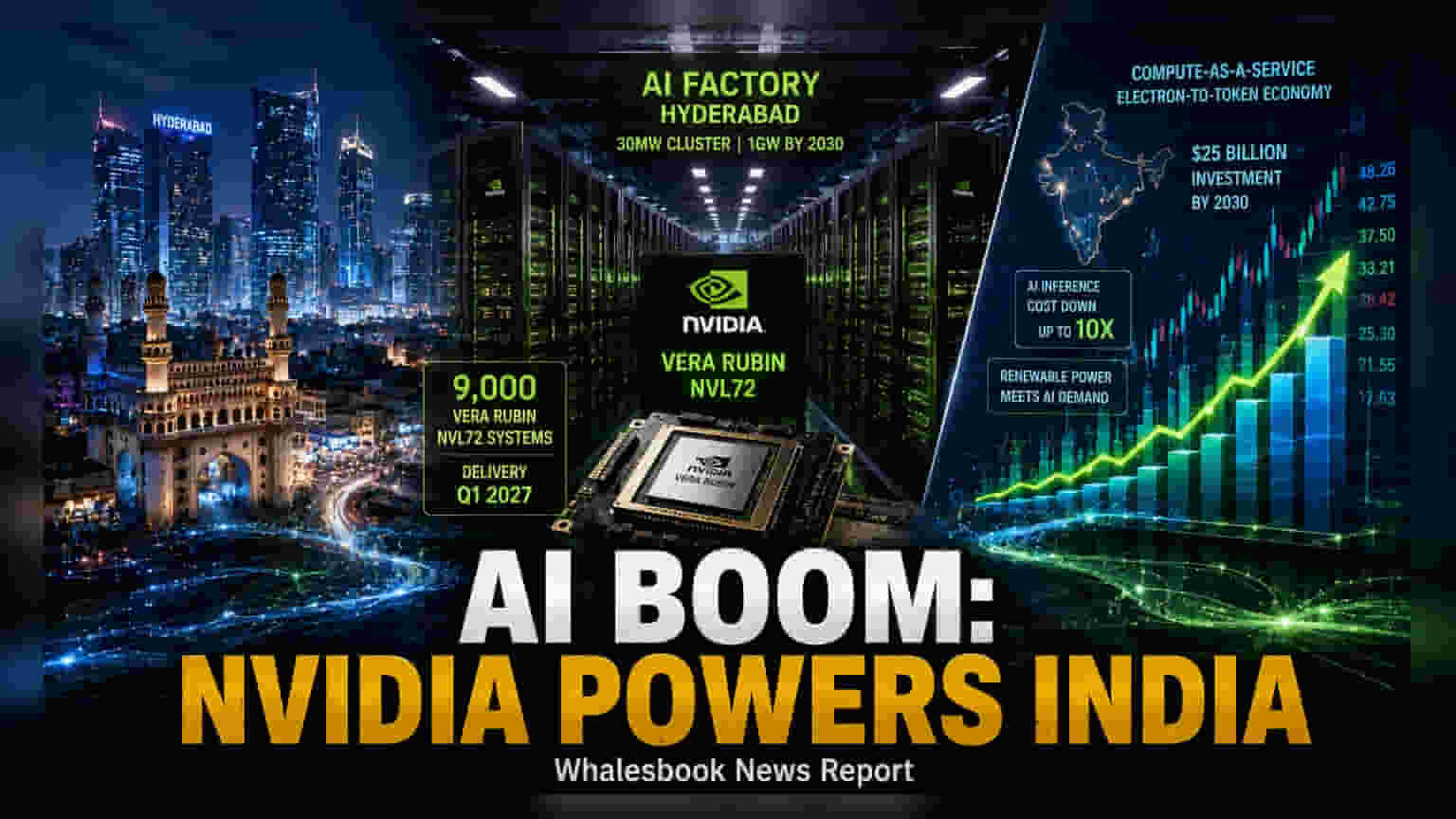
AM Intelligence, the AI infrastructure arm linked to Greenko’s promoters, has ordered 9,000 Nvidia Vera Rubin rack-scale systems for its upcoming Hyderabad facility. This $8 billion initiative marks a major move to use renewable energy for powering large-scale AI compute clusters.
AM Intelligence (AMI), the AI infrastructure division of the AM Group, has placed a significant order for 9,000 Nvidia Vera Rubin NVL72 rack-scale systems. These high-performance computing units are scheduled for delivery in the first quarter of 2027 and will power the company's new AI factory in Hyderabad. This project is the first phase of a larger plan to create a 'compute-as-a-Service' platform designed to compete with global AI infrastructure hubs.
The Hyderabad facility will initially support a 30-megawatt compute cluster, which AMI plans to scale up significantly over time. The company is positioning this as a key part of its broader strategy to build a 1-gigawatt compute platform across India, the United States, Finland, and Malaysia. The core idea behind this expansion is the 'electron-to-token' economy, where the group uses its expertise in renewable energy—developed through its Greenko business—to provide the massive amounts of power needed by modern AI data centers.
Strategic Shift and Expansion
The AM Group, founded by Anil Chalamalasetty and Mahesh Kolli, has organized its operations into three main pillars: Greenko for renewable energy, AM Green for green fuels and ammonia, and AM Intelligence for AI infrastructure. The group is also working on a larger 1-gigawatt AI compute hub in Greater Noida, Uttar Pradesh, with plans for a total investment of approximately $25 billion by 2030. This indicates a long-term commitment to integrating large-scale power generation with high-performance computing.
The Nvidia Vera Rubin architecture is a major upgrade from the previous Grace Blackwell technology. AMI expects this newer hardware to significantly reduce the cost of AI inference—the process where AI models run and generate responses—by up to ten times. By investing in these advanced systems and using liquid cooling technology, the company aims to handle the heat and density requirements of future AI models.
Risks and Market Context
While the ambitious scale of these projects highlights the group's intent to lead in the AI infrastructure space, there are significant risks for investors to track. The project is highly capital-intensive, requiring billions of dollars in investment, which creates substantial financial pressure on the group's balance sheet. Relying heavily on specific high-end hardware from Nvidia also introduces supply chain risks, as any delay in receiving these chips could slow down project execution.
Furthermore, the business model is relatively new. The demand for 'compute-as-a-Service' is growing rapidly, but the long-term profitability will depend on the company's ability to secure large-scale clients and maintain competitive pricing. Executing such technically complex projects, which involve balancing large-scale renewable power with continuous high-performance compute needs, will be the primary test for the company. Investors should watch for updates on funding, project timelines, and the group's ability to successfully scale these AI factories as planned.