

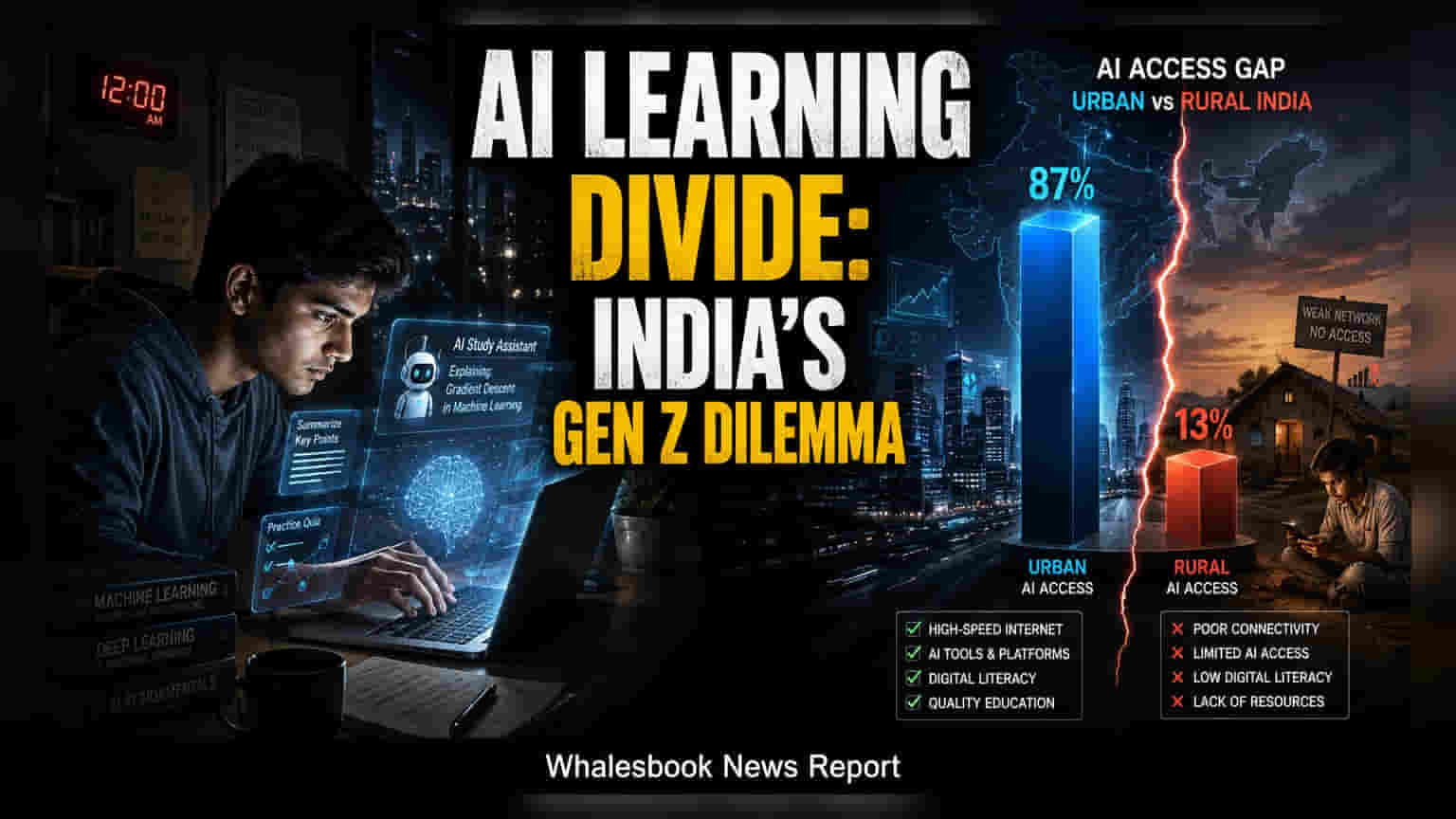
Indian students and young professionals are rapidly adopting AI for skill enhancement, yet a clear disparity exists, with 50% of users concentrated in just 10 cities. While the interest in AI-led learning is strong, data indicates a struggle to convert certifications into job-ready skills, creating a challenge for the education and employment sector.
Indian students and professionals are increasingly integrating Artificial Intelligence into their daily learning routines. This shift, led primarily by Gen Z, is changing how aspirants prepare for exams and how professionals approach upskilling. However, beneath the surge in adoption, the sector faces a complex reality regarding equitable access and the true value of AI-driven certifications.
While AI is helping students break down complex topics and iterate on coding or communication tasks, its reach remains uneven. Recent findings highlight that nearly 50% of all AI users in India are located in the top 10 cities, even though these cities represent less than 10% of the total population. This concentration creates a significant capability gap, raising questions about whether AI will bridge the inequality divide in education or widen it further.
The challenge extends beyond access to the actual quality and relevance of skill development. Data from the Pradhan Mantri Kaushal Vikas Yojana (PMKVY) 4.0 as of June 30, 2026, shows that only 47.6% of candidates enrolled in AI-related roles had successfully achieved certification. This suggests that despite high interest, the path from enrollment to proficiency is not straightforward. For the broader labor market, this creates a persistent 'readiness gap,' where graduates may hold certifications but lack the practical, day-one skills required by employers.
Corporate upskilling is another area experiencing a distinct trend. A 2026 study notes that 66% of AI program enrollments among professionals are coming from non-technical backgrounds, with senior leadership actively pushing for AI fluency in the workplace. This indicates a high demand for AI-related training in the corporate sector. However, the Ministry of Skill Development and Entrepreneurship has not yet conducted a formal national assessment of the specific demand for AI-related skills or the current workforce gap, leaving stakeholders to navigate this demand with limited public data.
Investors and observers should note that the sector is currently grappling with several long-term risks. Beyond the uneven geographic distribution of tools, there are ongoing concerns about academic integrity and the potential for AI to erode critical thinking if students rely on it for efficiency rather than deeper understanding. Furthermore, while new AI-driven roles are emerging, the slow growth of formal manufacturing jobs alongside rapid automation contributes to high unemployment rates for the under-35 age group.
The next important trend to track will be how educational institutions and the government balance the push for AI integration with the need for rigorous, applied learning. Future updates on workforce skill gap assessments and the evolution of AI-certification frameworks will be critical to understanding whether these training programs are effectively preparing the Indian workforce for the evolving job market.