

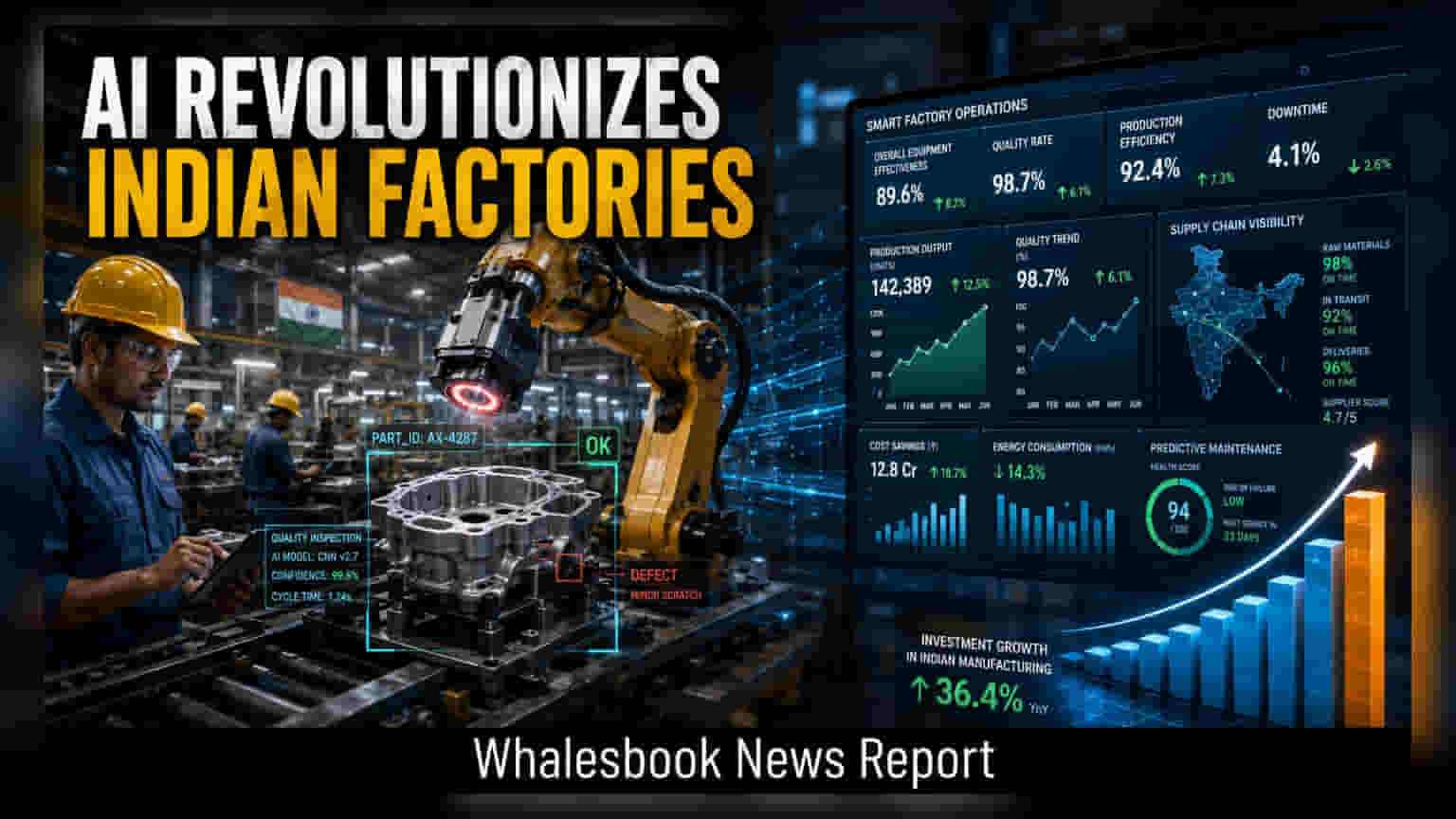
Indian manufacturing is adopting AI and SaaS to cut defects and boost production. While the sector saw total funding of $198.74 million through 2026, firms now face the challenge of connecting new technology to older, complex factory systems and meeting stricter global regulations.
The Indian manufacturing sector is undergoing a major technological shift, with software and Artificial Intelligence (AI) startups playing a central role. Instead of relying solely on manual processes, factory owners are increasingly using specialized tools to monitor production lines, check product quality, and manage supply chains more efficiently. This transition, often called Industry 4.0, aims to reduce waste and improve the speed of production.
Investment into this space has been strong, with startups raising $198.74 million between 2019 and 2026. The funding peaked in 2024, when the sector secured $77.8 million across 16 investment rounds. While 2026 has seen a slower start with $12.6 million raised so far, the sustained interest highlights a shift toward high-tech, data-driven manufacturing solutions rather than basic digitization.
Several private companies are leading this wave by applying different layers of technology. For example, firms like SwitchOn use computer vision to automate quality checks, which helps reduce defect rates on assembly lines. Meanwhile, companies like Enmovil focus on supply chain management using agentic AI, which is software that can make decisions and recommend actions on its own to keep logistics running smoothly. Others, like Jidoka and Groyyo, are tackling bottlenecks in product inspection and fashion apparel production, respectively, helping brands bring new collections to market faster.
However, moving from basic manual work to advanced AI comes with significant real-world challenges. A major hurdle is integrating these new AI tools into older, fragmented manufacturing systems. Many factories rely on legacy software that was not designed to communicate with modern AI models. If these new systems cannot sync with the existing factory floor, the promised gains in productivity may not materialize. This execution risk means that companies must prove tangible, measurable business results to survive.
Beyond technical integration, these startups face a tightening regulatory environment. As Indian tech companies expand their services globally, they must comply with strict international rules, such as the European Union’s AI Act. These laws require companies to maintain transparency, safety, and accountability in their AI systems, which can increase operational costs and complexity. Cybersecurity is another rising concern; as manufacturing floors become more connected and digitized, they become more vulnerable to data breaches and systemic cyberattacks.
For the sector to continue its growth, the focus must shift from simply securing funding to proving long-term value. Investors and industry observers are watching to see if these startups can navigate the high costs of global compliance and successfully embed their technology into the core unit economics of manufacturing, rather than offering solutions that are easily replaced by generic, cheaper software.