 Whalesbook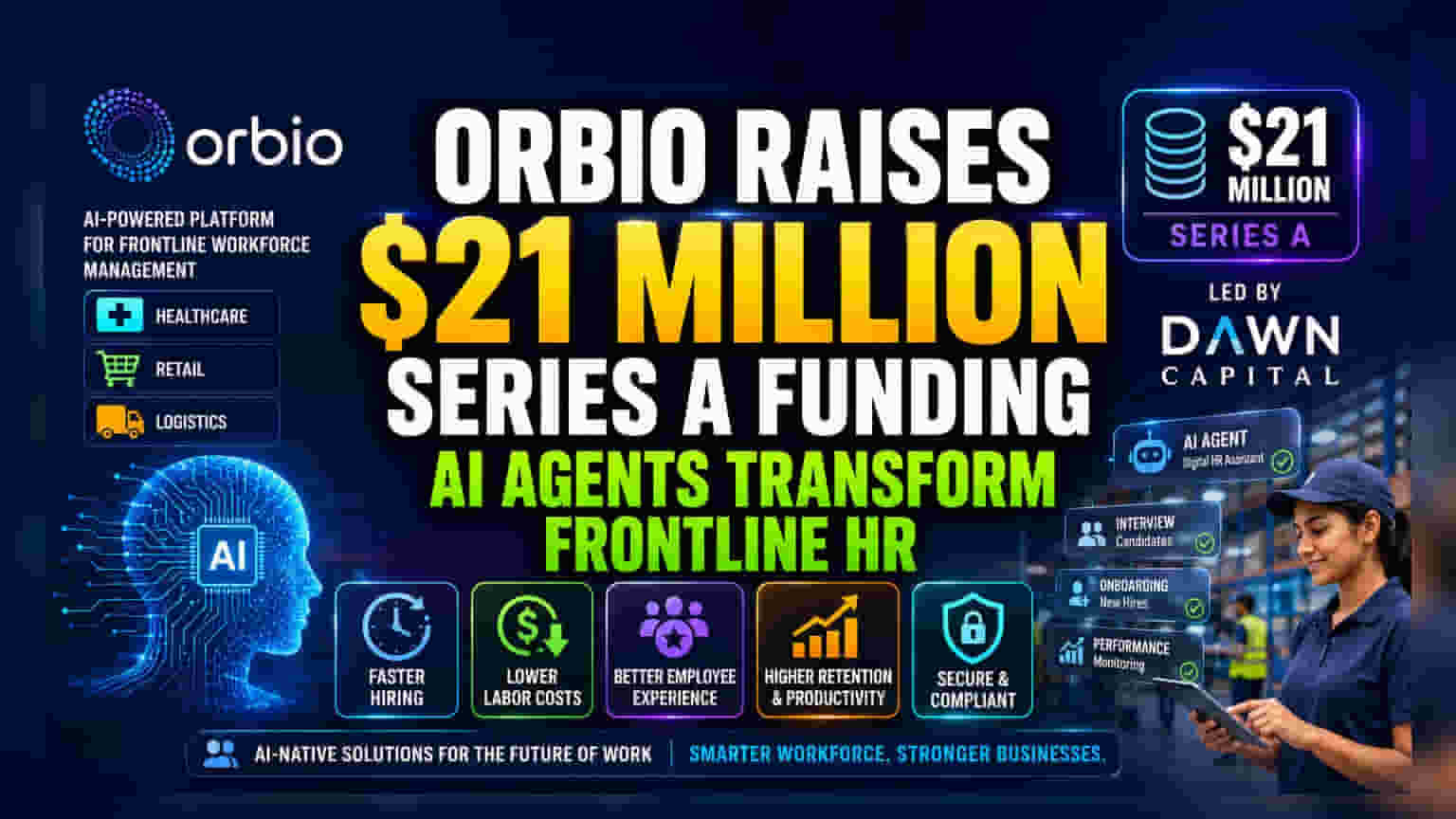


Orbio, an AI-focused HR tech startup, has raised $21 million in a Series A round led by Dawn Capital. The company aims to automate frontline worker hiring and management, a trend attracting significant interest as large enterprises seek to improve operational efficiency.
What Happened
Orbio, a technology startup focused on transforming human resources through artificial intelligence, has successfully closed a $21 million Series A funding round. The investment was led by Dawn Capital. Founded in 2025, the company has developed a platform that uses AI agents to handle labor-intensive human resources functions, specifically targeting frontline workers in sectors such as healthcare, retail, and logistics.
Why This Matters For Investors
The funding highlights a growing trend of enterprises seeking to consolidate and automate fragmented workforce management systems. For investors, Orbio represents the broader move toward 'AI-native' enterprise software. Rather than adding simple automation tools to legacy systems, companies like Orbio are attempting to build entirely new, AI-driven platforms from the ground up.
This trend is particularly relevant to large, global corporations that manage massive, distributed workforces. Companies like YUM! Brands, which owns global chains such as KFC and Taco Bell, have been aggressively pursuing their own AI-driven 'backbone'—such as their 'Byte by Yum!' platform—to streamline everything from inventory to labor management. The interest in Orbio suggests that specialized third-party AI solutions may find significant demand as major enterprises look to optimize operational costs and improve hiring speed in high-turnover industries.
The Business Logic
Orbio’s platform utilizes autonomous AI agents designed to function as digital HR assistants. These agents are tasked with managing the complete employee lifecycle: interviewing candidates, conducting onboarding, and monitoring performance. By shifting these administrative tasks from human managers to automated agents, the company aims to reduce the time-to-hire and lower overall labor costs. For retail and logistics businesses, where labor is a primary operating cost, even marginal gains in hiring efficiency or employee retention can lead to measurable financial impact.
The Competitive Landscape
The HR-tech sector is currently crowded, with both established players and emerging startups competing for enterprise budgets. While Orbio aims to differentiate itself with a native AI approach, it faces competition from well-capitalized firms that are integrating similar automation features into their existing suites. The ultimate success of Orbio and similar firms will depend on their ability to integrate seamlessly with existing enterprise software, comply with complex global data privacy regulations, and prove that their AI agents can outperform traditional management methods in diverse operational environments.
Potential Risks and Challenges
As with many emerging technology firms, investors may monitor several operational risks. First, the integration of AI into human-centric roles like hiring involves significant regulatory scrutiny. Compliance with data protection laws, such as GDPR in Europe and similar frameworks globally, is a constant operational hurdle for HR-tech companies. Furthermore, the 'AI-agent' model must prove it can operate reliably at scale without creating biases or errors that could lead to legal or reputational issues for the client companies. Lastly, as enterprises face economic pressures, there is a risk that they may consolidate spending on established, multi-purpose platforms rather than adopting new, specialized AI tools.
What Investors Should Track
Moving forward, the primary monitorables for this sector include the pace of enterprise adoption, the ability of these platforms to demonstrate measurable return on investment (ROI) for clients, and their capacity to maintain security and regulatory compliance. Additionally, market participants will observe whether specialized startups like Orbio can maintain their technical edge against broader, incumbent HR software providers that are rapidly deploying their own internal AI upgrades.