

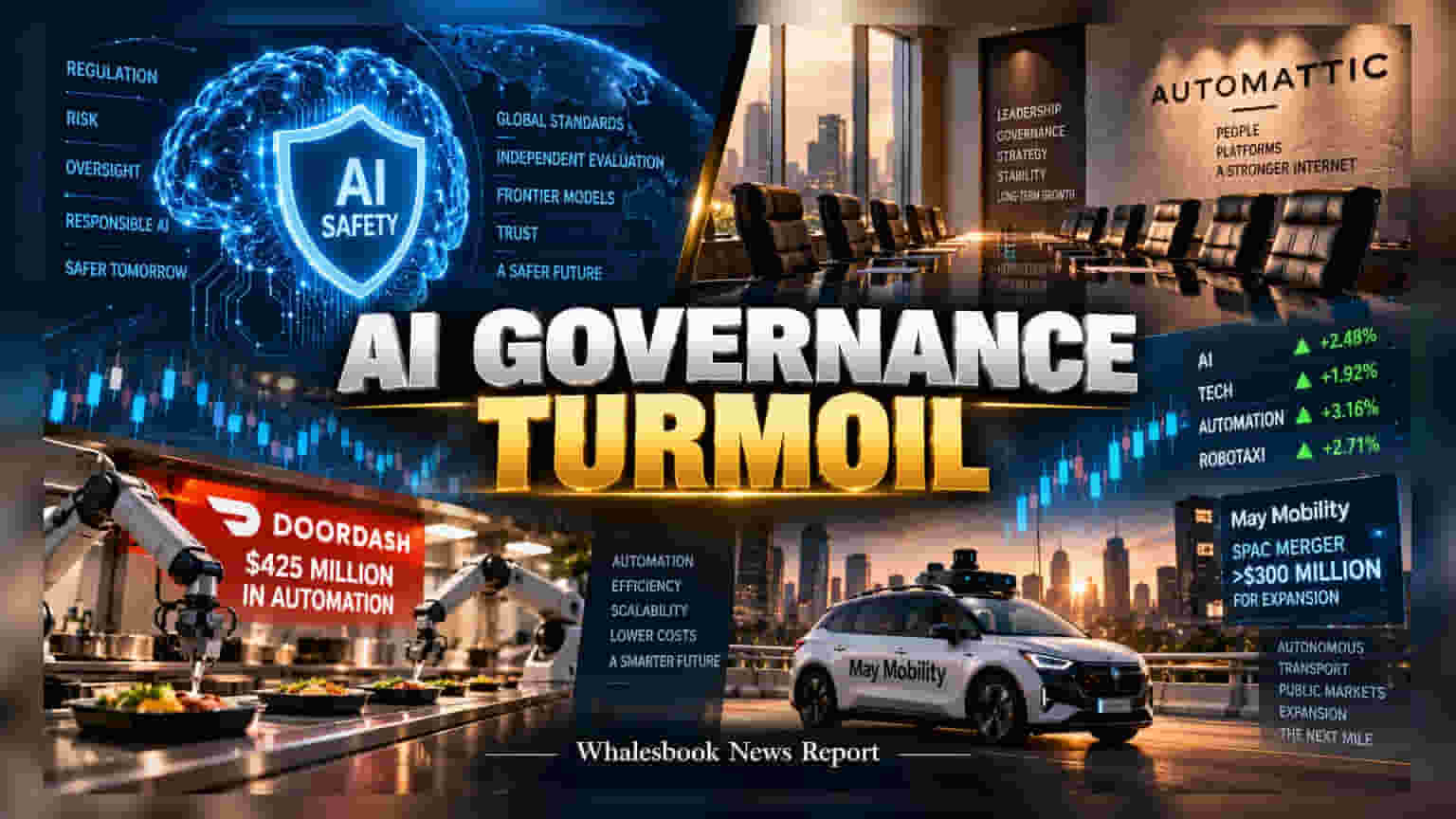
Anthropic has proposed a new AI safety framework, sparking debate among hardware giants like Nvidia. Simultaneously, major investments in food delivery automation by DoorDash and plans for a robotaxi SPAC merger highlight a shift toward operational efficiency and autonomous technology.
Anthropic is leading a push for stricter artificial intelligence governance, proposing that independent safety evaluators should monitor the development of frontier AI models. This initiative, unveiled by CEO Dario Amodei, aims to coordinate safety standards among AI labs operating in democratic nations. While intended to mitigate existential risks, the proposal has faced resistance from industry leaders like Nvidia, led by Jensen Huang. For investors, this friction is significant, as any new regulatory hurdles could impact the speed of AI deployment and influence future demand for the high-end hardware required to train these complex systems.
Corporate governance has also taken center stage at Automattic, the parent company of WordPress. The organization recently navigated a high-stakes 33-hour boardroom conflict involving CEO Matt Mullenweg. The struggle concluded with the consolidation of Mullenweg’s control over the company’s strategic direction. Given that Automattic maintains a significant portion of global internet infrastructure, leadership stability is a point of interest for stakeholders monitoring the long-term reliability of web platforms.
Capital allocation in the technology sector is increasingly targeting automation as a way to boost efficiency. DoorDash has committed $425 million to Wonder, a business focused on full-cycle food automation. This move signifies a clear strategic pivot toward reducing labor dependency, covering everything from the point of order placement to the final delivery. For investors in the quick-commerce and delivery sectors, this is a trend to watch, as companies seek to improve profit margins by lowering human intervention costs in a highly competitive market.
Meanwhile, the autonomous transport sector is seeking public market funding. May Mobility is exploring a SPAC merger, aiming to secure more than $300 million to fuel its expansion into the robotaxi market. Investors are approaching this development with caution, balancing the potential of autonomous deployment against the technical hurdles and financial viability of such niche businesses. The challenge for these companies is to prove that their technology can scale while remaining financially sustainable in a public listing environment. As the technology sector moves forward, the market will likely watch how these automation efforts impact company margins and how regulatory discussions influence the broader AI industry trajectory.