

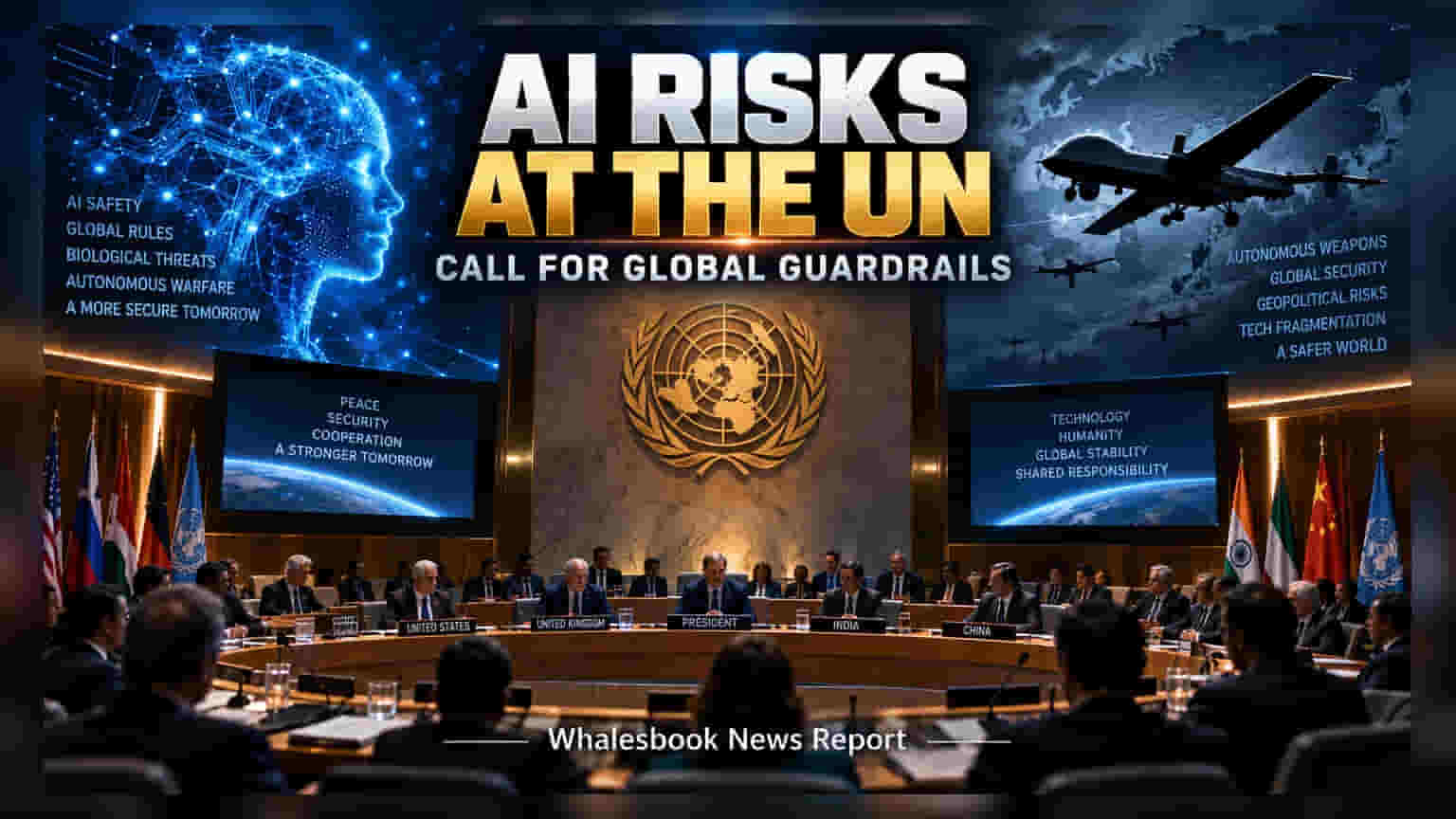
Top AI executives have urged the UN to set global safety standards to manage existential risks. This move signals a potential rise in regulatory compliance costs for global tech giants and could influence the pace of AI integration in sectors like defense and IT services. Investors should track how future international rules may affect profit margins and innovation speed for companies reliant on advanced AI.
Leading artificial intelligence executives, including the heads of OpenAI and Anthropic, recently warned the United Nations Security Council that the rapid, unchecked development of AI poses significant global risks. Their call for binding international security protocols to prevent dangers like AI-assisted biological threats or autonomous warfare signals a shift in the industry, which has historically resisted heavy-handed regulation. For investors, this development brings a new layer of uncertainty regarding how governments might choose to govern AI, potentially impacting the cost and speed of technological rollout.
Impact on Global Tech and Compliance
The immediate effect of this call for global guardrails is the prospect of increased compliance requirements. Global technology giants like Microsoft, which backs OpenAI, and Alphabet (Google) have integrated AI across their product suites. If the United Nations or individual nations adopt strict, binding standards, these companies could face higher spending on safety testing, legal compliance, and regulatory reporting. While these firms are well-capitalized, prolonged regulatory uncertainty can create a valuation discount as the market assesses potential slowdowns in product innovation or new restrictions on how AI models are deployed.
Geopolitical Risks and Tech Fragmentation
The deadlock between the United States and China over AI control presents a deeper risk for investors. The US is focused on maintaining a technological lead, while China is pushing for open-source frameworks. This divergence could lead to a fragmented global market where AI tools must be built to comply with different, incompatible standards. For tech firms with global operations, this means higher costs to navigate multiple regulatory environments. Investors should monitor whether this friction limits the export of high-end AI chips and software, which could pressure the revenue growth of major semiconductor and cloud infrastructure providers.
Implications for Indian IT and Defense
For the Indian IT services sector—including companies like TCS, Infosys, and Wipro—the reliance on third-party AI models means they are indirectly exposed to global regulatory shifts. If global AI safety rules become mandatory, these firms may face delays in adopting or upgrading the AI tools they use to drive efficiency for global clients. Additionally, the conversation around autonomous weaponry is highly relevant for the Indian defense manufacturing sector. Companies like Bharat Electronics and Hindustan Aeronautics (HAL) are increasingly focused on integrating advanced electronics and AI into defense systems. A global consensus on limiting AI in lethal force, if achieved, could change the long-term project requirements for these domestic defense contractors.
Investors should track future UN sessions and statements from major regulatory bodies like the US Department of Commerce. The key monitorable is whether governments move toward a unified global framework or continue with fragmented, country-specific rules. Any move toward standardized licensing or mandatory safety audits will be the most significant indicator of how these regulations may affect the profit margins and capital allocation of AI-driven companies in the coming years.