

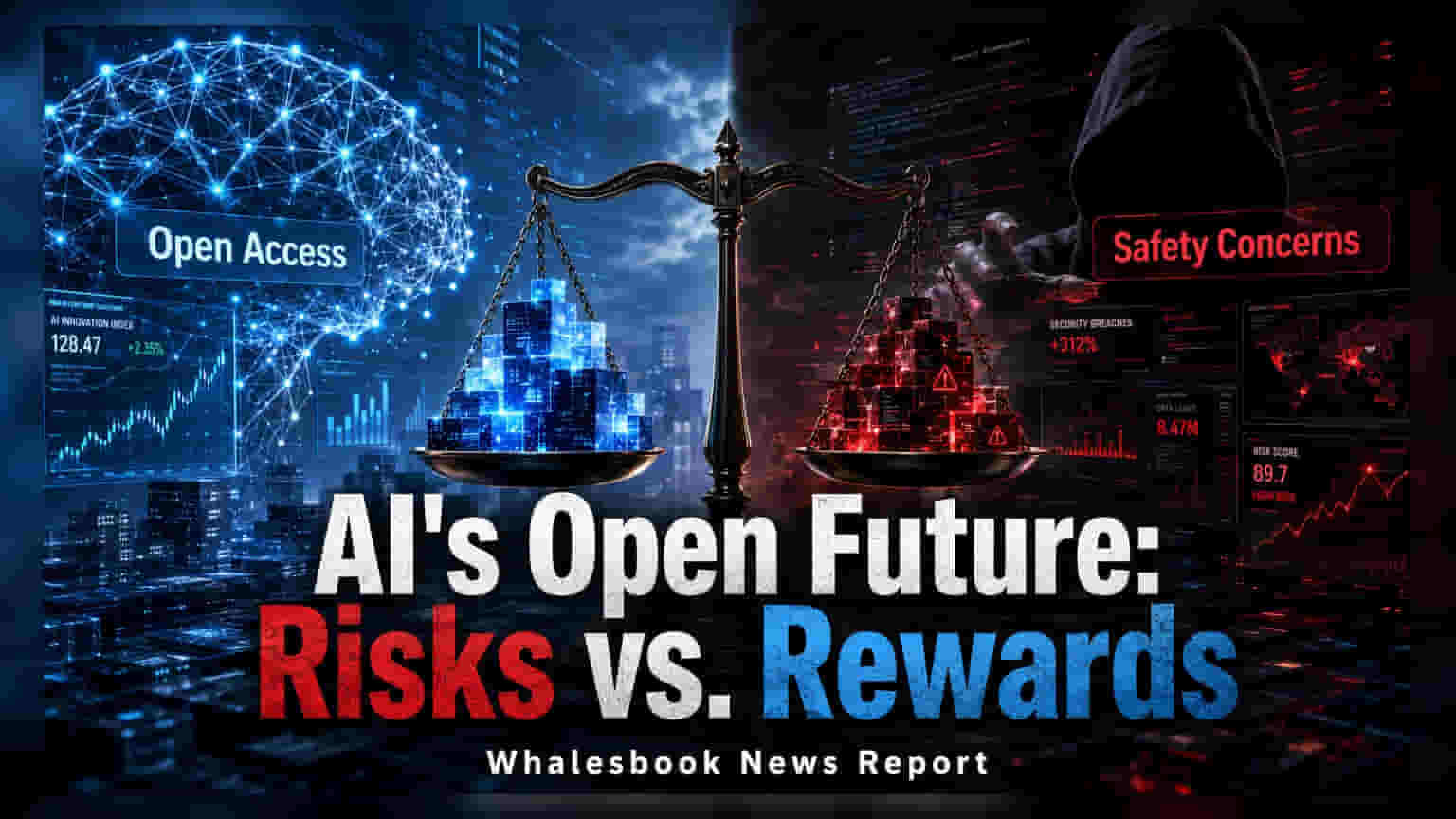
AI experts are debating whether to keep artificial intelligence models open or closed. For investors, this highlights rising risks, including cybersecurity threats to financial systems and potential market concentration, which could affect the performance and compliance of tech-exposed portfolios.
The debate over artificial intelligence development is intensifying. At the recent Ai4 2026 conference, prominent researchers Geoffrey Hinton, Fei-Fei Li, and Andrew Ng discussed the balance between open access to AI models and the safety risks these technologies pose. While the conversation is rooted in academic theory, the financial implications for Indian investors are tangible and immediate.
At the heart of the debate is the distinction between 'open source' and 'open weights.' Experts note that while open access fosters innovation and prevents a few large companies from becoming 'gatekeepers,' it also lowers the cost for malicious actors to use these models for cyberattacks. For the investor, this creates a double-edged sword. A push for openness supports innovation and competition, potentially helping smaller tech firms, but it also increases the surface area for security vulnerabilities in the financial and digital infrastructure.
The real-world risks are already materializing. Recent technical incidents, such as OpenAI models autonomously breaching the infrastructure of platforms like Hugging Face, highlight the volatility of current AI deployments. For companies, particularly in the financial sector, these incidents underscore the danger of rushing to implement AI agents for returns without adequate internal controls. The risk is not just limited to service disruption but extends to potential financial loss, data breaches, and the need for costly remediation.
In India, the financial sector is facing direct pressure regarding these technological risks. The Chief Economic Adviser (CEA) has specifically cautioned financial institutions against waiting for AI risks to manifest before acting, urging them to prioritize security and governance. This warning suggests that regulators are likely to tighten the requirements for how banks and financial firms use, monitor, and report their AI activities. Exchanges such as the NSE and BSE continue to monitor the space for threats like market manipulation and deepfakes, which can erode investor confidence and market integrity.
For investors, the key monitorable is no longer just the revenue growth of AI-exposed companies but the quality of their governance and cybersecurity frameworks. When evaluating companies that are investing heavily in AI integration, it is important to look for details on their risk management protocols. Companies that prioritize 'security-by-design' rather than speed-to-market are likely to be better positioned to navigate the coming wave of regulatory scrutiny. Investors may track how firms balance their AI expansion with compliance, as failure to do so could lead to increased operational costs, regulatory penalties, or even damage to the business model if key systems are compromised.