 Whalesbook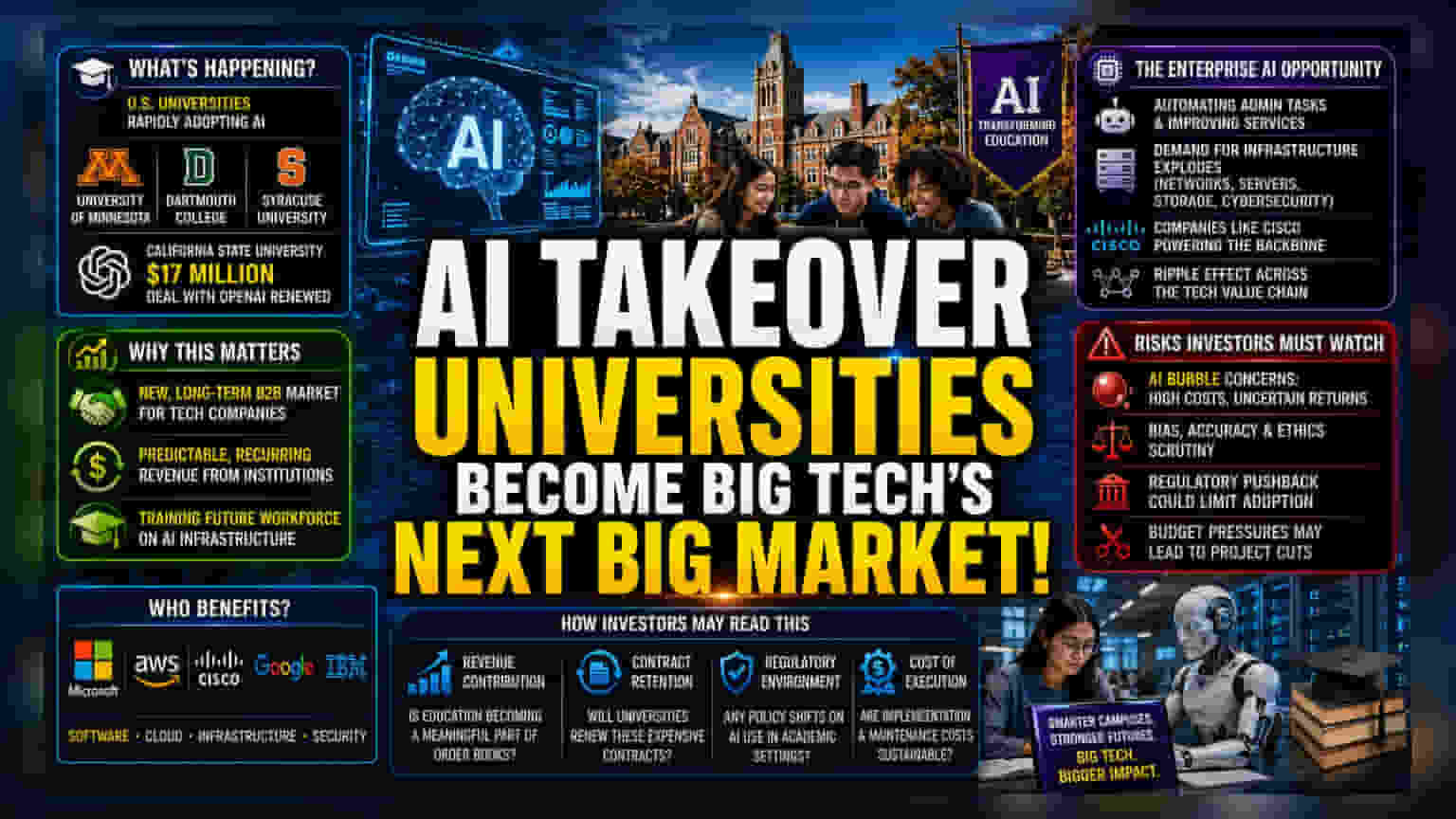


Universities are increasingly adopting AI, creating a new B2B market for tech giants and software firms. While this opens potential revenue streams for the technology sector, investors are weighing the risks of high adoption costs and potential regulatory hurdles in educational AI.
What Happened
Universities across the United States are increasingly integrating Artificial Intelligence (AI) into their operations and curricula. Institutions such as the University of Minnesota, Dartmouth College, and Syracuse University have entered into partnerships with various AI companies to automate administrative tasks and enhance service delivery. A notable example is California State University’s $17 million agreement with OpenAI, which the university recently renewed despite internal faculty concerns and budget pressures. This shift reflects a broader trend where educational institutions are moving toward becoming major enterprise customers for AI technology providers.
Why This Matters For Investors
For investors, the education sector has emerged as a fresh, long-term B2B (business-to-business) market for tech infrastructure and software companies. Tech giants and specialized AI firms are positioning universities as critical nodes for training the future workforce. When institutions sign large, multi-year contracts for AI services, it provides predictable, recurring revenue for technology providers—a business model often favored by the market. This trend is part of a wider effort by tech companies to expand their reach beyond traditional corporate sectors into public institutions and higher education.
The Enterprise AI Opportunity
Companies like Cisco are increasingly linked to the infrastructure side of this digital transformation, providing the networking and connectivity required for high-intensity AI operations. As universities seek to modernize their digital footprints, the demand for high-end server capacity, data storage, and cybersecurity solutions typically increases. This creates a ripple effect in the tech value chain, benefitting providers of hardware, cloud computing, and software platforms. Investors often monitor these institutional partnerships as indicators of how successfully tech companies can monetize AI outside of the traditional corporate and consumer markets.
Potential Risks In The AI Shift
While the commercial potential is significant, there are meaningful risks for investors to track. Critics and academic observers have raised concerns about the long-term viability of these partnerships. One major risk is the 'AI bubble' sentiment—the concern that universities are investing heavily in tech contracts without fully realized returns or clear academic benefits. If these massive investments do not lead to improved operational efficiency or student outcomes, universities may face budget cuts, which could threaten the stability of these long-term contracts.
Furthermore, the implementation of AI in teaching and assessment—such as automated grading or student identification systems—has faced scrutiny regarding accuracy and bias. Any regulatory pushback against the use of AI in education, or reputational damage from system failures, could lead to project cancellations or stricter oversight, potentially impacting the revenue predictability that investors look for in these tech firms.
How Investors May Read This
Investors looking at the AI sector should distinguish between 'hype' and 'sustainable adoption.' The key question is whether universities can sustain this spending if their own financial constraints tighten. Investors may watch for:
Revenue Contribution: Whether the education segment starts to contribute significantly to the order books of major tech players.
Contract Retention: Whether universities continue to renew these expensive contracts as they assess the return on their investment.
Regulatory Environment: Any shifts in government policy regarding the use of AI in academic settings, which could force companies to change their product offerings or limit their addressable market.
Cost of Execution: Whether the cost of implementing and maintaining these systems remains manageable for both the provider and the client.