

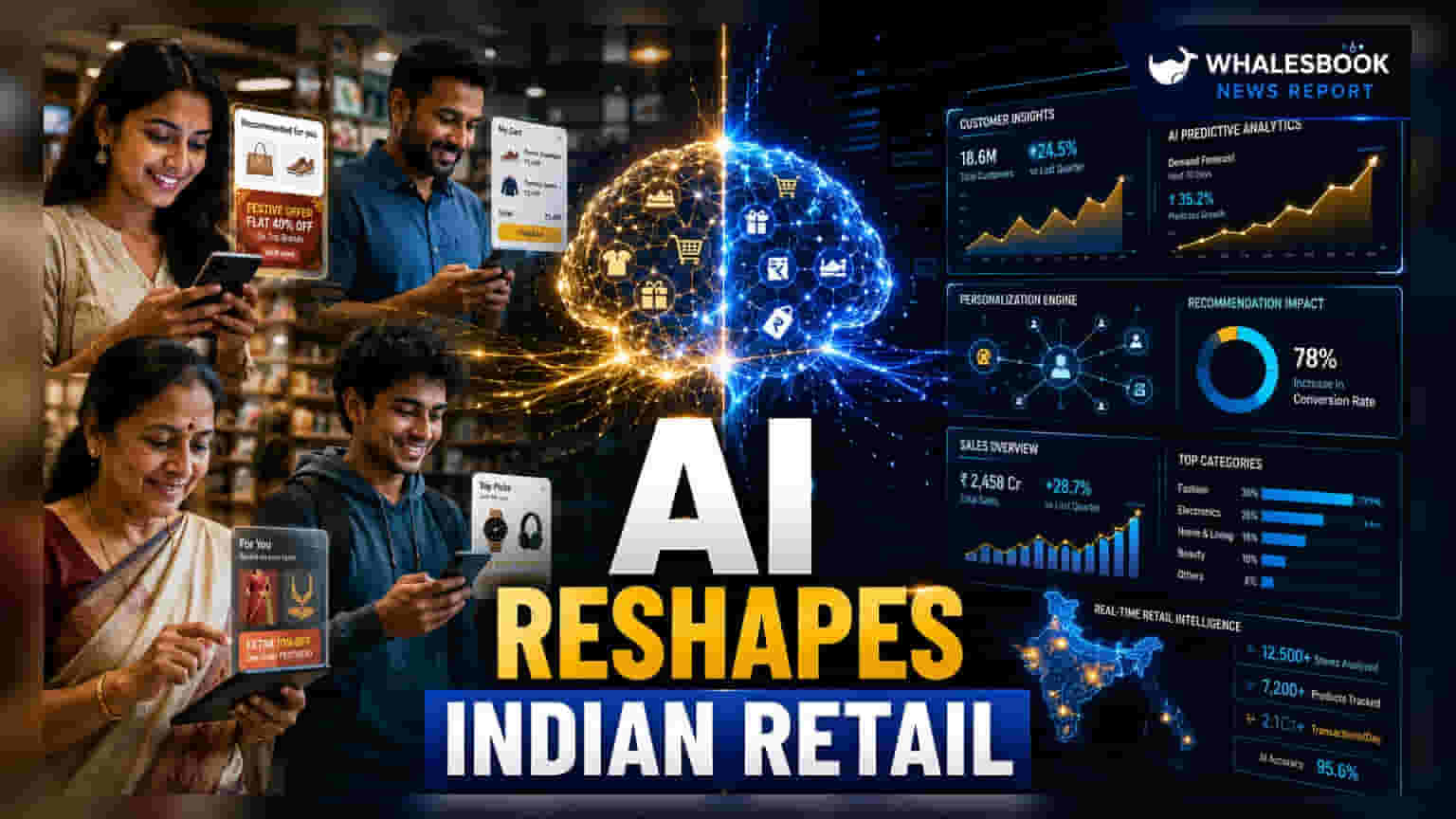
Indian retailers are embedding artificial intelligence into their supply chains and customer platforms to reduce waste and drive sales. While these digital upgrades promise better profit margins through inventory efficiency, investors should weigh the high technology spending and execution risks against potential long-term gains.
What Happened
Artificial intelligence has moved beyond the pilot phase to become a core operational tool for India’s largest retailers. Companies like Reliance Retail and Tata Digital are now utilizing AI not just for basic analytics, but to manage end-to-end supply chains and create hyper-personalized shopping experiences. From forecasting demand to reduce food waste in grocery chains to adjusting app homepages in real-time based on browsing behavior, these technologies are now influencing daily operations for major retail players.
Why This Matters For Investors
The shift to AI is primarily driven by a need to fix structural inefficiencies in the Indian retail market. Inventory management has long been a challenge, where overstocking ties up capital and understocking leads to lost sales. AI-driven demand forecasting helps retailers predict what, where, and when a product will be needed, significantly reducing wastage. For example, some large retailers have deployed AI systems to track produce from farms to stores, cutting down on food waste, which directly protects profit margins.
Beyond inventory, AI plays a crucial role in personalization. By analyzing vast amounts of purchase data, retailers can tailor product recommendations and pricing to specific customer profiles. This isn't just about customer convenience; it is a strategy to increase the average order value and improve conversion rates. As the Indian AI-in-retail sector continues to grow—with some projections estimating a CAGR of nearly 38% through 2032—the focus for investors is shifting from simple store expansion to digital efficiency.
The Cost And Execution Reality
While the upside is clear, the transition to an AI-first model is capital-intensive. Investors must differentiate between retail companies effectively leveraging AI and those simply incurring high technology costs without delivering visible results. Building proprietary AI platforms involves significant upfront spending on hardware, data centers, and specialized talent, which can put pressure on short-term profitability.
Execution risk remains a substantial factor. The experience of platforms like Tata Neu illustrates that integrating diverse legacy businesses into a unified digital interface is complex and prone to friction. Retailers face challenges ranging from data privacy regulations to the difficulty of training staff to work alongside AI tools. Furthermore, as companies collect more consumer data, they must navigate India's evolving data privacy landscape, where any security breach or compliance failure could lead to financial and reputational damage.
What Investors Should Track
For investors, the success of these initiatives will show up in specific financial and operational metrics.
First, watch for trends in operating margins. If AI investments are truly efficient, they should eventually lower the cost of goods sold or reduce inventory carrying costs.
Second, pay attention to management commentary regarding technology spending. A spike in spending is expected, but investors should monitor if this translates into growth in same-store sales or improved digital revenue.
Finally, monitor the performance of omnichannel strategies. The goal of AI is to create a seamless journey between physical stores and digital apps; companies that can successfully connect these two will likely have a stronger competitive advantage over those that operate in silos.