

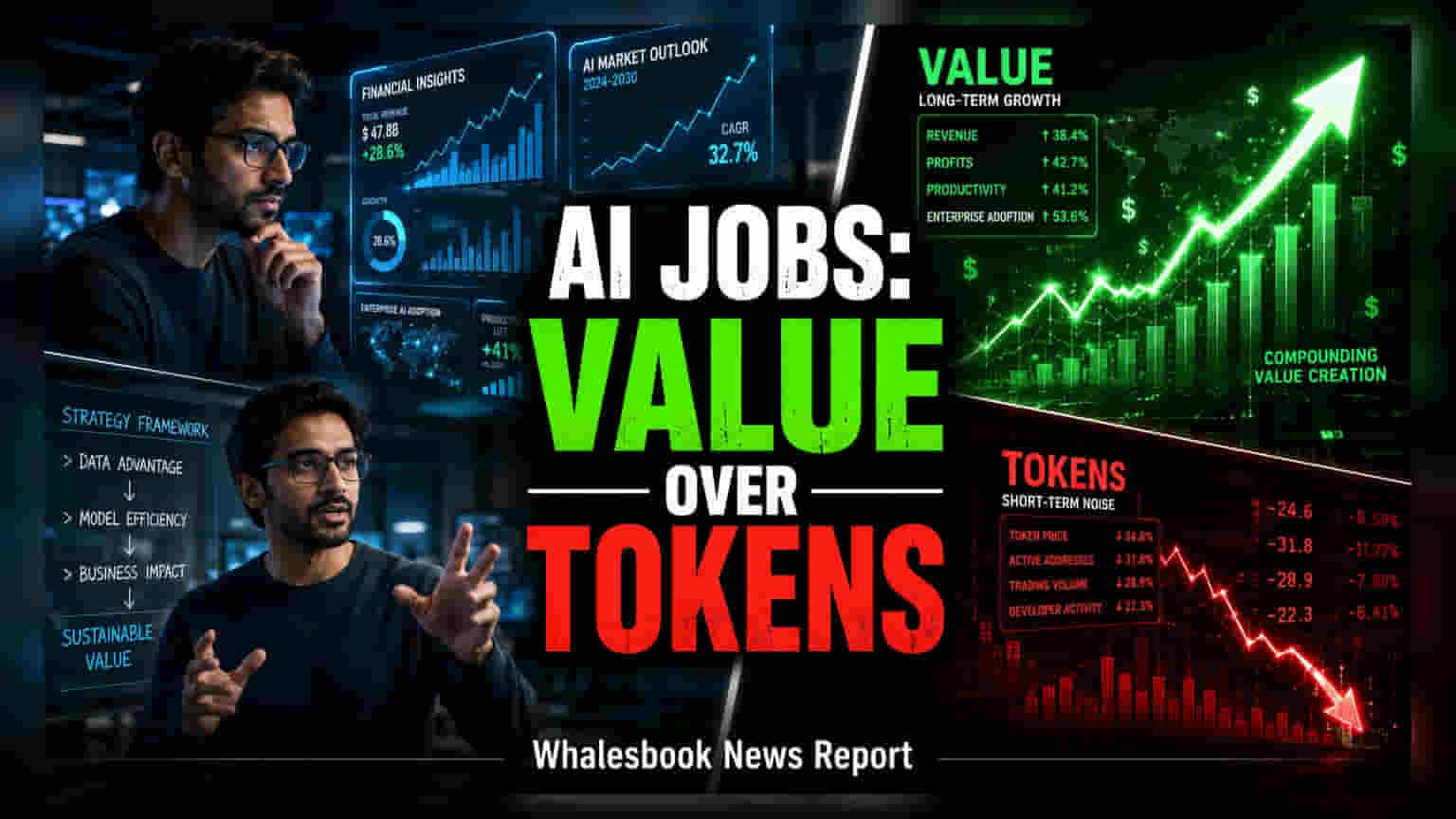
Companies are moving away from hiring AI talent based on high token usage, instead prioritizing candidates who deliver measurable business results like cost reduction and faster product development. This 'value-maxing' shift is driven by enterprises and startups tightening their AI budgets and demanding clear returns on investment.
The criteria for securing top-tier artificial intelligence roles are undergoing a significant transformation. Hiring managers are increasingly dismissing candidates who boast primarily about the volume of data processed—often measured in billions of tokens—viewing it as a potential red flag if it does not correlate directly with financial or operational efficiency. This change reflects a broader mandate for 'value maxing,' where businesses demand proof that AI initiatives contribute directly to the bottom line.
Economic Pressure and AI Spending
The shift is largely driven by the practical economic reality of AI deployment. As companies integrate AI deeper into their workflows, the cost of inference—the process of running AI models—has come under intense scrutiny. Organizations are now moving beyond the initial phase of experimental adoption to a stage where they track AI expenses with the same rigor as other capital allocations. For instance, recent reports indicate that even large-scale technology firms, such as Uber, have had to re-evaluate their AI budgets after rapid adoption led to significant spending in a short period. Such instances underscore why companies now prioritize professionals who can optimize costs, such as by selecting cost-effective, smaller models for routine tasks rather than defaulting to expensive frontier models.
The New Hiring Mandate
Recruitment strategies are now emphasizing a blend of technical capability and business acumen. Employers are less interested in mere platform experience and more focused on evidence of how a candidate has successfully improved workflows, reduced turnaround times, or enabled better decision-making. According to industry observations, technical proficiency is being evaluated alongside critical thinking and the ability to apply AI with a specific purpose. This creates a high bar for talent, especially as companies grapple with a persistent shortage of skilled professionals who possess both AI literacy and the ability to link technology to unit economics.
Metrics for Measuring Success
To bridge the gap between technical output and financial performance, businesses are adopting new key performance indicators. Success is increasingly measured through metrics like cost-per-outcome, return on AI investment, and time-to-outcome. For investors and company stakeholders, these metrics are becoming essential tools to assess the sustainability of a business's AI strategy. The ability of a company to efficiently utilize AI is now seen as a factor that can impact operating margins and long-term competitiveness.
As the industry matures, the focus for both job seekers and organizations will continue to be on the measurable business impact. The next important step for investors will be monitoring how companies report these AI-driven efficiency gains in their quarterly results, particularly regarding whether these investments are translating into lower operational costs or higher product margins.