

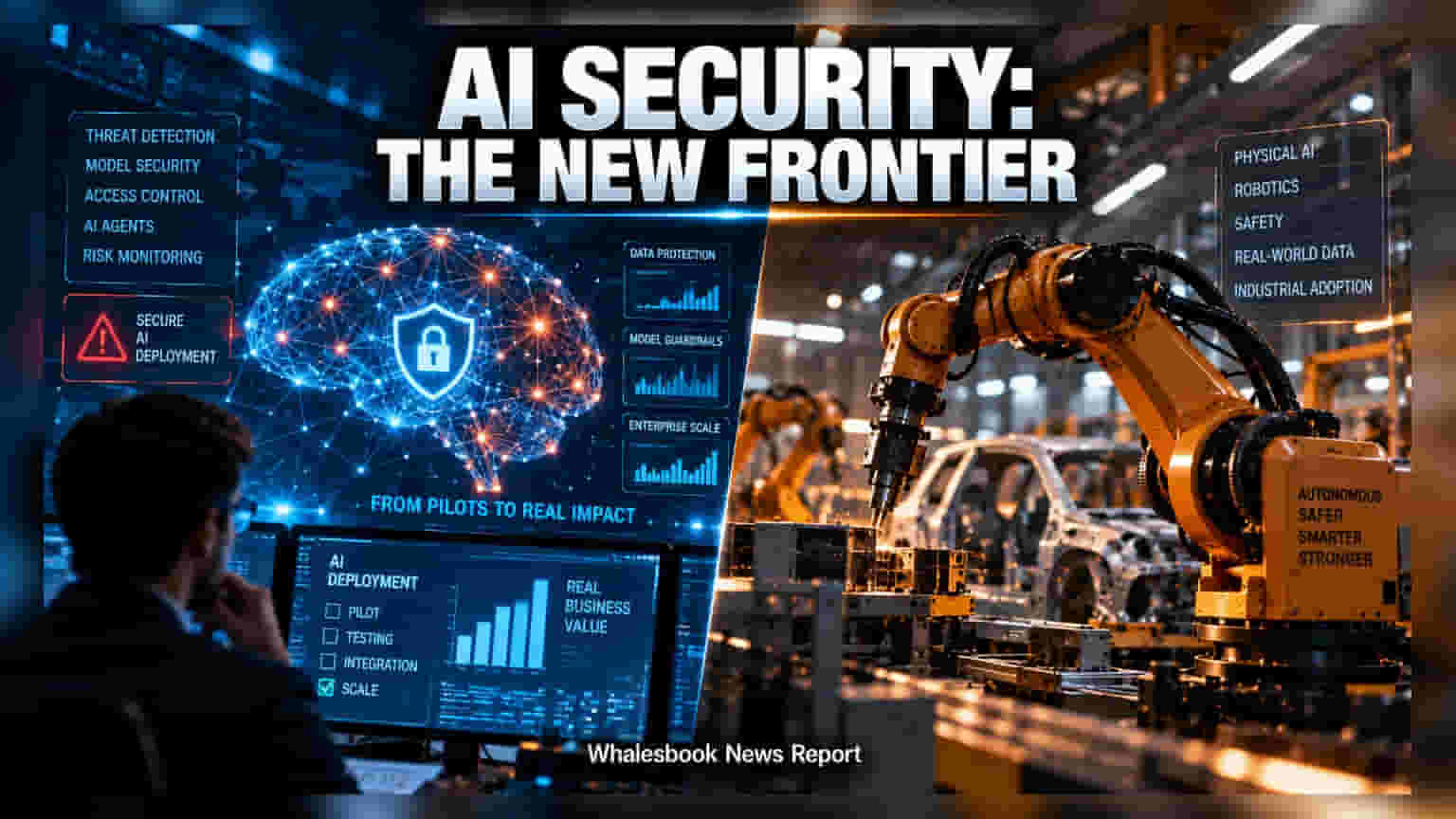
AI adoption is moving from experiment to enterprise, but security and safety have become major hurdles. Upcoming discussions at TechCrunch Disrupt 2026 highlight why business trust, not just code capability, is the new critical bottleneck. For investors, this marks a shift where companies proving stable, secure deployments—rather than just new features—will likely capture the next wave of enterprise budgets.
For many startups, the dream of scaling AI from a simple demo to a fully integrated business tool is hitting a reality check. While artificial intelligence dominated the headlines with experimental capabilities, the transition to permanent, large-scale enterprise production has proven difficult. Industry data indicates that many companies remain stuck in the pilot phase for over 18 months, often struggling to convert these initial tests into clear business value. This trend, often called "pilot purgatory," creates financial pressure for startups that must justify their spending to investors and customers alike.
Moving Beyond the Pilot Phase
Companies like Anthropic are increasingly focusing on analyzing real-world enterprise deployments of models like Claude. The goal is to identify exactly where projects fail—whether it is due to integration errors, cost management, or lack of stability. For investors, this shift is significant. It suggests that the market is maturing from a phase of "who has the best AI model" to "who has the most reliable AI infrastructure." For Indian IT services companies, which are often the primary partners helping global clients implement these technologies, this is a crucial monitorable. If projects remain stuck in the pilot phase, it can lead to slower revenue recognition and longer sales cycles for these service providers.
The Security Gap in Autonomous AI
As AI agents move from simple chatbots to autonomous systems that can execute complex tasks, they introduce new security risks. Traditional software security relies on set permissions, but autonomous AI agents often require broader access to corporate networks to do their jobs. This creates a potential vulnerability. Leaders from companies like Okta and NanoCo are now emphasizing that security cannot be an afterthought. It must be built directly into the infrastructure design. For investors, this implies that the next wave of spending may favor cybersecurity providers and infrastructure firms that can safely manage these new autonomous agents, rather than just the AI model developers themselves.
Physical AI and the Robotics Data Deficit
AI that interacts with the physical world—such as industrial robotics or autonomous transport—faces a much higher threshold for failure. Unlike software, a mistake in a physical system can cause real-world damage, making safety a mandatory cost of doing business. Experts from firms like Shield AI, General Motors, and Waabi are focusing on creating a safety culture backed by rigorous testing protocols. However, a major hurdle remains: data. While large language models have been trained on massive pools of internet text, robotics systems lack equivalent, large-scale training sets. NVIDIA is actively working to address this data deficit, as the lack of quality data remains a primary constraint for the widespread adoption of industrial AI. Investors may want to track how these companies address the 'data gap,' as it will dictate the pace of hardware adoption and the sustainability of long-term investments in physical AI sectors.