

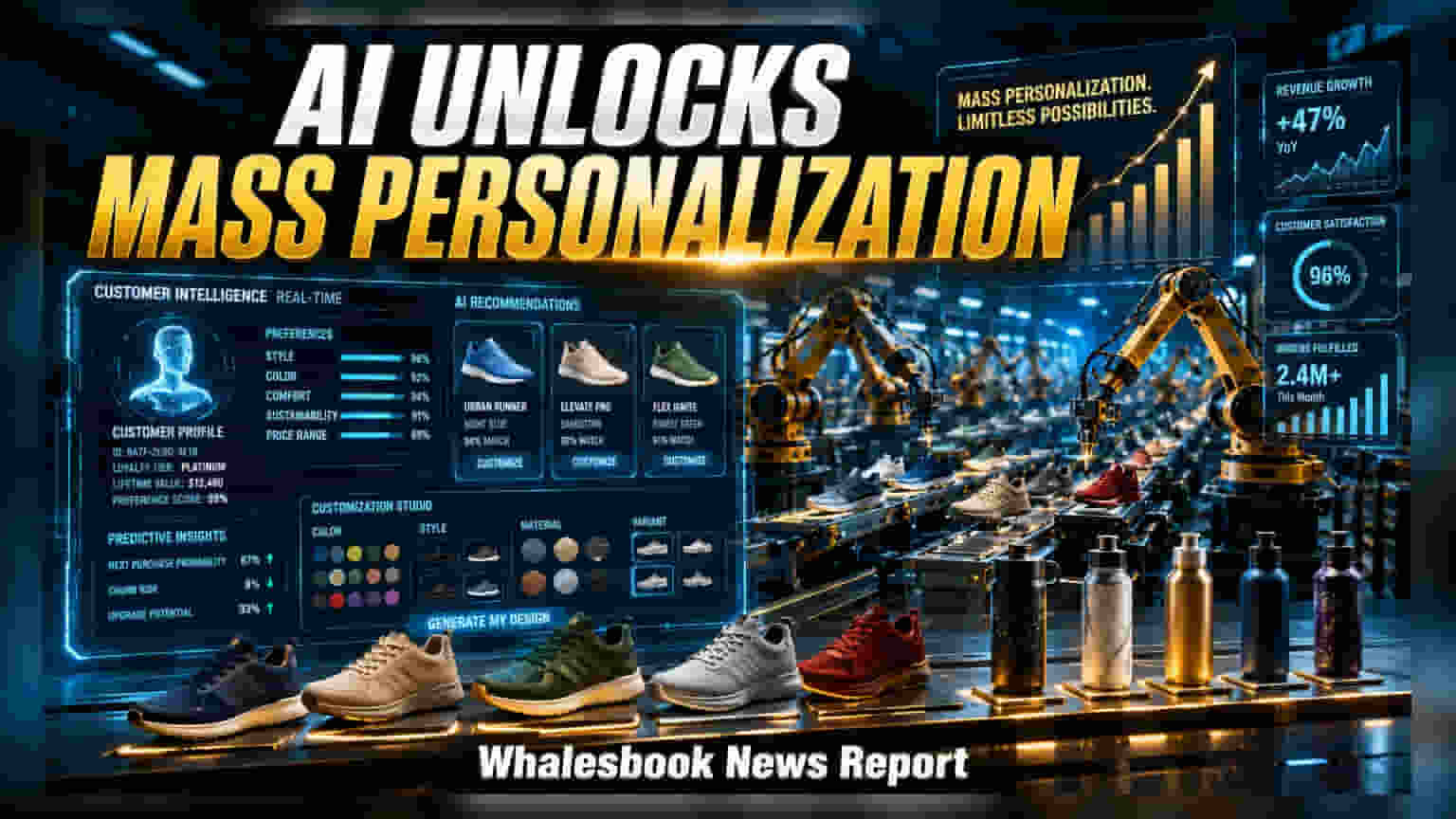
Artificial intelligence is enabling firms to combine mass production with individual customization, a concept known as the 'N=1, R=G' framework. For companies, integrating these tools is becoming a strategy to improve operational efficiency and customer experience in competitive markets.
Artificial intelligence is shifting how businesses approach product creation and customer service. By leveraging AI, companies are increasingly capable of delivering personalized experiences on a massive scale. This shift aligns with the 'N=1, R=G' framework, a concept popularized by management thinker CK Prahalad, which suggests that businesses can create unique value for individual customers (N=1) by accessing and utilizing global resources and talent (R=G).
During the recent 'CK Prahalad Next Practice Oration' in Chennai, Professor M S Krishnan from the University of Michigan noted that AI acts as a catalyst in this transformation. Traditional businesses often face a trade-off between the efficiency of mass production and the high cost of handcrafted customization. AI tools are bridging this gap, allowing firms to optimize processes while offering tailored solutions, a trend relevant across sectors such as healthcare, retail, and manufacturing.
For investors, the adoption of such technologies is often a sign of operational evolution. Companies that successfully implement AI to reduce waste, improve supply chain efficiency, or enhance customer engagement may gain a competitive advantage. The focus is shifting from simple digital presence to deep-tech integration that drives real-world business outcomes.
The event also highlighted startups that are putting these 'next practice' ideas into action. S4S Technologies, an agri-tech firm, received an award for its model of reducing food loss. By procuring surplus produce and using solar technology to process it into stable ingredients, the firm demonstrates how businesses can optimize resources to solve systemic problems. Other startups mentioned, such as Pocket FM, Exponent Energy, and Dhruva Aerospace, reflect the diversity of sectors—from entertainment to energy and space—where technology is being applied to solve specific market challenges.
While the potential for AI-driven personalization is significant, investors should remain aware of the practical challenges. Moving from theory to execution involves risks such as data privacy concerns, the complexity of integrating new AI tools into legacy systems, and the need for significant organizational change. Not every company will be able to scale these solutions effectively. The ability of a business to navigate these hurdles and translate technological adoption into measurable margin improvement or market share growth will remain a key factor to track in the coming years.