

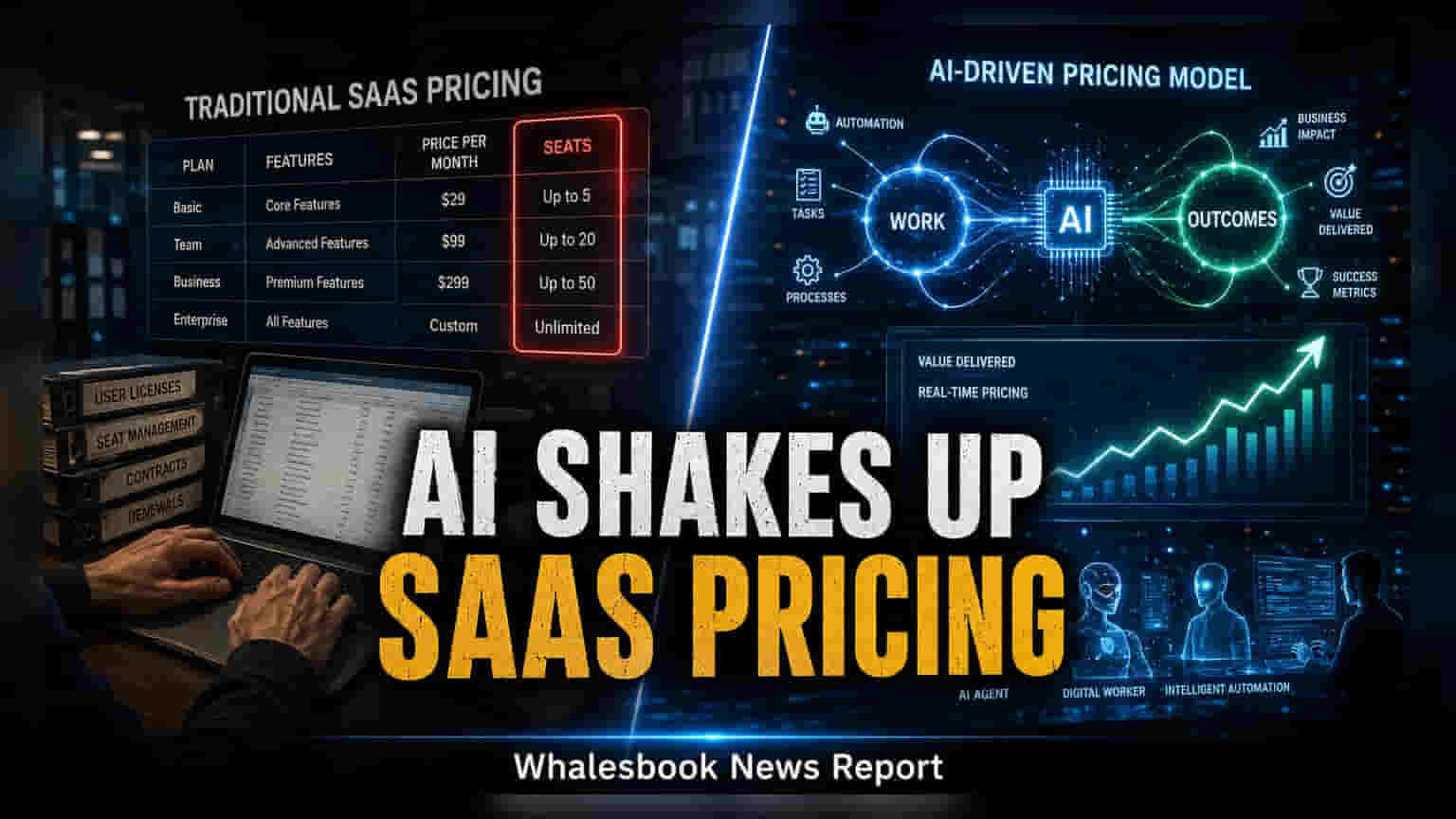
SaaS companies are moving from seat-based pricing to work-based models as AI agents automate tasks. This shift allows vendors to target larger labor budgets by charging for specific outcomes rather than just software access. Investors should track which firms can successfully implement hybrid pricing without losing enterprise value.
The business model of the global software industry is undergoing a structural change as artificial intelligence automates core tasks once performed by employees. For decades, Software-as-a-Service (SaaS) companies have relied on seat-based pricing, where costs are tied to the number of users accessing a platform. This model is now being challenged because AI agents can handle complex processes—such as invoice processing or lead qualification—with little to no human interaction.
Targeting Labor Budgets Over Software Spend
When software moves from being a tool for workers to a system that performs work itself, the traditional pricing logic breaks down. SaaS vendors are now adjusting strategies to capture value from labor budgets instead of just software budgets. By positioning their AI tools as direct alternatives to headcount or outsourcing, companies aim to capture a larger share of operational expenditure. The transition is forcing a move toward pricing models based on execution, such as charging per completed task, rather than a flat fee per user.
The Move Toward Hybrid Pricing Models
While seat-based pricing remains useful for security and user management, it is no longer the primary driver of value. Leading software companies are experimenting with hybrid structures that combine access fees with outcome-based charges. In an outcome-based model, a customer pays only when the software achieves a specific, verifiable result, such as a successfully resolved support ticket or a collected payment. This aligns the vendor's revenue directly with the value provided to the client.
Competitive Landscape for Incumbents and Startups
Large enterprise software providers like Salesforce, SAP, and Microsoft hold a significant advantage due to their established data infrastructure and deep trust with corporate clients. However, their position is not guaranteed. These incumbents must ensure they do not become simple data repositories while newer, AI-native startups capture the value created by autonomous work. The challenge for established players lies in evolving their legacy pricing frameworks without disrupting their core revenue streams. Meanwhile, specialized AI firms are increasingly competing for control over task execution, which could reshape market share across the enterprise software sector.
Monitorables for Investors
Investors should monitor how software companies report their revenue composition in coming quarters. The key indicator will be whether vendors can successfully transition to outcome-based or execution-based pricing without facing margin pressure. Companies that fail to adapt may find themselves providing significant value to customers without being able to monetize it effectively. Additionally, the role of large system integrators, such as Accenture, will be important to track as they manage the complex integration of these new AI-driven workflows into existing corporate systems.