

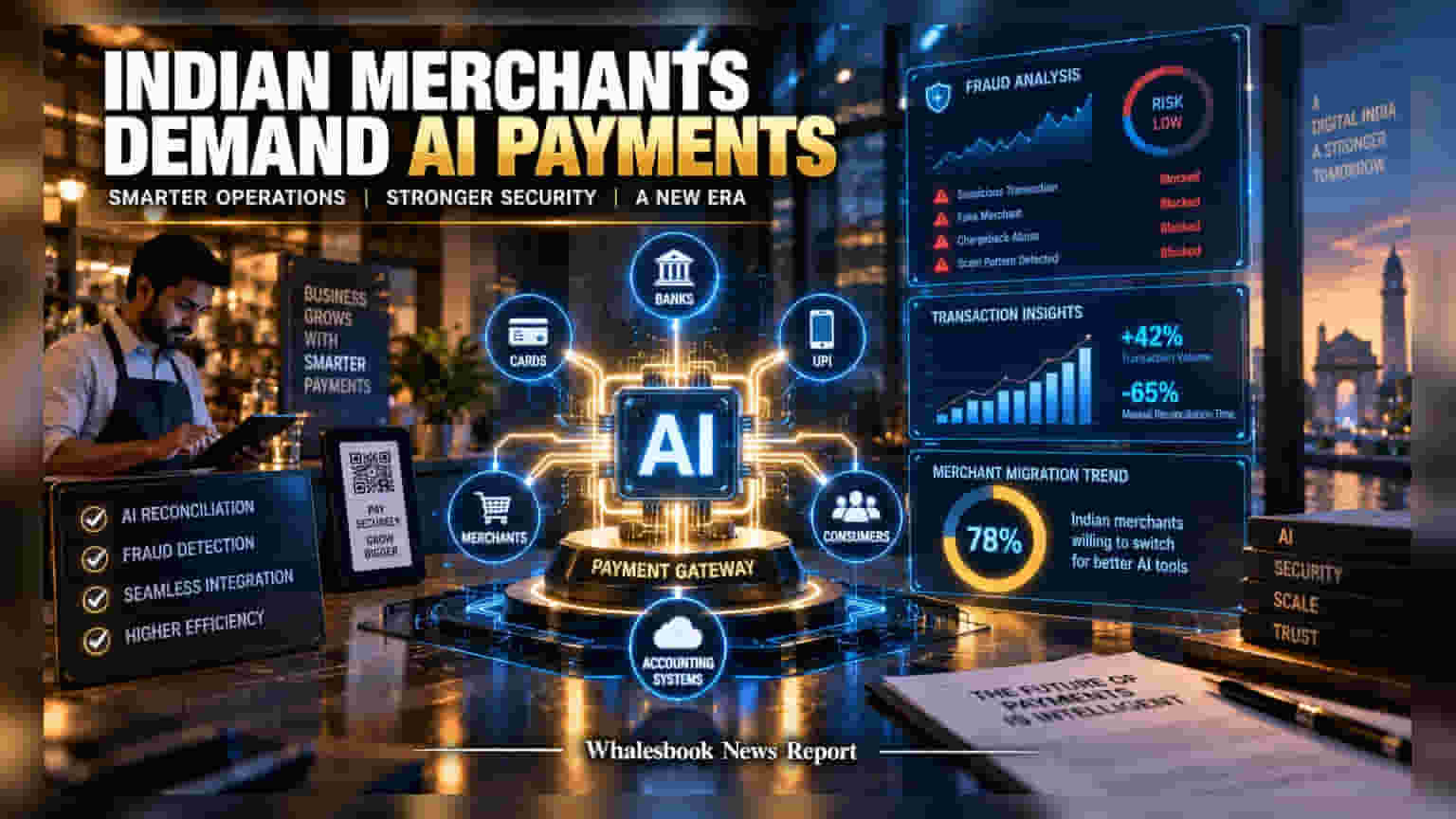
Nearly 8 in 10 Indian businesses are prepared to replace their current payment gateway provider if competitors offer better AI-driven fraud detection and automation. This trend marks a major shift as companies prioritize operational efficiency over traditional cost-based loyalty, while the sector anticipates the rollout of new 'agentic' UPI payment standards.
The loyalty of Indian merchants toward legacy payment gateway providers is facing a significant test. According to the Indian Merchant Payment Survey 2026, 78% of businesses are now willing to migrate their payment infrastructure if a competitor can provide superior artificial intelligence tools. This indicates that operational efficiency and advanced technology are rapidly replacing transaction costs as the primary factor in selecting a vendor.
Moving Beyond Transaction Fees
Historically, payment gateway selection in India was heavily influenced by the merchant discount rate, or the fees charged per transaction. However, that focus is shifting. Businesses are increasingly struggling with the administrative burden of manual financial workflows. Specifically, about 60% of companies report that they spend several hours every day on manual reconciliation—the process of matching payment records with accounting software. Consequently, there is strong demand for gateways that offer automated reconciliation and direct integration with existing enterprise accounting systems.
The Security and Fraud Hurdle
Fraud prevention has emerged as another critical differentiator. UPI-based social engineering scams, false chargebacks, and delivery-related fraud are creating financial and operational strain for merchants. Larger firms, in particular, are looking for platforms that provide robust, AI-powered fraud detection that can be embedded directly into their internal systems. This demand for end-to-end integration acts as a potential defense for incumbent providers, as many businesses are currently held back from switching only because of the technical complexity of migrating their existing ERP connections.
The Arrival of Agentic Payments
This push for AI integration comes at a time when the broader digital payments ecosystem in India is preparing for the next phase of automation. The 9th Global Fintech Festival, held in Mumbai this week, has brought focus to the development of 'agentic payments' on the UPI network. These are AI-driven, autonomous agents that can perform authorized, rule-based transactions without constant manual oversight from the user. As these technologies gain traction, payment providers that fail to incorporate AI-driven intelligence into their platforms may find themselves at a disadvantage.
Investor and Industry Risks
For participants in the fintech sector, this shift presents both opportunity and risk. Companies that invest in proprietary AI infrastructure may gain market share by solving pain points like reconciliation and fraud. Conversely, legacy players that rely solely on transaction volume without upgrading their tech stack face a high risk of customer churn.
However, this transition is not without challenges. The industry faces uncertainty regarding the liability framework for autonomous or 'agentic' transactions. Questions remain about how accountability will be managed if an AI agent authorizes an incorrect or fraudulent payment, and how regulatory bodies will oversee these automated processes. Investors in the sector will be monitoring how payment companies navigate these regulatory requirements while maintaining the speed and reliability that merchants currently demand.