

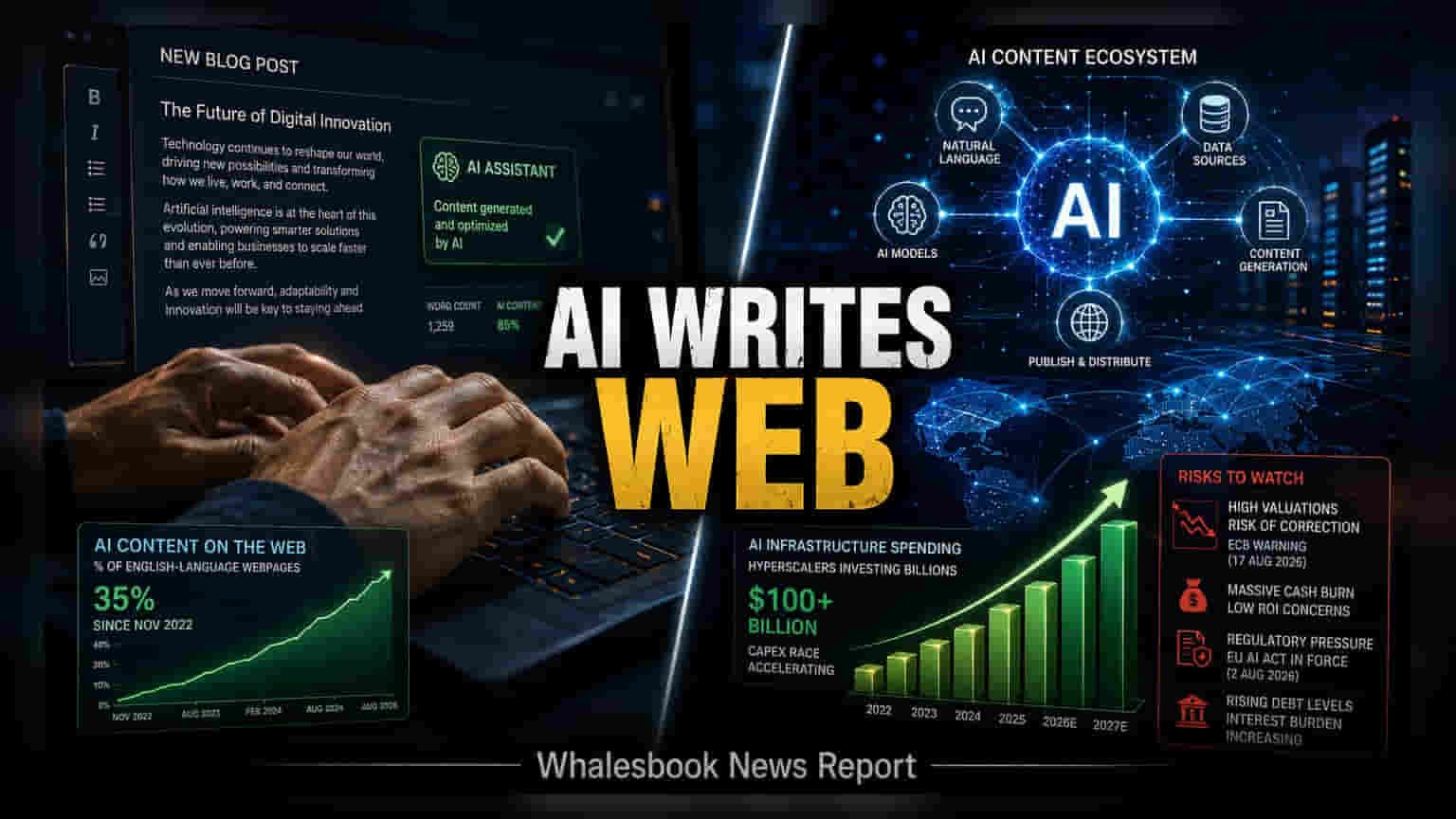
New research shows over one-third of webpages published since late 2022 feature AI-written content. This rapid adoption is fueling massive infrastructure spending by major tech firms, creating both long-term growth opportunities and rising valuation concerns for global investors.
A new study by the Pew Research Center released on August 20, 2026, reveals that AI-generated content has become a standard part of the internet. The report found that approximately 35% of all English-language webpages published since the launch of ChatGPT in November 2022 show clear signs of AI authorship or significant AI-driven editing.
The findings highlight a sharp divide in how different parts of the internet are using these tools. Commercial websites, typically identified by the .com domain, are adopting AI content creation at a rate roughly ten times higher than educational or government sites. For investors, this confirms that businesses are aggressively using artificial intelligence to increase content output and reduce costs.
This shift is not happening in a vacuum. It is the direct result of massive capital spending by the world's largest technology companies, often called 'hyperscalers'—a group that includes firms like Alphabet, Microsoft, Meta, Amazon, and Oracle. These companies are investing billions of dollars into data centers and server infrastructure to power this AI boom. While this spending drives growth for the hardware and IT services sectors, it also places significant pressure on the balance sheets of these tech giants, who are increasingly relying on debt to fund this rapid expansion.
However, this surge in AI activity comes with financial risks that investors should monitor closely. On August 17, 2026, the European Central Bank (ECB) warned that AI-driven stock market valuations, which are currently near historical peaks, face a high risk of correction. Financial analysts are growing concerned that the massive 'cash burn'—or heavy spending without immediate profit—required to build AI infrastructure may not yield the expected returns in the near term. If the return on investment (ROI) from these AI projects remains low, it could lead to a reassessment of stock prices in the tech sector.
Regulatory pressure is also becoming a material factor. The European Union’s AI Act, which includes strict transparency and labeling requirements for synthetic content, officially took effect on August 2, 2026. Companies that fail to comply with these labeling rules may face legal risks and increased compliance costs. This regulatory landscape is forcing firms to balance their push for AI-driven growth with the need for clearer communication about what is human-written and what is machine-generated.
For investors, the key monitorables are no longer just the excitement around AI adoption. The focus is shifting toward whether this heavy spending on AI infrastructure will actually translate into higher revenue and profit margins. As companies continue to issue bonds to fund these projects, debt levels and interest obligations will also become critical areas to track in upcoming quarterly reports.