 Whalesbook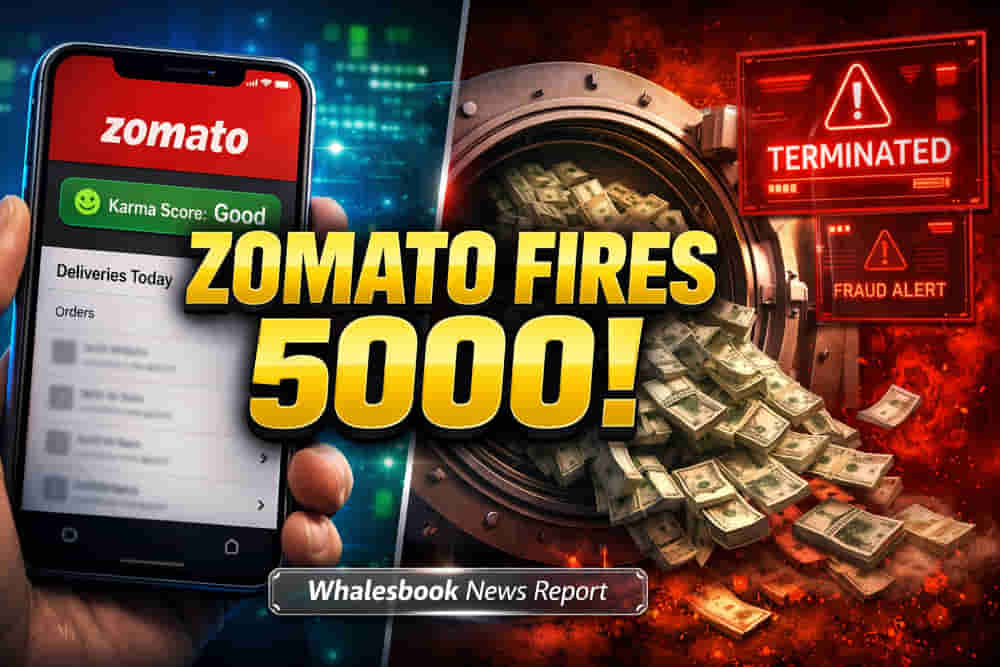
Zomato CEO Deepinder Goyal Details Delivery Partner Policies and 'Karma' System
Zomato founder and group chief executive officer Deepinder Goyal has offered insight into the company's operational policies, particularly concerning its vast network of delivery partners. Addressing claims of arbitrary firings and concerns over worker safety, Goyal stated that Zomato terminates around 5,000 delivery partners each month. He framed this figure not as punitive action but as a standard outcome within a large, high-turnover gig workforce.
Workforce Dynamics and Attrition
Together, Zomato and its quick commerce arm Blinkit engage with approximately 7 to 8 lakh monthly active delivery partners. The company onboards a significant number of new riders, around 1.5 to 2 lakh each month, underscoring the transient nature of gig work. Goyal noted that a substantial portion of this workforce engages in part-time delivery, often joining for short durations.
The 'Karma' System for Dispute Resolution
The monthly terminations are primarily a consequence of repeated fraud or misuse of the platform, rather than isolated errors. Common infractions include orders marked as delivered but not received by the customer, instances of food being consumed by riders, and abuse of the cash-on-delivery system, such as failing to return the correct change for larger currency notes. To navigate these issues, Zomato employs a reputation-based 'karma' system. This system meticulously tracks the historical behavior and performance of both customers and delivery partners, aiding in dispute resolution.
Addressing Ambiguity in Fault Determination
Goyal acknowledged the inherent difficulty in definitively assigning fault in delivery disputes. He revealed that in a significant portion of contested cases, estimated between 50% and 70%, the platform absorbs the financial loss. This occurs when responsibility cannot be conclusively established. However, he emphasized that when stark mismatches occur and patterns of abuse repeat, decisive action, including termination, is taken. The focus remains on addressing recurring issues rather than penalizing single incidents.
Rider Safety and Delivery Timelines
Responding to criticisms that rapid quick commerce delivery timelines compromise rider safety, Goyal refuted the notion that speed is achieved by pressuring riders to drive recklessly. He explained that Zomato's 10-minute delivery model relies on strategic store placement for shorter distances and efficient in-store packing processes. Blinkit's average packing time is under two minutes, Goyal stated, and delivery partners are only contacted if significant delays are observed. "Otherwise, there is zero human pressure," he asserted.
Support and Welfare for Delivery Partners
Addressing the perception of workers being treated as disposable, Goyal highlighted the safety nets in place for delivery personnel. These include comprehensive accident and health insurance coverage. In tragic cases of rider deaths due to road accidents, insurance payouts are a minimum of ₹10 lakh. Zomato also offers additional support on a case-by-case basis, such as educational sponsorships for dependents or employment opportunities, demonstrating a commitment to supporting families during difficult times.
Responding to Social Media Criticism
Regarding public scrutiny and allegations often amplified on social media, Goyal indicated that the company does not feel obligated to respond to every claim. "People abuse social media and we just let it be," he said, reiterating that the company's operational decisions, including partner terminations, are not random but based on established criteria and repeated infractions.
Impact
This clarification from Zomato's CEO aims to reassure investors about the company's operational integrity and its approach to managing a large gig workforce. Transparency regarding termination policies and the dispute resolution mechanism can bolster investor confidence and mitigate reputational risks. The emphasis on rider welfare and safety could also positively influence public perception and worker morale. However, the sheer volume of terminations, even if justified, highlights the volatile nature of the gig economy.
Impact Rating: 7/10
Difficult Terms Explained
- Gig Workforce: A labor market characterized by the prevalence of short-term contracts or freelance work, as opposed to permanent jobs.
- Churn: The rate at which employees or customers leave a company and are replaced by new ones.
- Quick Commerce: A rapidly growing segment of e-commerce focused on ultra-fast delivery, typically within minutes of ordering.
- Cash-on-Delivery (COD): A payment method where the recipient makes payment for goods at the time of delivery rather than in advance.
- Contested Cases: Disputes or disagreements where the outcome or responsibility is questioned and requires investigation or arbitration.
- Arbitrary Firings: Terminations of employment that are not based on clear reasons, rules, or regulations, often perceived as unfair.
- Reputation System: A mechanism that tracks and displays the behavior or reliability of users (customers or service providers) to build trust and manage interactions.