 Whalesbook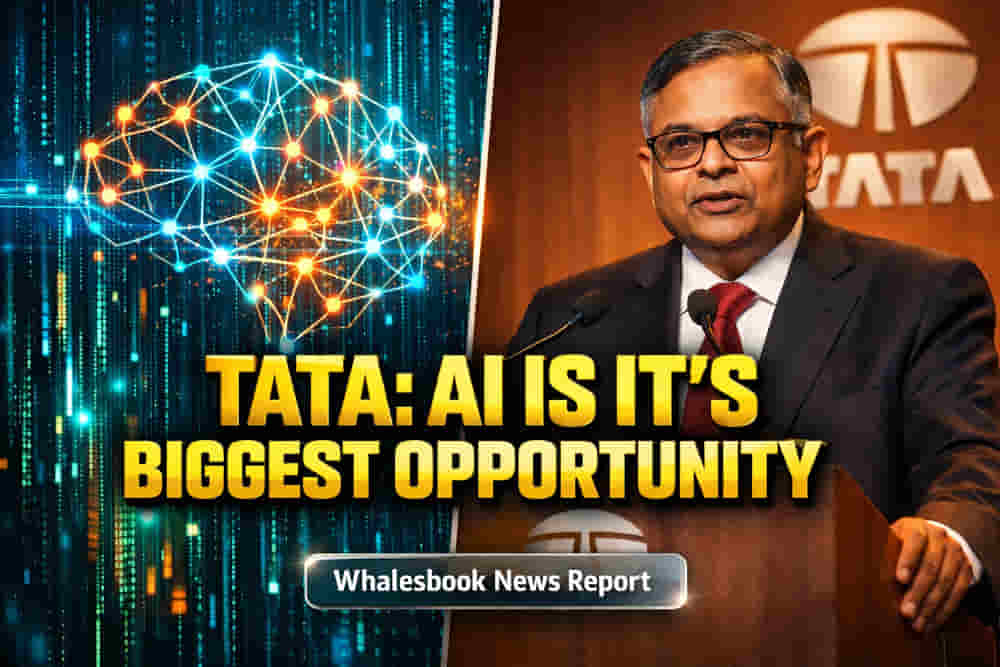
The Ambitious Blueprint
Tata Group's commitment to Artificial Intelligence is manifesting as a multi-pillar strategy, spearheaded by Chairman N. Chandrasekaran's pronouncements on AI being the "single biggest opportunity" for the technology sector. This vision translates into significant investment across critical AI domains. A cornerstone of this strategy is the establishment of large-scale AI-optimized infrastructure, evidenced by a partnership with OpenAI to develop 100 megawatts of data center capacity, scalable to 1 gigawatt. This initiative, alongside a collaboration with AMD to co-develop rack-scale AI infrastructure based on the Helios platform, aims to bolster India's sovereign AI capabilities and cater to global clients. These ventures are being housed under TCS's HyperVault AI Data Center subsidiary, which aims for gigawatt-scale capacity. Beyond infrastructure, Tata is also focusing on an AI data insights platform and developing an "AI operating system for industries" through TCS and Tata Communications. The group's foray into semiconductors, with a focus on AI-optimized chips for sectors like automotive, aligns with national manufacturing goals. Tata Consultancy Services (TCS), a financial powerhouse with a market capitalization nearing ₹9.75 trillion and a P/E ratio around 20.6, is the primary listed entity driving these efforts. The company's AI services already generate an annualized revenue of approximately $1.5 billion and are growing at a mid-teens quarter-over-quarter rate, significantly outpacing traditional IT services.
The Competitive Crucible
The global AI infrastructure market is projected for exponential growth, anticipated to reach hundreds of billions of dollars by the end of the decade. This burgeoning demand is fueling a race among technology giants. While Tata is forging ahead with substantial infrastructure plans, it confronts intense competition. In the semiconductor space, AMD's Helios platform is positioned against established leaders like Nvidia, a dynamic where market share is hard-won. The broader Indian IT sector is also actively pursuing AI opportunities; for instance, Infosys has entered into a partnership with Anthropic for enterprise AI solutions. Global players are also making significant bets, with Google announcing a $15 billion AI hub in India. Furthermore, India's semiconductor industry is receiving significant government backing through policies like the Production Linked Incentive (PLI) and Design Linked Incentive (DLI) schemes, aiming to foster domestic manufacturing and design capabilities. This policy environment, while supportive, also signifies a crowded field with ambitious national objectives. Tata's P/E ratio, while indicating a stable, mature company, may not fully reflect the high-risk, high-reward nature of its AI infrastructure and semiconductor ventures, which demand substantial and sustained capital expenditure.
The Forensic Bear Case
While the narrative surrounding Tata's AI strategy emphasizes opportunity, a critical assessment reveals significant execution hurdles and competitive threats. The sheer scale of investment required for AI-optimized data centers and semiconductor fabrication is monumental, carrying inherent risks of technological obsolescence and uncertain profitability. Building gigawatt-scale data infrastructure, particularly for AI workloads, is a capital-intensive endeavor that demands continuous upgrades and operational efficiency to remain competitive against hyperscalers and specialized infrastructure providers. The semiconductor design and manufacturing domain is notoriously challenging, characterized by long development cycles, high R&D costs, and fierce global competition, where dominance is often held by a few established players. Tata's reliance on partnerships with OpenAI and AMD, while strategic, also introduces dependency on external roadmaps and technological advancements. Moreover, translating vast infrastructure investments into profitable service offerings in a market with evolving pricing models and intense competition could strain margins. Unlike its traditional IT services business, which boasts strong EBIT margins and a zero-debt balance sheet, the capital-heavy AI infrastructure and semiconductor sectors present a different financial profile with longer payback periods and higher upfront risks. The success of these ventures will hinge not only on technological prowess but also on Tata's ability to navigate complex supply chains, secure consistent customer demand, and achieve economies of scale in highly competitive global markets. Brokerage targets for TCS, such as ₹3,800, suggest upside potential but do not fully account for the inherent risks in these new, capital-intensive ventures.
Future Outlook
Despite the inherent challenges, the strategic direction set by Tata Group signals a determined push into the future of computing. Analyst sentiment, as reflected in buy ratings and price targets for TCS, generally remains positive, acknowledging the company's strong financial footing and its proactive stance in the AI services market. The company's stated ambition to become the world's largest AI-led technology services firm underscores its long-term vision. India's overall embrace of AI, with high expectations for positive returns and substantial planned investments by businesses, provides a supportive domestic backdrop. The government's continued focus on fostering a robust AI and semiconductor ecosystem through various incentives further underpins these strategic moves. The ultimate success of Tata's expansive AI agenda will depend on its ability to effectively manage these large-scale, capital-intensive projects, adapt to rapid technological shifts, and carve out sustainable profitable niches within the fiercely competitive global AI and semiconductor industries.