 Whalesbook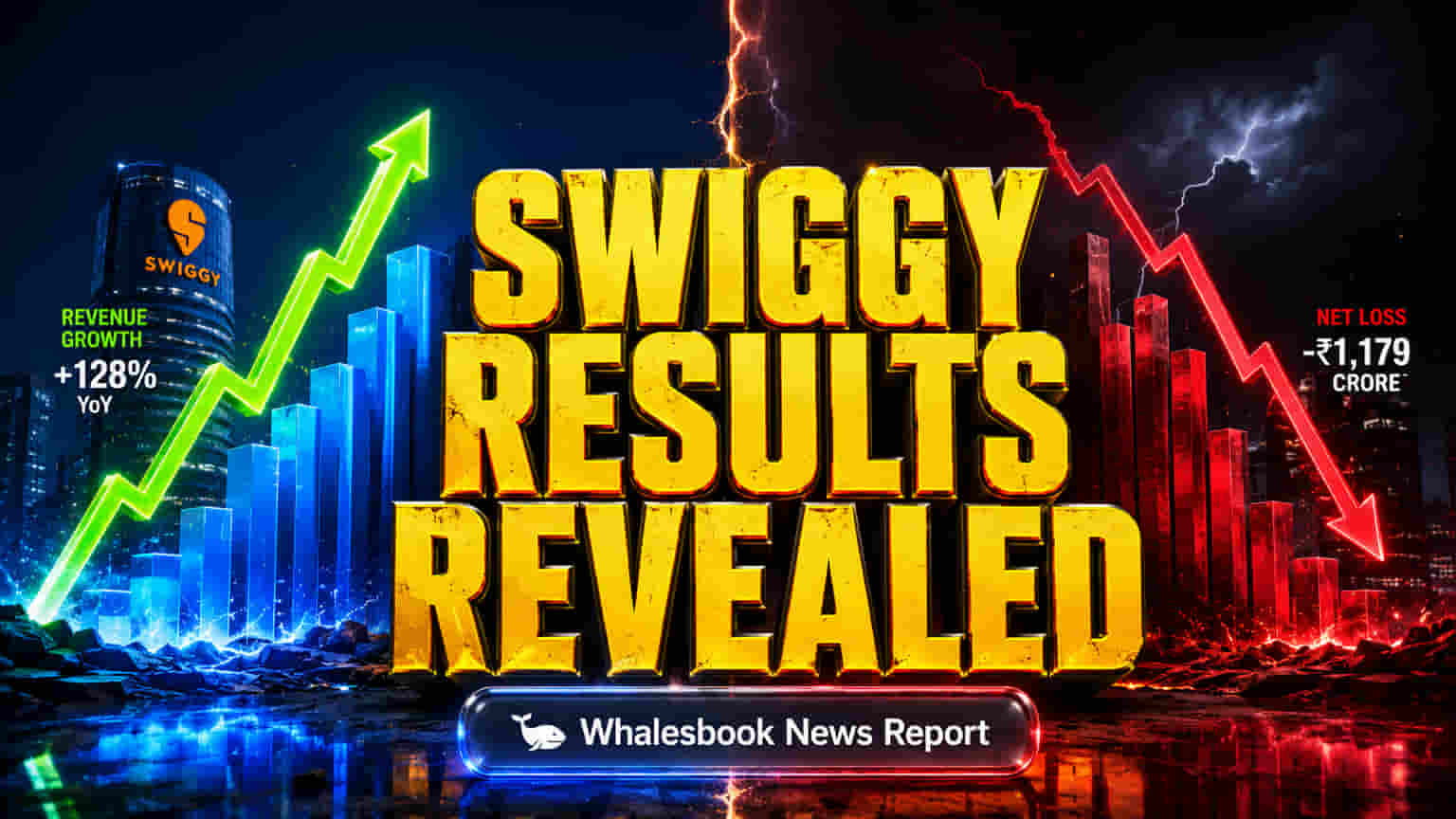


Swiggy's Growth vs. Financial Losses
Swiggy Ltd.'s upcoming earnings announcement on May 8, 2026, is a key moment for the company as it navigates market share growth against mounting financial losses. While Swiggy has achieved strong revenue growth, particularly in its quick commerce operations, the continued increase in net and EBITDA losses presents a major challenge for investors. This financial picture contrasts with some rivals in India's rapidly expanding digital delivery market.
Revenue Soars, But Losses Deepen
Swiggy's consolidated revenue from operations rose 54% year-on-year to ₹6,148 crore in Q3 FY26, supported by solid performance across its business segments. Gross Order Value (GOV) also grew to ₹18,122 crore. However, this revenue growth was overshadowed by a 33% year-on-year increase in its consolidated net loss, reaching ₹1,065 crore for the quarter ending December 2025. The adjusted EBITDA loss widened to ₹712 crore. This trend points to rising costs tied to expanding operations, including investments in technology, delivery networks, and aggressive marketing, especially in quick commerce, where losses saw a significant jump.
Rivals Gain Ground While Swiggy Struggles
The Indian food delivery and quick commerce market is highly competitive. Swiggy's main rival, Zomato, has shown signs of recovery, reporting a net profit of ₹174 crore on operating revenue of ₹17,292 crore for Q4 FY26. Zomato's quick commerce service, Blinkit, has reportedly significantly reduced its losses in FY25. This contrasts with Swiggy's Instamart, which saw its losses increase by 60% even as sales grew. Meanwhile, Zepto, a rapidly growing quick commerce player, has secured substantial funding, achieving a valuation of around $7 billion and raising $2.3 billion to date, indicating aggressive expansion plans. This competitive environment puts greater focus on how efficiently companies manage costs and achieve profitability.
Market Growth Promises Opportunity, Profitability Remains Elusive
The Indian online food delivery market is projected for substantial growth, with forecasts ranging from $27 billion to $59 billion by 2030, expecting compound annual growth rates (CAGR) between 14% and 29%. However, the sector faces ongoing challenges such as high customer acquisition costs, pressure on restaurant commission rates, and the complex task of managing its gig workforce efficiently. For many companies, achieving consistent profitability is still a distant goal, as they prioritize expanding their market share over immediate earnings. Zomato, valued at approximately ₹2.4 trillion with a trailing twelve-month P/E ratio of about 655x, trades around ₹248-₹252 per share. Analysts generally maintain a 'Strong Buy' rating for Zomato, with an average price target of ₹370, expecting continued growth and margin improvements.
Investor Concerns Mount Over Mounting Losses
Swiggy's expanding losses, particularly in the capital-intensive quick commerce sector, are a major concern for investors. While revenue growth is strong, the widening gap between income and expenses questions the long-term viability of its current strategy. The rise in losses at Instamart, directly opposing Blinkit's reported turnaround and Zepto's funding-fueled market capture, suggests Swiggy may be at a disadvantage in achieving profitability in this segment. The company's stock performance reflects these worries, having fallen roughly 18-32% over the past six months and trading near its 52-week low of ₹256, far from its 52-week high of ₹474. The persistent net loss per quarter highlights the significant capital drain, making the path to positive earnings challenging in a highly competitive market where rivals show better financial discipline or stronger investor backing.
Focus on Profitability Path Ahead
Investors will be closely watching Swiggy's Board meeting and subsequent earnings call on May 8, 2026. Key discussion points will include management's strategy to reduce losses, enhance unit economics, and outline a clearer path to profitability. Swiggy's ability to control operational costs and leverage its market position against Zomato's improved financials and Zepto's rapid expansion will be crucial for its future valuation and investor confidence. While the sector's continued growth offers significant opportunities, achieving sustainable profitability remains the critical goal for all players.