 Whalesbook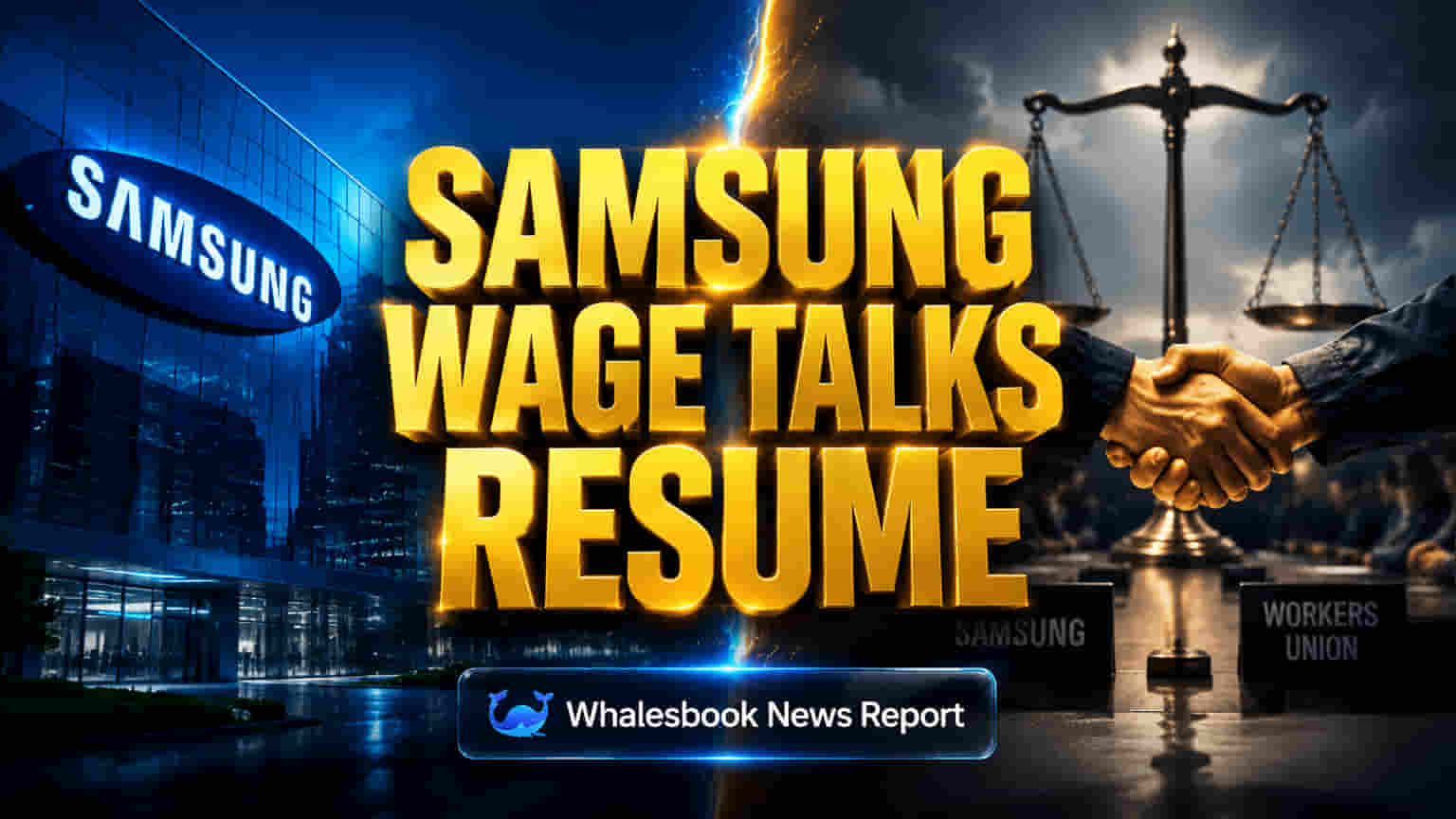


Key Talks Begin Amid Tension
Samsung Electronics and its labor union are resuming pay talks, with the government mediating to help avoid a strike. This key moment comes as these recurring labor disputes and their economic impact on South Korea and the global tech sector are a serious concern. Chairman Jay Y. Lee has again apologized for labor issues, highlighting the ongoing challenges in managing employee relations at the tech giant.
Market Watch: Investor Concerns
Samsung Electronics, valued around $330 billion with a P/E ratio of about 15x, has seen its stock price fluctuate with the labor negotiations. This trading pattern shows investor concerns about how long the talks will last and what they will yield. Investors are weighing the potential cost of wage increases against the risk of a prolonged strike that could halt memory chip supplies to clients like Nvidia and AMD. The company's stock has seen higher trading volumes during periods of failed talks, indicating investor worry. Analysts offer a mixed view, with some keeping 'buy' ratings but lowering price targets because of the labor uncertainty.
Global Chip Competition
The semiconductor industry, already facing ups and downs in demand and tough competition, can ill afford major labor disruptions at key companies. Samsung Electronics, the world's top memory chip producer, competes with SK Hynix and Micron, which have often had more stable labor relations. Such stability among rivals could put Samsung at a disadvantage if its labor issues worsen, affecting its market share and client ties. Historically, Samsung's stock has reacted to labor news, dropping during tense periods. The South Korean government's firm position highlights the broad risk, as a prolonged strike could seriously harm the nation's export-driven economy and financial markets, which depend heavily on the tech sector.
Ongoing Labor Challenges
Chairman Jay Y. Lee's public apologies challenge the effectiveness of Samsung Electronics' commitments to labor rights. Lee's 2020 pledge, made after executives were found interfering with union activities, is under renewed scrutiny. This pattern suggests a gap between executive promises and actual labor practices, a concern for investors focused on stable operations. Unlike some rivals with more established union-management dialogues, Samsung's history points to a more confrontational relationship. The cost of potential wage increases or better benefits could also squeeze profit margins, particularly in a market with aggressive pricing. Any perception of management inflexibility or continued executive misconduct could also deter future investment and complicate key supply chain partnerships.
Outlook for Samsung
Samsung's management is focused on resolving the labor dispute. Analysts expect a swift resolution would stabilize the stock, letting it move with broader semiconductor market trends. However, ongoing labor friction could lead to lower earnings forecasts.