 Whalesbook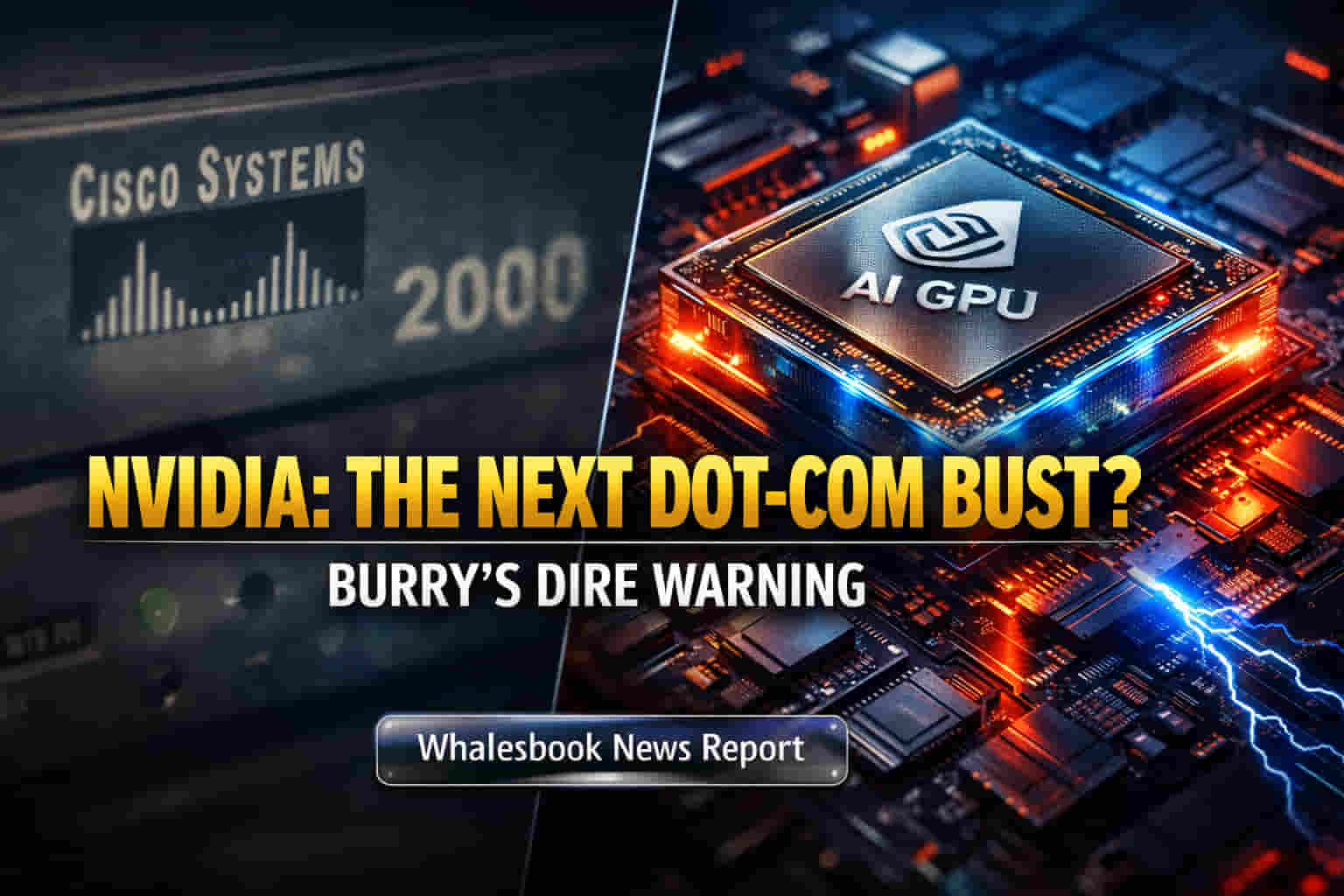


### The Commitment Crunch
Michael Burry, the investor known for predicting the 2008 financial crisis, is drawing parallels between Nvidia's current financial structure and that of Cisco Systems at the height of the dot-com boom. Burry's primary concern centers on Nvidia's substantial and rapidly expanding long-term purchase obligations. These commitments surged to approximately $95.2 billion as of January 2026, a stark increase from $16.1 billion reported the previous year. Factoring in inventory and other contractual obligations, Nvidia's total financial exposure approaches $110 billion to $120 billion. This figure is notably close to the company's annual operating cash flow, indicating a significant leverage on future production capacity. Such aggressive pre-securing of supply is driven by the current insatiable demand for AI infrastructure, evidenced by Nvidia's data center revenue tripling year-on-year and gross margins exceeding 70%, projected to reach 75%. As of March 1, 2026, Nvidia's stock trades around $175-$178, with a market capitalization of approximately $4.3 trillion. The stock's Price/Earnings ratio stands around 36-43x, down from previous highs but still elevated, reflecting high growth expectations.
### Dot-Com Echoes and Financial Rigidity
Burry's comparison to Cisco Systems is rooted in a critical financial mechanism: forward commitments. In the late 1990s, Cisco aggressively ramped production based on runaway internet traffic growth forecasts and heavy orders from telecom operators. This led Cisco to lock in extensive supplier contracts and expand manufacturing capacity, much like Nvidia is doing today. However, when the telecom spending cycle shifted, Cisco found itself burdened with excess inventory and billions in write-downs, causing its stock to plummet nearly 80% from its peak market capitalization of over $500 billion. While Cisco ultimately survived and reinvented itself, its stock took approximately 25 years to surpass its dot-com era highs, underscoring the long-term consequences of over-commitment against cyclical demand. Burry's argument posits that AI's growth, while robust, will eventually normalize, and companies with massive, inflexible financial commitments face asymmetric risk. If demand continues unabated, these commitments appear prescient; if demand cools even slightly, these obligations become a significant drag on margins and cash flow, a situation reminiscent of Cisco's inventory crisis.
### The Bear Case: Asymmetric Risk and Competitive Headwinds
Nvidia's customer base is heavily concentrated among a few large cloud providers. A slowdown in their capital expenditures, even for a few quarters, could have a substantial impact on Nvidia's demand. Furthermore, the rise of custom silicon initiatives and alternative AI accelerators from competitors like AMD, which is leveraging TSMC's advanced nodes, and Intel, which is enhancing its manufacturing capabilities and strategic alliances, presents an evolving competitive threat. Taiwan Semiconductor Manufacturing Company (TSMC), the primary foundry for many advanced chips, faces capacity constraints, particularly at its leading-edge nodes, and is prioritizing high-margin AI accelerators. TSMC is investing heavily in its 2nm process and expanding capacity, with capital expenditures projected between $52 billion and $56 billion for 2026, but lead times are extending, pushing some customers to seek alternatives. This supply-side pressure, combined with potential shifts in customer spending, amplifies the risk associated with Nvidia's large forward commitments.
### Analyst Sentiment and Valuation
Despite these concerns, the Wall Street consensus remains strongly optimistic, with a significant majority of analysts rating Nvidia a 'Buy' or 'Strong Buy'. The average 12-month price target from analysts is around $271.86, suggesting substantial upside potential from current levels. Analysts highlight Nvidia's continued technological leadership, robust CUDA ecosystem, and strong financial performance, including projected revenue growth and margin expansion. However, the company's multi-trillion dollar valuation is built on assumptions of sustained dominance and relentless AI spending. Historically, as seen with Cisco, even technological inevitability does not guarantee financial inevitability when expectations outstrip sustainable reality. Cisco's P/E ratio at its peak was nearly 97x, whereas Nvidia's current P/E is around 36-43x; while lower, it still prices in significant future growth. The global semiconductor market is projected to reach $670 billion by 2026, driven by AI, but this growth is not without its cyclical elements and supply chain complexities.
### Future Outlook
The semiconductor industry is forecast to continue its expansion, driven by AI infrastructure and evolving technologies like edge computing. Nvidia's role as a key enabler of AI is undeniable, supported by its technological moat and strong customer relationships. However, Burry's warning serves as a critical reminder that the financial mechanics of expansion during euphoric phases can create vulnerabilities. The distinction between technological progress and financial inevitability is crucial, as markets often punish inflexibility when cycles inevitably turn, a lesson etched in the legacy of the dot-com era.