 Whalesbook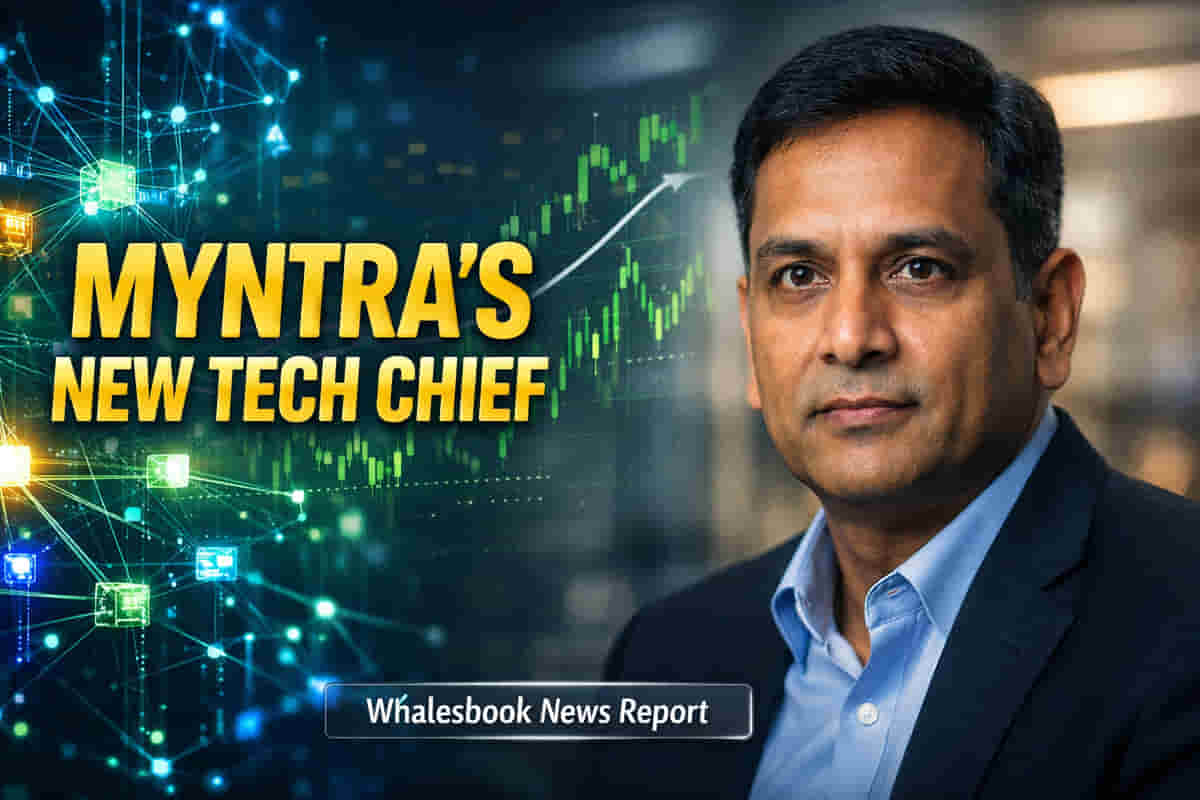
THE SEAMLESS LINK
The strategic infusion of Pramod Adiddam as Myntra's Chief Technology Officer is poised to accelerate the company's technological evolution, aligning with its robust financial performance and the dynamic landscape of India's digital retail sector.
The Core Catalyst: Tech Leadership for Growth
Pramod Adiddam, a seasoned technologist with over two decades of experience at global giants like Google and Instacart, steps into the Chief Technology Officer role at Myntra. His mandate extends beyond routine oversight; he is tasked with charting Myntra's overall technology strategy, prioritizing innovation, platform resilience, and the development of advanced technical capabilities [19]. This appointment is critical as Myntra navigates India's rapidly expanding and intensely competitive fashion e-commerce market, estimated to reach $98.45 billion by 2032 with a 24.2% CAGR [2]. Adiddam's deep background in architecting large-scale commerce systems and scaling multi-billion dollar platforms directly addresses the need for robust infrastructure to support Myntra's aggressive growth trajectory. The company's significant FY25 profitability surge, with net profit jumping 18 times to Rs 548 crore from Rs 31 crore in FY24, and revenue increasing 18% to Rs 6,043 crore, provides a strong financial foundation for substantial investments in technology, including AI and advanced analytics. This leadership reinforcement signals a proactive stance to leverage technological prowess as a key differentiator.
The Analytical Deep Dive: Market Context and Competitive Landscape
Myntra's recent financial success positions it strongly within the broader Indian e-commerce ecosystem. While its 18% revenue growth is solid, competitors are also demonstrating momentum. For instance, Nykaa's Q3 FY25 saw a 61.4% rise in net profit to Rs 26.12 crore, with revenue up 27% to Rs 2,267.21 crore [7]. For the full FY25, Nykaa reported Rs 7,950 crore in revenue and Rs 72 crore in net profit [31]. The Indian e-commerce market itself is a significant growth engine, projected to reach $160 billion in FY25 and $345 billion by 2030, with fashion and apparel comprising a substantial 31.67% of market share in 2025 [11], [16]. Myntra's parent, Flipkart, and arch-rivals like Amazon India are also heavily investing in technology, focusing on AI-driven personalization, supply chain innovation, and enhanced customer experiences, including virtual try-ons and rapid delivery services [20], [24]. Myntra itself has been a recipient of substantial funding from Flipkart and Walmart, underscoring a strategic commitment to its expansion, with past infusions totaling hundreds of millions of dollars [6], [8], [15]. This period of robust performance and leadership strengthening occurs against a backdrop of a maturing market where technological sophistication is paramount for sustained success.
THE FORENSIC BEAR CASE
Despite Myntra's impressive profit leap and strategic CTO appointment, the competitive environment presents significant challenges. The Indian fashion e-commerce space is fiercely contested, featuring giants like Amazon India, Reliance Retail's AJIO, and its own parent, Flipkart, all investing aggressively in technology and logistics [20], [24]. Nykaa, a key competitor in both fashion and beauty, continues to grow its revenue and profitability [7], [31]. Furthermore, emerging quick commerce players like ZILO and KNOT are intensifying competition, particularly in rapid delivery [17], [26]. While the overall e-commerce market is projected for long-term growth, 2024 saw a slowdown to 10-12% due to macroeconomic pressures [12]. Intense competition often translates to aggressive discounting and high customer acquisition costs, potentially pressuring margins [3]. Fashion retail also faces inherent operational burdens, such as elevated product return rates, which can erode profitability [3]. Myntra's historical reliance on significant funding infusions from its parent entities, including substantial capital injections prior to its FY24 profitability, highlights the capital-intensive nature of the sector and the challenges of achieving sustainable profitability [6], [8], [15], [21].
The Future Outlook
Analysts anticipate continued robust growth for India's e-commerce sector, with projections of 17-22% annual growth in 2025 and a CAGR of over 18% expected to drive the market to $170-$190 billion by 2030 [12], [16]. The fashion segment is a key driver of this expansion [11]. The strategic appointment of Pramod Adiddam as CTO is thus timely, positioning Myntra to leverage technological advancements, including AI, to enhance customer experience, optimize operations, and solidify its market leadership. The company's recent financial strength provides the necessary capital to fuel these technological investments, aiming to navigate the competitive landscape and capitalize on the burgeoning demand for online fashion in India.