 Whalesbook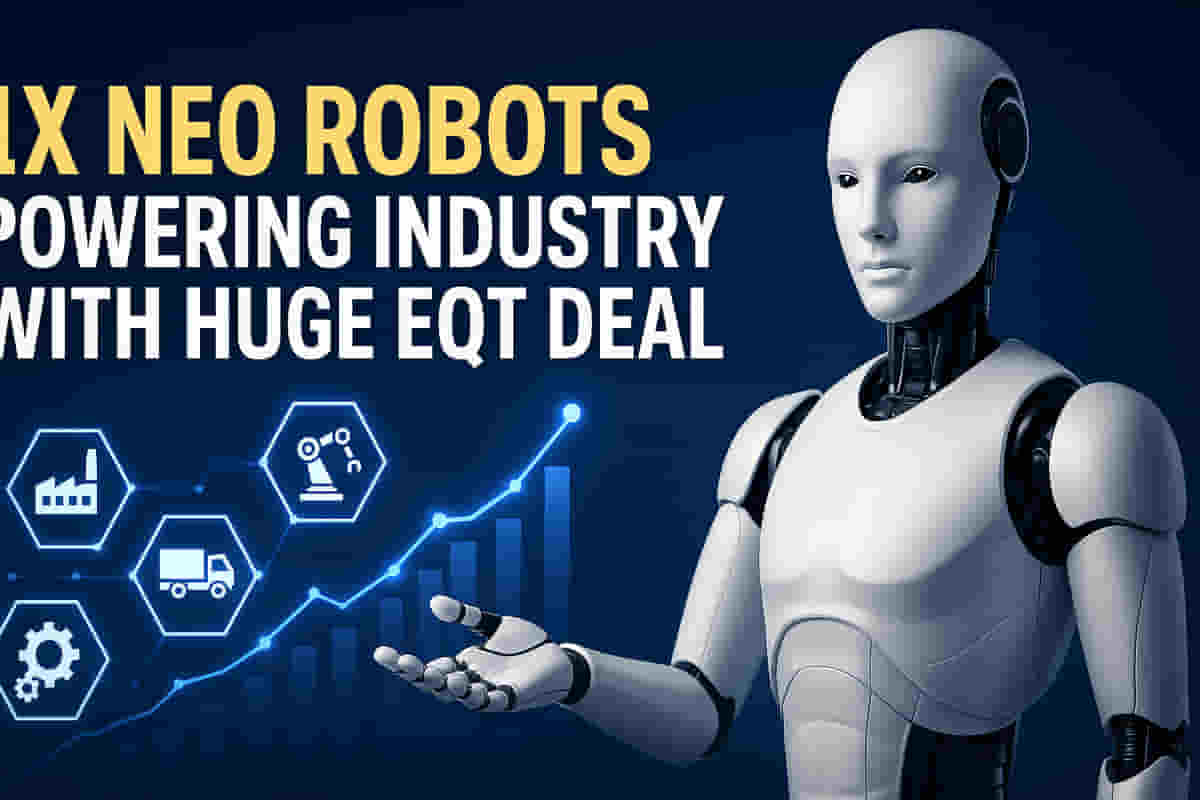
Humanoid robot maker 1X has forged a significant strategic partnership with the investment firm EQT, aiming to deliver up to 10,000 of its Neo humanoid robots to EQT's extensive network of portfolio companies. This collaboration, set to span from 2026 to 2030, signals a substantial shift in the primary market for 1X's flagship robot, pivoting towards industrial applications rather than the consumer market it was initially designed for.
The Strategic Pivot
The 1X Neo robot has been prominently marketed as the "first consumer-ready humanoid robot designed to transform life at home." When pre-orders opened in October for the $20,000 unit, the company emphasized its capabilities in performing household chores and interacting with people in a domestic setting. This consumer-centric positioning contrasted with competitors like Figure, which have focused on commercial or industrial deployments. However, this new deal with EQT channels the Neo robot into manufacturing, warehousing, logistics, and other industrial use cases.
The EQT Partnership Details
EQT, a large Swedish multi-asset investor, and its venture fund EQT Ventures, an existing backer of 1X, are facilitating this large-scale deployment. The agreement plans for up to 10,000 Neo robots to be shipped to EQT's over 300 portfolio companies. 1X confirmed that individual agreements will be established with each interested EQT portfolio company. This move leverages EQT's broad industrial reach to find a substantial market for 1X's technology.
Market Dynamics and Challenges
The decision to prioritize industrial clients for the Neo robot likely stems from the current market realities. While robots designed for home use face significant hurdles, including a high $20,000 price tag that limits consumer appeal, and privacy concerns such as human operators potentially viewing through the robot's eyes, industrial applications present a more immediate and easier sell. Sectors like manufacturing and logistics are actively seeking automation solutions to improve efficiency and address labor shortages.
The broader adoption of humanoid robots, even in industrial settings, is projected to take time. Several venture capitalists and robotics experts have indicated that widespread humanoid adoption might be several years, if not a decade, away. Concerns around safety, particularly regarding interactions with children and pets due to the robots' size and stability, also remain a factor. Despite these challenges, 1X reported that pre-orders for its Neo bot "far exceeded" its goals, though the exact number was not disclosed.
Company Background and Funding
Founded in 2014, 1X has successfully raised over $130 million in venture capital. Its funding rounds have attracted notable investors, including EQT Ventures, Tiger Global, and the OpenAI Startup Fund, underscoring strong confidence in the company's technological advancements and future potential.
Future Outlook
This partnership with EQT could be a crucial step for 1X, providing a strong revenue stream and proving the viability of its robots in demanding industrial environments. While the consumer market for sophisticated humanoid robots may still be some way off, this industrial focus allows 1X to scale its production and refine its technology in real-world operational settings, potentially paving the way for future consumer applications.
Impact Rating: 7/10
Difficult Terms Explained
Humanoid robots: Robots designed to resemble the human body in form and movement.
Portfolio companies: Companies that are owned or invested in by an investment firm or venture capital fund.
Logistics: The detailed organization and implementation of a complex plan, especially the movement of supplies and personnel.
Warehousing: The storage of large quantities of goods.
Venture capital: Finance provided by investors to startup companies and small businesses with perceived long-term growth potential.